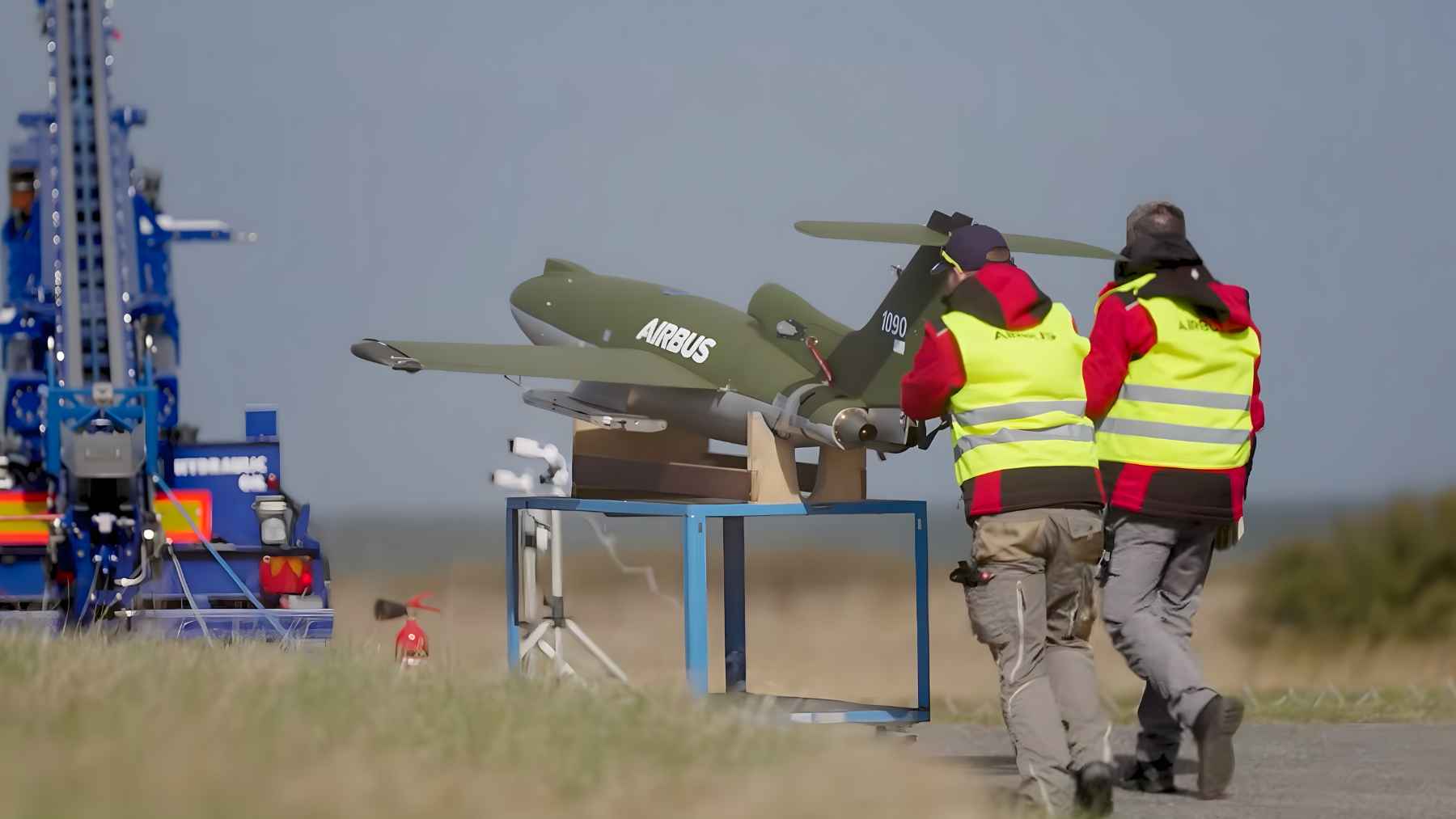
How do you defend against a wave of low-cost drones without draining your best air-defense missiles? Airbus says it has a new option, a reusable uncrewed interceptor called “Bird of Prey” that is built to spot and destroy one-way attack drones in the kind of messy, fast-moving scenarios modern militaries now face.
On March 30, 2026, Airbus said Bird of Prey completed its first demonstration flight at a military training area in northern Germany. In that test, the company said the system autonomously searched for, detected, classified, identified, and then engaged a target using a Mark I air-to-air missile developed with partner Frankenburg Technologies.
A first flight built around autonomy
Airbus framed the demo as a full “chain of combat,” not a single isolated shot. The company said Bird of Prey ran the mission sequence on its own, from the initial search to the final intercept, without an operator manually guiding each step.
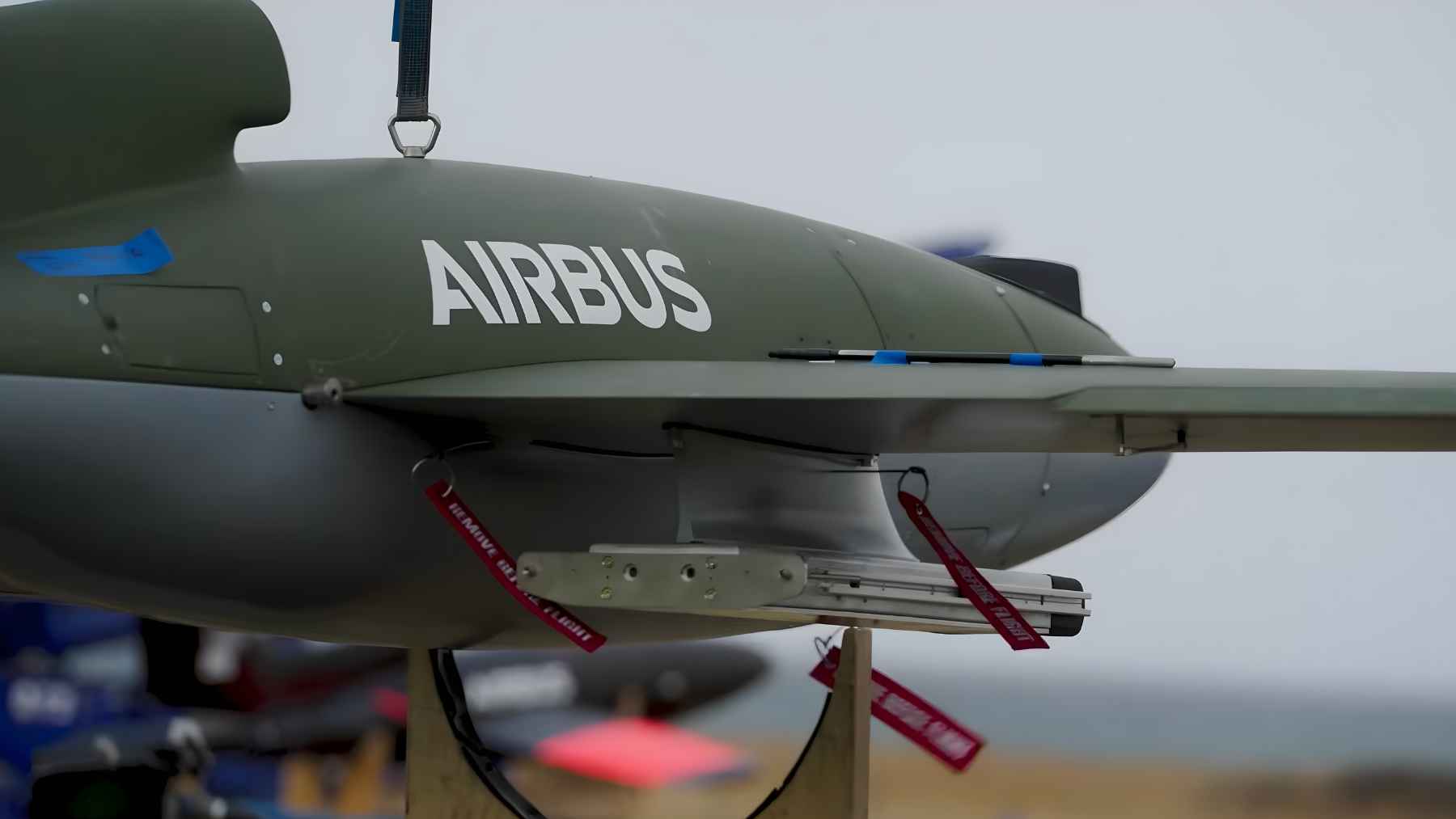
The prototype is based on a modified Airbus Do-DT25 drone. Airbus lists a wingspan of about 8.2 feet (2.5 meters), a length of about 10.2 feet (3.1 meters), and a maximum takeoff weight of roughly 353 pounds (160 kilograms).
It also carries its own magazine. Airbus said the prototype flew with four Mark I missiles, while an operational version is planned to carry up to eight, allowing multiple engagements in a single mission.
The saturation problem that keeps getting worse
One-way attack drones have become a go-to tool in recent conflicts because they are cheap, easy to launch, and hard to ignore. The pressure they create is not just physical but logistical, since even a successful defense can burn through interceptors that were designed for bigger threats.
Mike Schoellhorn, CEO of Airbus Defence and Space, said “defending against kamikaze drones is a tactical priority that urgently needs to be tackled.” He also said Bird of Prey paired with Frankenburg’s “affordable” missiles can fill “a crucial capability gap” in today’s asymmetric conflict theaters.
This is where the economics start to feel very real. A defense plan that works on paper still has to work when the threat shows up at 2 a.m. and the magazines are already half empty.
The Mark I missile and the new “cost curve”
Airbus says Bird of Prey’s core weapon is Frankenburg’s Mark I, a “fire-and-forget” interceptor that guides itself after launch. That matters because it reduces the need for continuous operator control, especially when multiple targets appear at once.
By Airbus’s description, the Mark I is a high-subsonic missile with an engagement range of up to about 0.93 miles (1.5 kilometers). Each missile measures about 26 inches (65 centimeters) and weighs under about 4.4 pounds (2 kilograms), and Airbus says that makes it the lightest guided interceptor developed to date.
Frankenburg CEO Kusti Salm called the Airbus integration “a defining step for modern air defense,” adding that it creates “a new cost curve for air defense” by putting “mass-manufacturable” interceptors on a drone.
Reuters reported that Poland’s state-owned defense group PGZ and Frankenburg plan a plant in Poland with capacity to produce up to 10,000 Mark I missiles per year, and the deal also outlines a Mark II interceptor expected to extend the effective range to about 3.1 to 5.0 miles (5 to 8 kilometers).
The companies did not disclose the investment, the plant location, or a production start date.
Plugging into NATO air-defense networks
Bird of Prey is not being sold as a lone hunter drone. Airbus says it is designed to operate within NATO’s integrated air-defense architecture through the company’s Integrated Battle Management System (IBMS), which helps connect sensors, decision tools, and shooters in a layered defense.
Schoellhorn called that integration a “force multiplier,” and it points to how the system might be used. Bird of Prey could be tasked against low-and-slow threats while longer-range air-defense systems focus on aircraft, cruise missiles, or other targets that demand expensive interceptors.
Still, networked autonomy comes with homework. Any interceptor that makes engagement decisions quickly has to fit into rules of engagement, airspace control, and identification procedures, especially when friendly drones and manned aircraft can be operating nearby.
What comes next and what buyers will likely ask
Airbus said the demonstration flight happened just nine months after the project started, which is an unusually fast turnaround in defense development. That speed is part of the story, since it reflects how urgently militaries are pushing industry to field counter-drone options.
The next question is whether the concept holds up outside a carefully managed test environment. Airbus said it and Frankenburg plan additional flight tests with a live warhead throughout 2026 to further operationalize the system and demonstrate its full capabilities to potential customers.
For defense planners, the checklist is easy to describe and hard to deliver. Can it be produced at volume, can it integrate cleanly with existing command systems, and can it keep intercepting when weather, jamming, or sheer numbers make everything harder, which is when real-world systems get exposed.
The official press release was published on Airbus Newsroom.