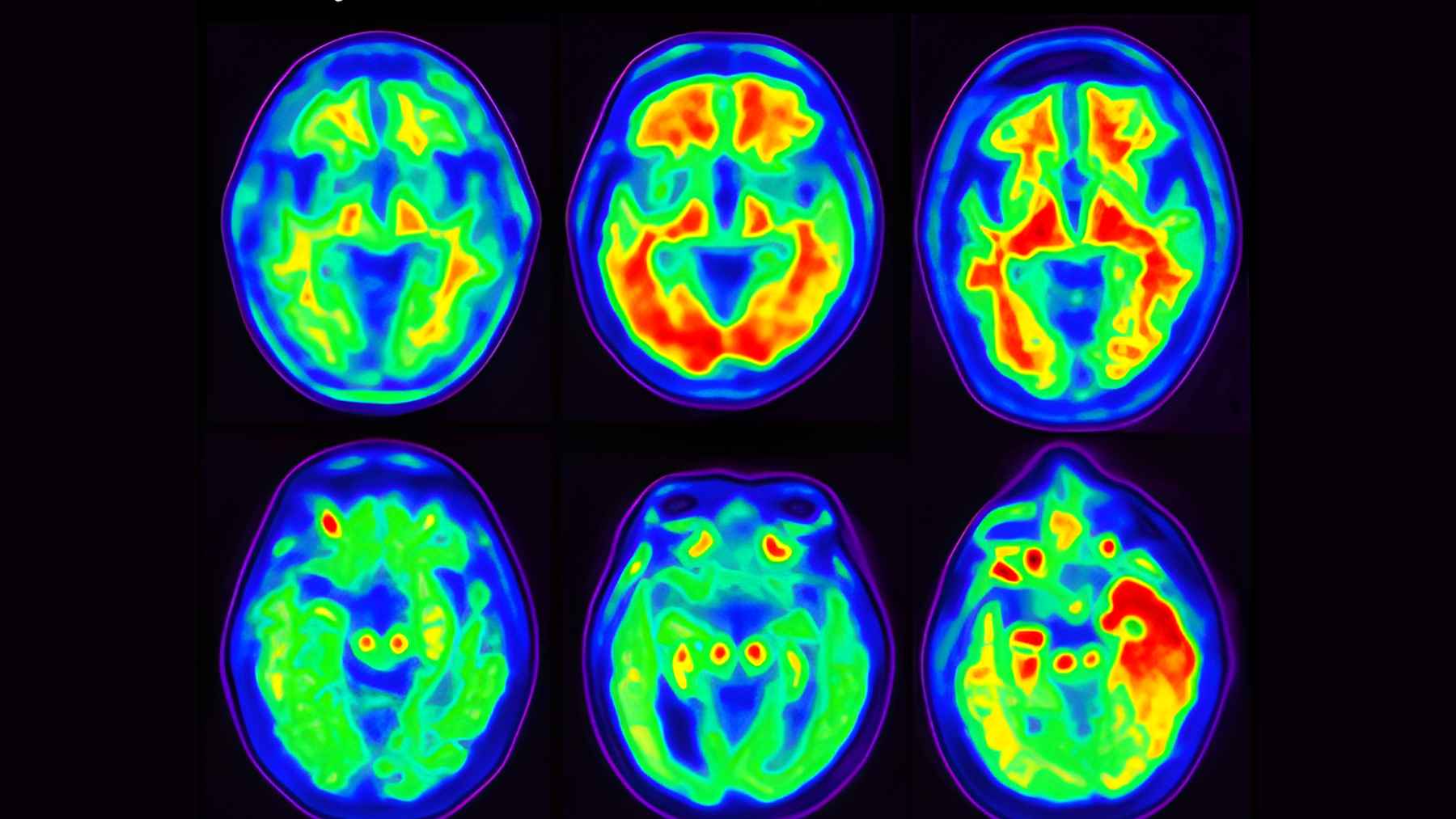
What if the brain is not working as a sealed box after all? Two recent papers in BioSystems from researchers at Politecnico di Torino and collaborators argue that consciousness may be shaped not only by neurons, but also by interactions among lipid membranes, vicinal water, cerebrospinal fluid, and weak electromagnetic fields from both inside and outside the body.
One outside candidate is the Schumann resonance, a natural low-frequency signal generated around the planet. The important caveat comes first. These papers do not offer proof that Earth’s electromagnetic rhythms influence the mind. They lay out a theoretical framework and a set of testable predictions, and both papers note that no new data were used in the research itself.
What Schumann resonances are and why scientists are studying them
Schumann resonances are established geophysical phenomena. NASA describes them as extremely low-frequency waves that circle Earth between the surface and the ionosphere, and says that about 2,000 thunderstorms and roughly 50 flashes of lightning per second help generate them.
Their fundamental frequency sits around 7.83 hertz, close to the range of some human brain rhythms. That overlap is one reason this hypothesis keeps attracting attention. Could something so faint really matter to the brain? Maybe. But right now, that is still an open question.
In practical terms, the team says cognition may emerge from “attractor states,” stable patterns in a brain-body system that is constantly interacting with its surroundings.
Their follow-up EMI framework describes consciousness as an emergent property of dynamic, field-based interactions and outlines experimental paths researchers could use to test the model.
The earlier paper also gives a central role to vicinal water and cell membranes, suggesting they may help biological tissue respond to weak electromagnetic signals. It is a bold idea, no doubt. Still, it remains a roadmap more than a verdict.
Brain synchronization research adds context to the debate
There is one reason scientists are likely to keep watching this area. Separate hyperscanning research has shown that brain activity can synchronize across people during real-time interaction, and a recent meta-analysis of 17 fNIRS studies covering 1,149 dyads found consistent interpersonal neural synchronization in close relationships.
That does not show Earth’s electromagnetic field is shaping consciousness. But it does suggest the brain is more dynamic, and sometimes more socially aligned, than older models once assumed.
So yes, the theory stretches beyond standard neuroscience. But the grounded takeaway is simpler. Researchers are testing whether the brain behaves less like a closed machine and more like a living system that is always negotiating with its environment, including the planet’s faint electrical weather.
The studies were published in BioSystems.