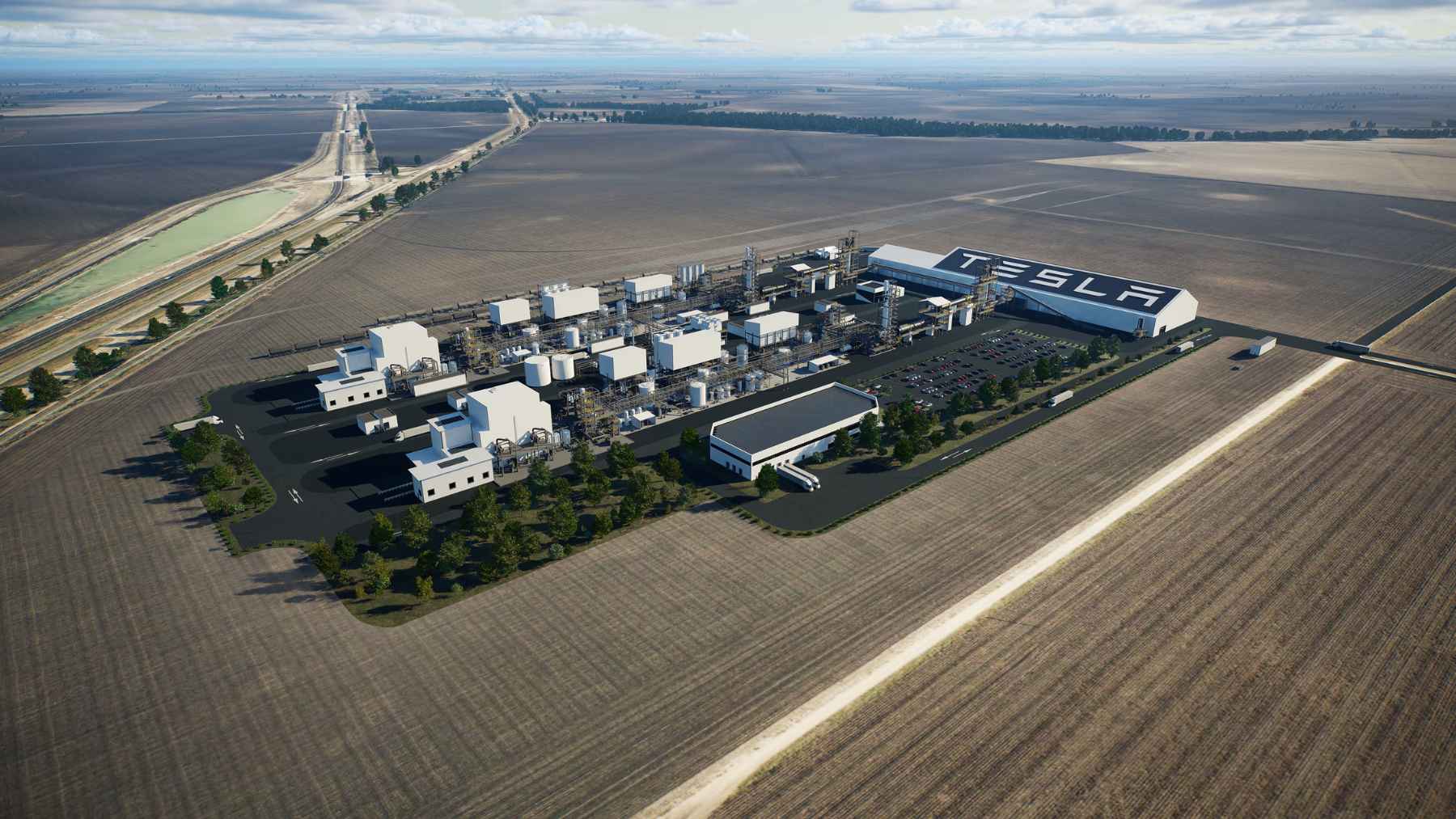
A drainage ditch along U.S. 77 in Nueces County, Texas, is not where you would expect the next chapter of America’s battery supply chain to unfold.
But that is exactly what happened after local workers say they found an unfamiliar pipe sending dark wastewater from Tesla’s lithium refinery near Robstown into a county ditch. State regulators investigated and reported no violation of Tesla’s wastewater discharge permit, yet the local drainage district says it never approved the pipe crossing its easement.
The clash matters because Tesla’s site is a more than $1 billion bet on domestic, battery-grade lithium hydroxide, a core ingredient for many electric vehicle batteries.
The Texas Commission on Environmental Quality (TCEQ) can set discharge limits, but the permit itself says it does not grant property rights for the route. In practical terms, a company can look compliant on a spreadsheet and still end up in a real-world dispute over land access, worker safety, and local trust.
What regulators found
TCEQ’s public complaint tracker shows two wastewater complaints tied to Tesla’s site, one received on January 20, 2026, and another received February 9, 2026. Both are listed as closed, and both reference the same investigation number, 2129071.
The investigation date is listed as February 12, 2026, and the tracker notes that no notice of violation or notice of enforcement was issued.
Inside Climate News reported that the agency approved an investigation report that found no violation of Tesla’s discharge permit.
The report describes sampling at the ditch and at the facility, including near cooling towers and at the facility, including near cooling towers and at the pipe leading to the ditch after treatment. TCEQ found the measured values for dissolved solids, oil and grease, chlorides, sulfates, temperature, and oxygen were within the permit’s bounds.
State records also included a detail that can sound surprising if you start with the phrase “black water.” The wastewater appeared clear as it flowed downstream, even as investigators noted heavy algae and vegetation growth along the banks and in the channel.
That contrast is part of why this story keeps pulling people in, because what a ditch looks like in the moment is not always what the permit tests are measuring.
A pipe the county says it did not approve
Nueces County Drainage District No. 2 says its crews first noticed the discharge while doing routine maintenance, clearing brush and debris to keep the ditch functioning.
Steve Ray, a spokesperson for the district, told local outlet KRIS 6 that what they saw was “very dark and murky” and “actually black.” Inside Climate News also reported that the district said it was not aware Tesla had a permit to discharge into that ditch before the pipe was discovered.
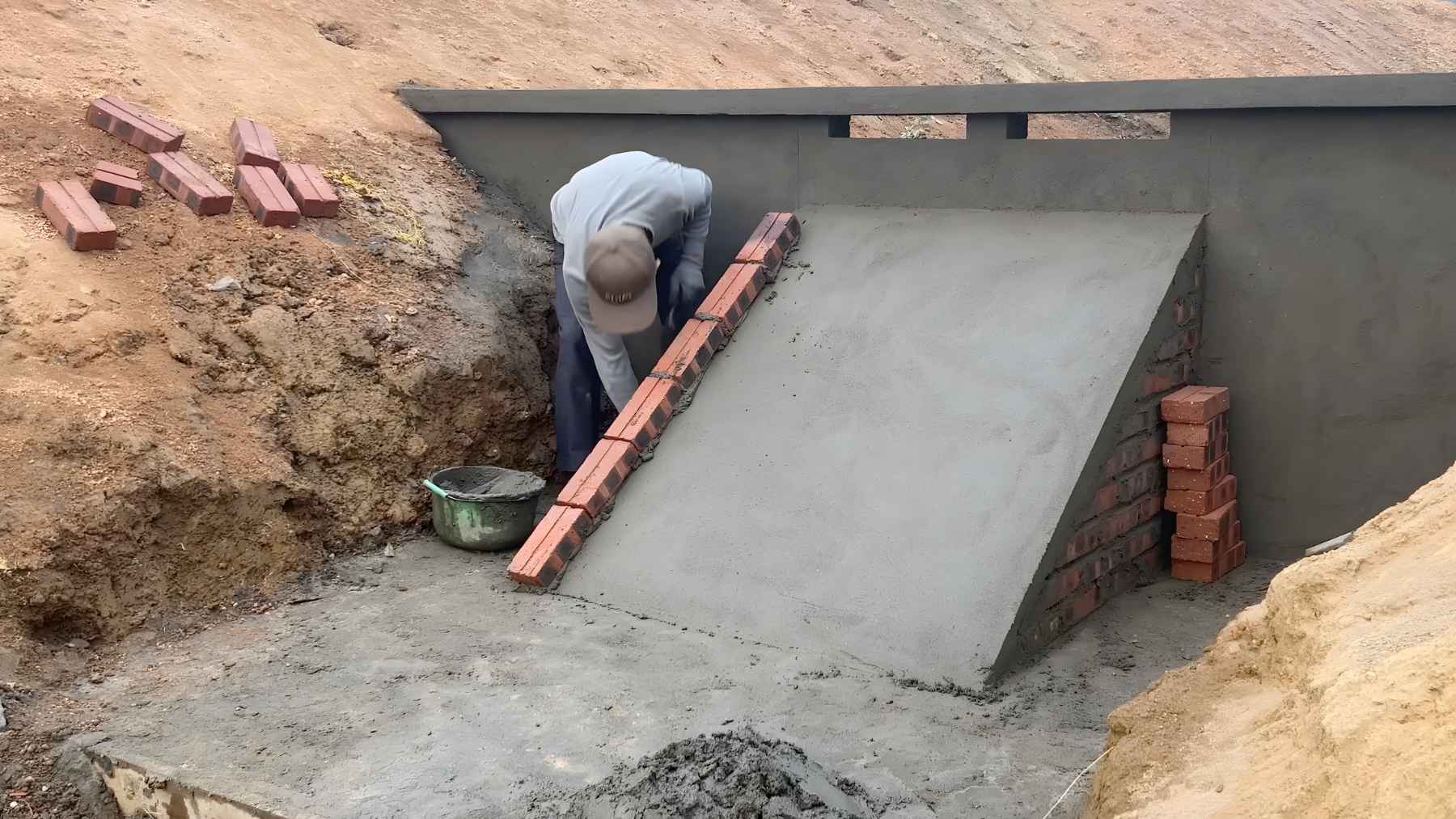
The district’s concern is not limited to chemistry. It says the pipe crosses an easement the district maintains, and that crossing was not authorized by the district, which matters when crews bring heavy equipment in to clean and rework drainage channels. KRIS 6 quoted the district’s attorney raising basic operational questions like where the pipe runs and how deep it is, because that is how you avoid ruptures when excavators show up.
Ray also told KRIS 6 the district plans to do its own independent testing, in part because outside lab reports can be hard for a small local agency to interpret quickly. Tesla did not respond to Inside Climate News’ questions about the discharge or the pipe, and KRIS 6 reported it also did not receive a response to its request for comment.
When you live in a place where drainage ditches are part of everyday flood prevention, silence can keep anxiety alive even after a state report says the numbers are within limits.
The permit says yes to discharge, not to property rights
Tesla’s wastewater discharge authorization is a Texas Pollutant Discharge Elimination System (TPDES) permit, No. WQ0005430000, issued in January 2025. The permit authorizes Tesla to “treat and discharge” wastewater from what it calls the Lynx Processing Facility, described as a battery-grade lithium compounds manufacturing facility near Robstown.
The discharge route is to an unnamed ditch and then to Petronila Creek in the Nueces-Rio Grande Coastal Basin.
The flow limit is a daily average of 0.2311 million gallons per day, which is about 231,100 gallons of treated wastewater per day. If a facility discharged at that daily average limit all year, it would total roughly 84 million gallons annually, which is a big volume to imagine moving through a rural drainage system after a storm.
The permit also spells out monitoring requirements and limits for items like total dissolved solids, chlorides, sulfates, and oil and grease, plus a requirement for no discharge of visible oil and no significant floating solids or foam.
Here is the line that sits at the center of the easement dispute. The permit states that “the issuance of this permit does not grant to the permittee the right to use private or public property for conveyance of wastewater along the discharge route,” and it says it is the permittee’s responsibility to acquire the necessary property rights.
That helps explain how one side can say “we are permitted” while the other says “you did not ask to cross our easement.”
Unseen Infrastructure: Much like these submerged markers in a river, the true extent of industrial drainage systems often remains hidden until examined.
Why Tesla built a refinery here
Tesla broke ground on its in-house lithium refinery in the greater Corpus Christi area in May 2023 and framed it as an investment of more than $1 billion in South Texas. The company said the site spans more than 1,200 acres and is designed to increase the supply of battery-grade lithium hydroxide available in North America.
Tesla also said the build would create nearly 1,000 construction jobs and that the facility would employ up to 250 full-time employees.
The company has marketed the facility as the first industrial deployment of an “acid-free” lithium refining route. Tesla says that approach eliminates the use of hazardous reagents and shifts byproducts toward more inert materials, describing a mixture of sand and limestone that could be used in construction materials.
It also said it expects the site to eventually process intermediate lithium feedstocks including recycled batteries and manufacturing scrap.
None of that changes the basic reality of industrial utilities. Cooling towers and boilers create blowdown water, and permits translate those needs into numeric limits and monitoring rules. The surprise is not that a refinery has wastewater, but that the last leg of the route appears to have ended in a ditch whose caretakers say they were not notified.
A watershed that already worries about storms
The ditch at the center of the dispute drains toward Petronila Creek and then Baffin Bay, tying a local maintenance issue to a larger coastal ecosystem. The Harte Research Institute at Texas A&M University-Corpus Christi describes the Baffin Bay watershed as naturally prone to flooding from high-intensity rain events that are increasing in frequency.
It also notes that stormwater runoff and flooding can carry nonpoint source pollution that threatens Baffin Bay’s ability to support healthy fish and bird populations.
That background helps explain why local agencies want clarity about what is entering drainage channels, even when the water looks clear at a glance. After a hard rain, those ditches are what keep water from pooling across roads and creeping toward homes, and crews do not like surprises when they are on the bank with heavy equipment.
Ray said the district will continue monitoring discharges while it works to keep area ditches operational and safe for workers and residents.
KRIS 6 also reported that Ray said the wastewater was pooling in one area and had not yet flowed into Petronila Creek at the time of his comments. That is not the same thing as a lab finding, but it captures the practical fear behind the paperwork. One big storm can turn a quiet ditch into a fast-moving system, and that is when local managers want to know exactly what is in the flow.
What to watch next
For Tesla, the immediate path is clear even if the politics are not. Stay within the permit limits and resolve the property-rights question with the drainage district, whether that means a formal easement agreement, a reroute, or a different conveyance plan. These are the unglamorous details of “clean tech,” but they often decide whether a project feels like a neighbor or a threat.
For regulators, the episode highlights a communication gap that can sit in plain sight. TCEQ told Inside Climate News it does not directly communicate with local drainage districts during the permitting process, and the process relies on public notices that applicants must publish in local newspapers.
That may meet procedural requirements, but it can still leave ditch operators learning about an industrial discharge only after they see it with their own eyes.
More critical minerals and battery-related facilities are arriving across the United States, and many will run into some version of this “last mile” issue.
The technology can be cutting edge while the infrastructure is very ordinary: a pipe, a ditch, a permit, and a crew trying to keep water moving before the next storm hits. If companies treat those details as part of the project from day one, they reduce the risk of turning a compliance story into a credibility fight.
The official complaint record was published by the Texas Commission on Environmental Quality.