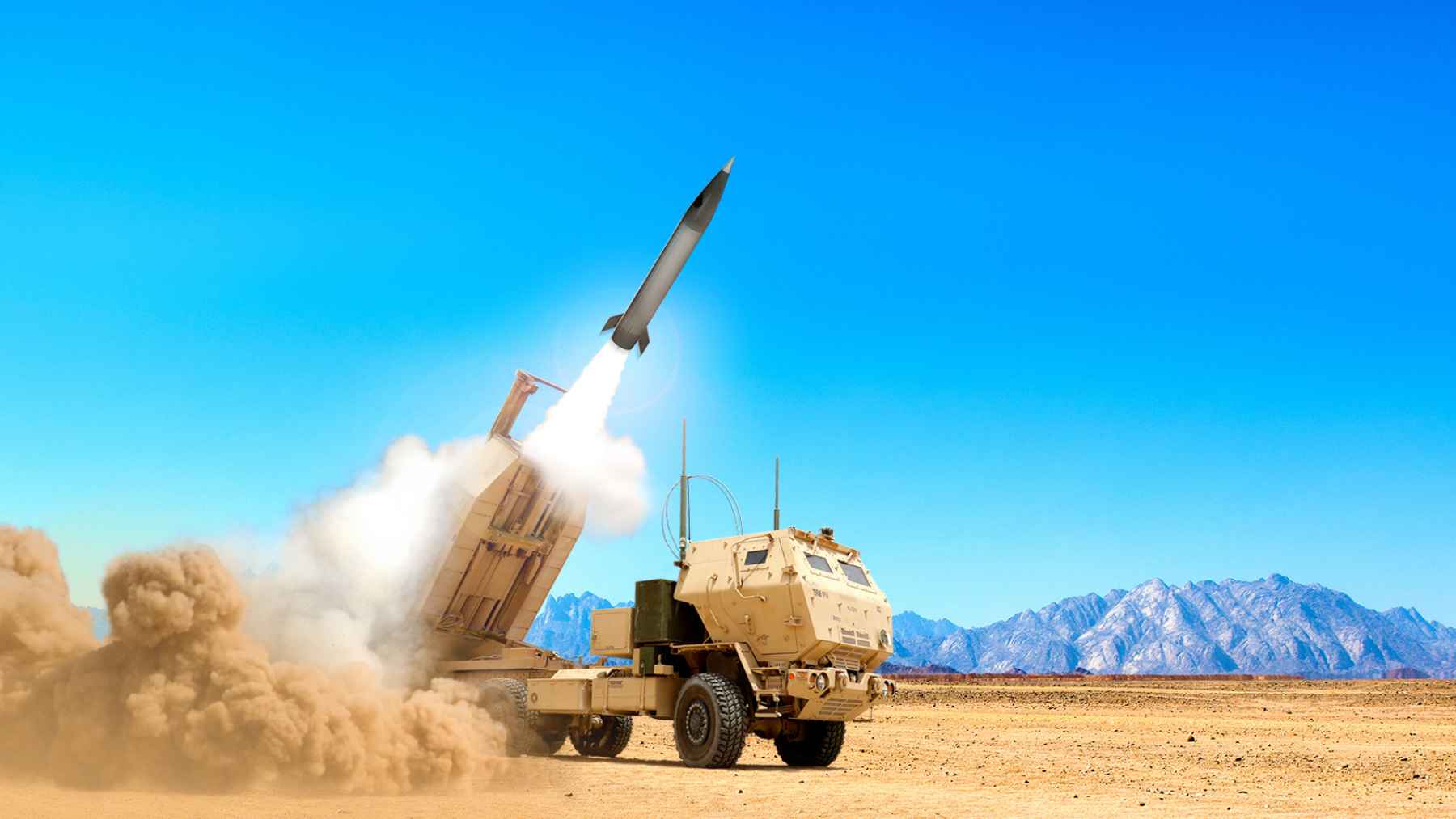
Lockheed Martin says it has completed the first integrated live-fire and vertical-launch test of an AGM-114 Hellfire missile from its new containerized launcher called Grizzly, designed to fit inside a 10-foot “Tricon” cargo container.
In plain terms, the company is turning a small shipping box into a missile launcher that can be moved like everyday freight. What happens when a missile battery can blend in with ordinary cargo?
That matters because the U.S. Navy is pushing modular payloads that can be placed on existing ships and, potentially, unmanned vessels without years of redesign. If containerized weapons keep proving themselves, the disruptive change may be about logistics and speed, not just raw firepower.
A missile launcher that looks like freight
Lockheed says Grizzly demonstrated it could load and launch a missile from a 10-foot container, including a vertical launch that met required trajectory parameters. Defense News reported the vertical-launch test took place at Yakima Training Center in Washington state.
The company says the launcher was built in about six months using “proven weapon and launcher architectures,” including the fielded M299 launcher system, while leaning on commercial off-the-shelf materials to cut cost and logistics footprint.
Lockheed also describes Grizzly as “command and control and sensor agnostic,” meaning it is intended to plug into different networks and sensors rather than being tied to a single platform.
Randy Crites, Lockheed Martin’s vice president for Advanced Programs, said the first live-fire tests came “just six months” after research and development began. Lockheed says it will keep working with the U.S. government as development continues.

Why containers are suddenly strategic
You have seen containers everywhere, stacked at ports, bouncing on railcars, or rumbling down the interstate. Lockheed says Grizzly can be lifted and transported with commercial freight equipment, including trucks, aircraft, and ships.
On the battlefield, the bigger draw is discretion and dispersion. The War Zone noted that a containerized launcher can “hide in plain sight” among other containers, creating targeting dilemmas when an opponent cannot easily tell what is cargo and what is capability.
It is not invisibility, but it can complicate planning, and sometimes uncertainty is the point.
There is also a defense logic that feels increasingly practical. A launcher that can be scattered, relocated, and operated remotely is attractive in an era when drones are cheap and attacks can come from unexpected directions.
Hellfire goes off-platform
Hellfire is not a niche weapon, which is part of why this test matters. Defense News notes it is used by the U.S. Army, the U.S. Navy, and international partners across more than 15 platforms spanning air, land, and sea roles.
It is also a family, not a single configuration. Many variants use semi-active laser guidance, while U.S. government descriptions of the Longbow Hellfire highlight a radar-guided, fire-and-forget option designed for poor weather and battlefield obscurants.
A 2023 Federal Register arms sales notice describes the M299 as a four-rail launcher for Hellfire, and Lockheed says Grizzly uses the fielded M299 architecture. Defense News adds that Grizzly incorporates M299 design elements and can also be used to launch the Joint Air-to-Ground Missile, a follow-on munition derived from the Hellfire line.
The Navy is building a modular ecosystem
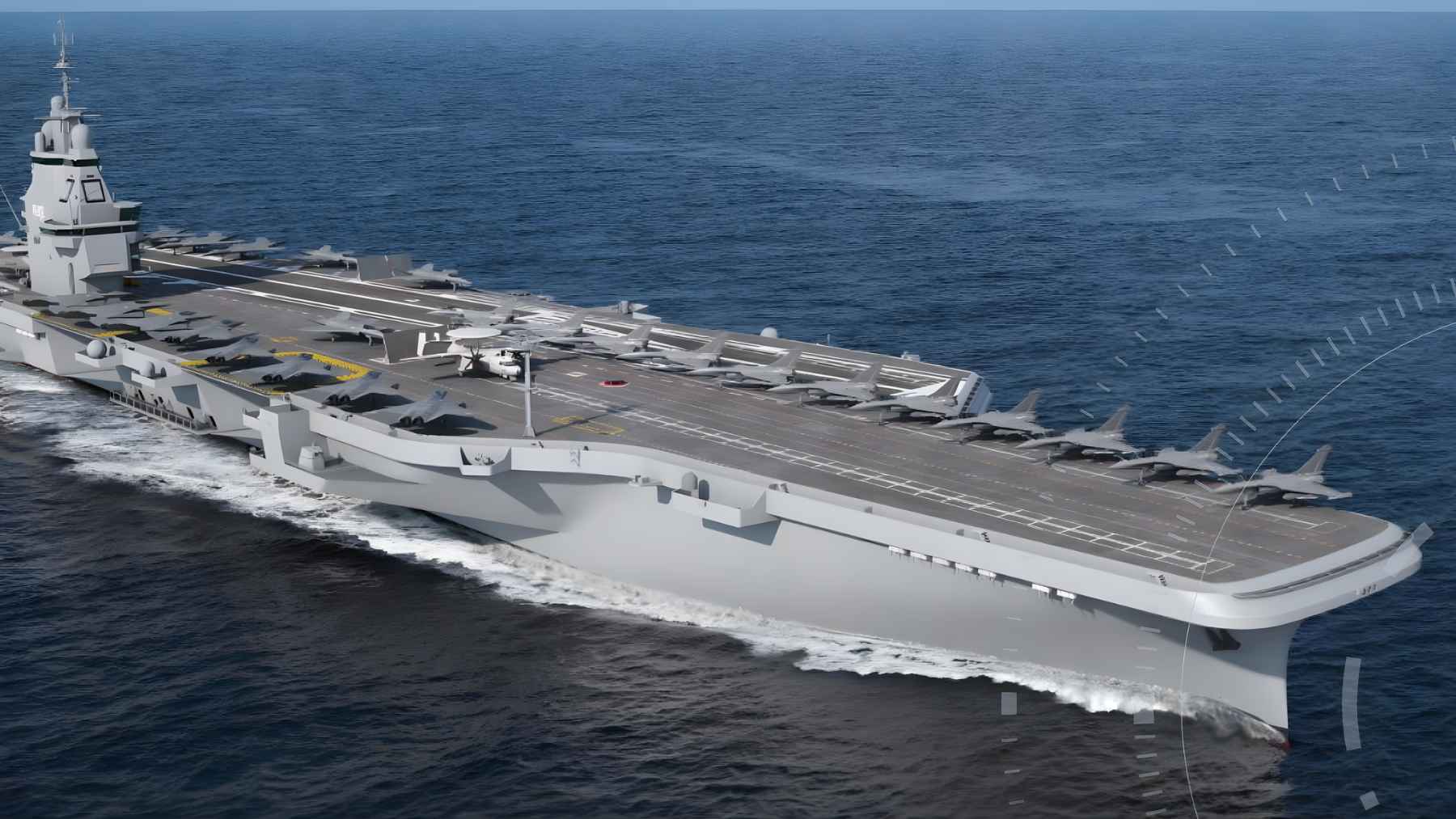
In late March, DefenseScoop reported that Chief of Naval Operations Adm. Daryl Caudle announced a “containerized capability campaign plan” aimed at deploying modular, containerized weapons and payloads on existing ships without long and expensive overhauls.
Caudle said he sees no reason a ship cannot carry modular containers loaded with different capabilities.
He also stressed that the concept only works if the engineering is real, with standardized interfaces to combat and communication systems. Caudle delivered the line industry will remember, saying, “I want to containerize everything.”
USNI News reported a parallel acquisition move. The Navy canceled its Modular Attack Surface Craft effort and is shifting toward a recurring “marketplace” approach for medium unmanned surface vessels, explicitly aligning it with the CNO’s containerized plan and rapid payload deployment.
The earlier concept called for a vessel that could carry up to two 40-foot containers and sail up to 2,500 nautical miles (about 2,877 miles) at 25 knots (about 29 mph).
The business upside comes with real questions
For defense contractors, the storyline is speed and who pays for it. Lockheed says Grizzly moved from research and development to live-fire testing in about six months using internal investment, while Navy leaders are signaling they want mature systems and faster fielding.
USNI News quoted Navy acquisition leadership saying “industry is putting the money in for development,” and the service wants to capitalize on that investment. But there is an uncomfortable flip side to “looks like freight,” especially in crowded ports and busy shipping lanes.
The War Zone explicitly flagged the targeting dilemmas and uncertainty that can come with launchers “intermixed with regular containers.” Caudle’s own questions about interfaces show why this is not just a hardware problem, since the hard part is linking sensors, command and control, power, and cybersecurity in a way that holds up under stress.
What to watch next
The next milestone is repeatability, not novelty. Can Grizzly be networked with multiple sensors, fired under different conditions, and reloaded in a way that makes sense for deployed units, not just a test range?
On the Navy side, the procurement mechanics will show whether containerization becomes a fielded capability or just a theme.
USNI News reports industry responses for the new unmanned vessel marketplace are due April 17, and the Navy wants on-water testing completed by the end of Fiscal Year 2026, with delivery of a first production vessel in Fiscal Year 2027.
For now, the key takeaway is simple. A steel box that blends into the supply chain is becoming a serious part of military design, and it could reshape both deterrence and logistics faster than many people expect.
The press release was published on Lockheed Martin.