The Strait of Hormuz is one of those places most people never think about until the price at the pump jumps overnight. In early 2026, it became the center of a widening U.S., Israel, and Iran conflict and a real-world stress test for global energy security.
Even with a two-week ceasefire announced on April 8 that is supposed to ease Iran’s blockade, the damage done in March is already revealing something blunt. Geography, plus a few key pipelines, can decide which oil states get a windfall and which ones watch revenues collapse.
A chokepoint that still sets the global price
Hormuz typically handles about one-fifth of global oil trade, and when traffic slowed to a near standstill, the shock did not stay “regional” for long. The International Energy Agency said flows through the strait plunged from around 20 million barrels per day before the war to “a trickle,” with limited bypass capacity and storage filling up.
That is how you get a month like March, when Brent crude surged 60%, the biggest monthly jump on record in Reuters’ analysis. Then, on April 8, ceasefire headlines helped knock Brent down sharply, but traders are still pricing the risk that ships and crews could get trapped again if fighting restarts.
For regular people, this is where the abstract becomes painfully practical. The IEA also warned the conflict is disrupting refined products and LPG flows, with knock-on effects like flight cancellations and fuel stress in supply chains that can show up as higher travel costs and pricier deliveries.
Winners and losers are decided before the tanker leaves port
A Reuters analysis of March export data found that Iraq and Kuwait’s estimated oil export revenues plunged by about three-quarters from a year earlier. Meanwhile, Iran’s revenues rose 37%, Oman’s rose 26%, and Saudi Arabia’s rose 4.3%, even as the UAE dipped 2.6%.
Those estimates were built using export volumes from ship-tracking firm Kpler and JODI data where available, multiplied by average Brent prices, then compared with a year earlier. Reuters noted Brent was used for simplicity, even though several regional crudes can price off other benchmarks that were trading at big premiums.
The pattern is hard to miss. Countries that can bypass Hormuz through pipelines and alternative ports can keep selling some barrels into a high-price environment, while those without alternate routes see volumes stranded and budgets squeezed.
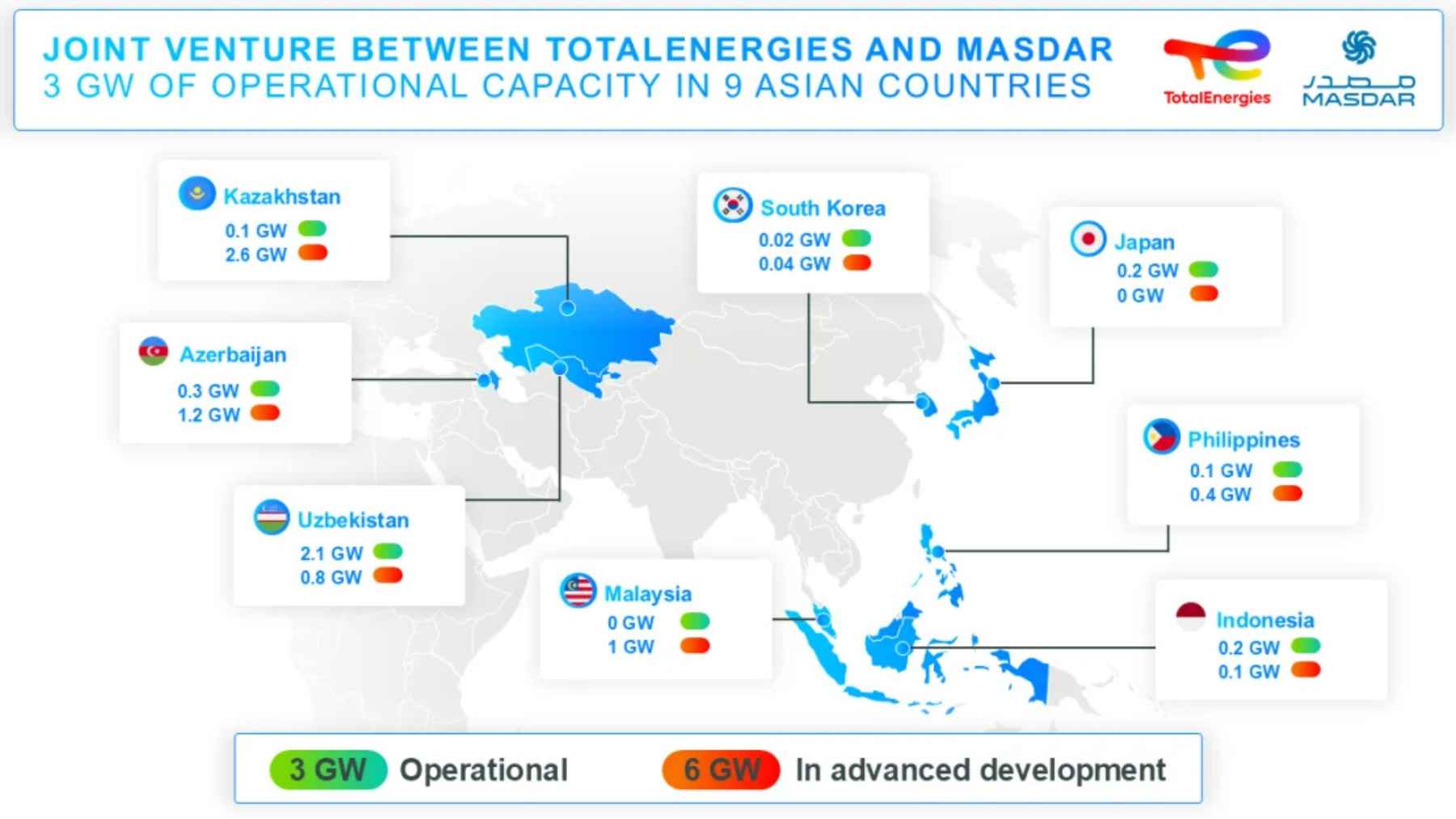
A map outlines TotalEnergies and Masdar’s joint renewable energy portfolio across Asia, including operational capacity and projects in development.
Saudi Arabia’s East-West pipeline is doing the job it was built for
Saudi Arabia’s biggest escape hatch is the East-West pipeline, built during the Iran-Iraq War specifically to bypass Hormuz. Reuters said it is operating at an expanded capacity of 7 million barrels per day, moving crude from eastern fields to the Red Sea port of Yanbu.
In practical terms, that means Saudi Arabia can still load tankers outside the Gulf, even while the region is on edge. Reuters reported Yanbu loadings averaged about 4.6 million barrels per day in the week starting March 23, close to capacity, despite attacks targeting the hub on March 19.
The protection is real, but it is not a force field. A Chatham House analyst warned Saudi infrastructure in the west, plus shipping through the Bab el-Mandeb route into the Red Sea, could remain vulnerable to further strikes by Iran or allied groups such as the Houthis.
The UAE can bypass Hormuz, but it cannot bypass the battlefield
The UAE has its own workaround, the Habshan to Fujairah pipeline, which bypasses the strait. The idea is straightforward: get crude to a port on the Gulf of Oman so exports do not depend on a single narrow waterway.
But the March numbers show how messy reality can be. Reuters estimated the UAE’s oil export value still fell by more than $174 million year-over-year in March, and it reported that Fujairah came under a series of attacks that led to loading halts.
Even when a route exists on a map, ships still need to show up, and insurers still need to sign off. Reuters also reported that roughly 200 tankers were holding about 130 million barrels of crude and 46 million barrels of refined fuels in the region during the disruption, plus about 1.3 million metric tons of LNG (around 1.4 million tons) stuck on vessels awaiting safe passage.
Iraq and Kuwait are learning what a stranded barrel costs
If Saudi Arabia and the UAE had partial escape routes, Iraq and Kuwait had far fewer options. Reuters estimated Iraq’s revenue plunged 76% to $1.73 billion in March, with Kuwait down 73% to $864 million.
Iraq’s state oil marketer SOMO said on April 2 that March oil revenues were about $2 billion, close to Reuters’ estimate. That alignment matters, because it suggests the hit is not just theoretical modeling, it is being felt in official revenue lines.
And the next data point could look worse. Reuters said March revenues were helped by cargoes that sailed in the early days of the conflict, and it warned both Iraq and Kuwait could suffer steeper declines in April if export constraints persist.
A crisis that is rewriting energy strategy in real time
There is also a bigger, longer-term question lurking behind the daily oil chart. “Now that Hormuz has been closed, it can be closed again and again, ”Chatham House’s Neil Quilliam said, calling it a major threat to the global economy and warning “the genie is out of the bottle.”
Financially, Gulf governments do have shock absorbers, at least for now. Morningstar DBRS’s Adriana Alvarado said most Gulf states can draw on fiscal savings or issue debt, with government debt levels “below 45% of GDP” for most, excluding Bahrain.
Still, companies and governments are already reacting in two directions at once, and that is the tell. Reuters reported that some Western oil executives and politicians are pushing for more fossil fuel investment to protect against supply shocks, while others argue renewables offer the best protection.
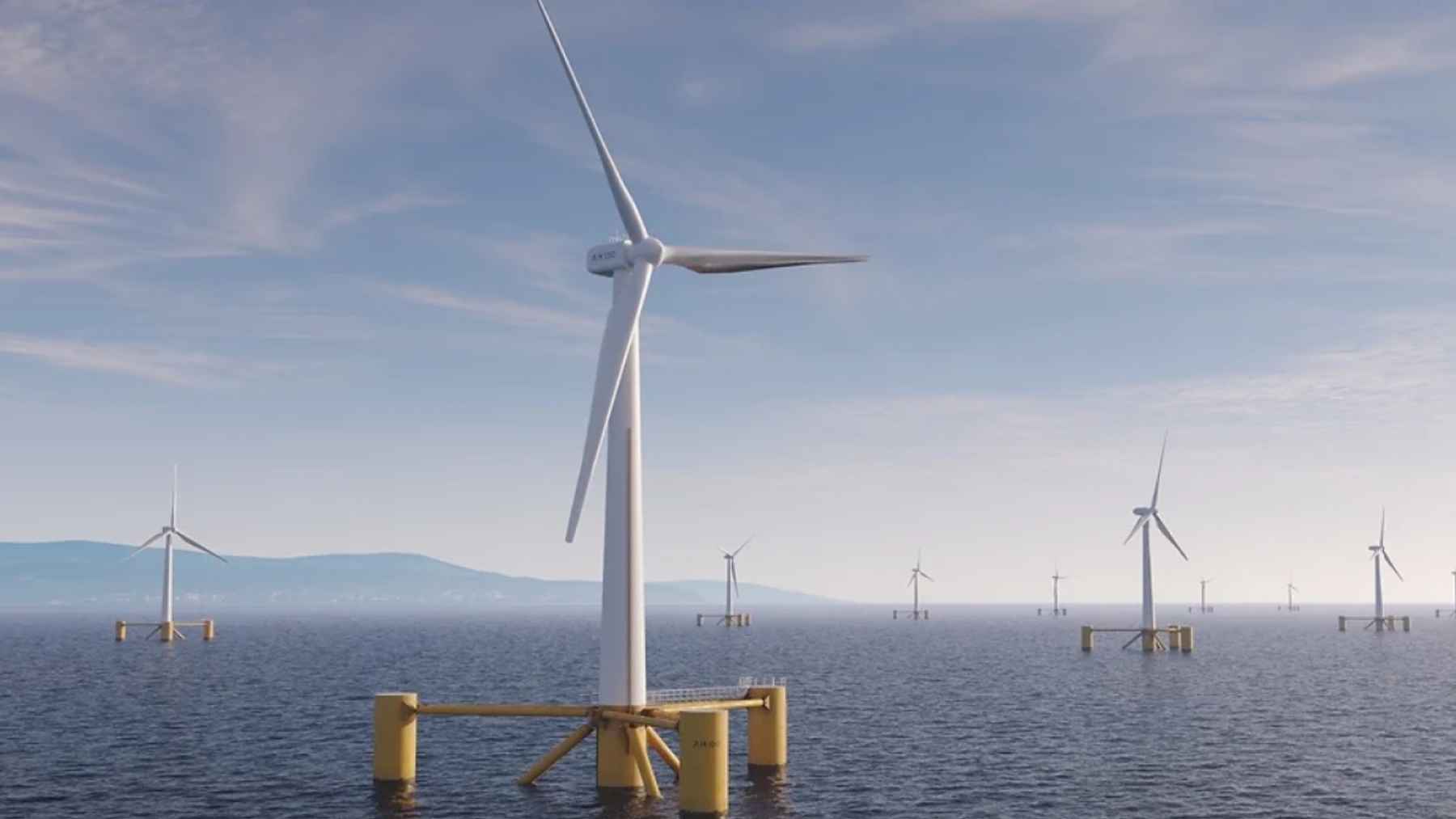
In that context, TotalEnergies and Masdar announced a $2.2 billion joint venture to accelerate renewables across nine Asian countries, including solar, wind, and battery storage projects, with 3 gigawatts operating and 6 gigawatts in advanced development expected online by 2030.
The press release was published on TotalEnergies.