China is touting a new air-breathing engine design that, if it holds up outside the lab, could reshape how future fighter jets and hypersonic missiles are built.
Researchers linked to the Chinese Academy of Sciences (CAS) say they have completed and experimentally verified a prototype “contra-rotary ramjet engine” designed to run continuously from a stationary start to speeds above Mach 6.
That headline matters less for the number itself and more for what it tries to avoid. The hardest part of high-speed propulsion is often the messy handoff between different engine modes – the moment when performance can dip and stability can wobble.
If China can truly remove that handoff, it changes the engineering math, but flight tests are the difference between a promising rig and a usable weapon system.
Why the engine matters
Hypersonic flight usually means speeds above Mach 5, which NASA describes as the point where the flow becomes “hypersonic” and the physics gets much more complicated. Typical hypersonic aircraft speeds are often described as above 3,000 mph, which is why designers obsess over heating, airflow control, and engine stability at the same time.
Mach numbers also hide a practical detail that engineers cannot ignore. Mach is a ratio to the speed of sound, and the speed of sound changes with altitude, which is why Mach 1 is often cited around 762 mph at sea level but closer to about 660 mph at typical cruising altitudes.
Still, Mach 6 gives a sense of the scale even with those caveats. At sea level, it is roughly 4,600 mph, fast enough that a small change in inlet performance or combustion stability can have outsize consequences.
What China says it built
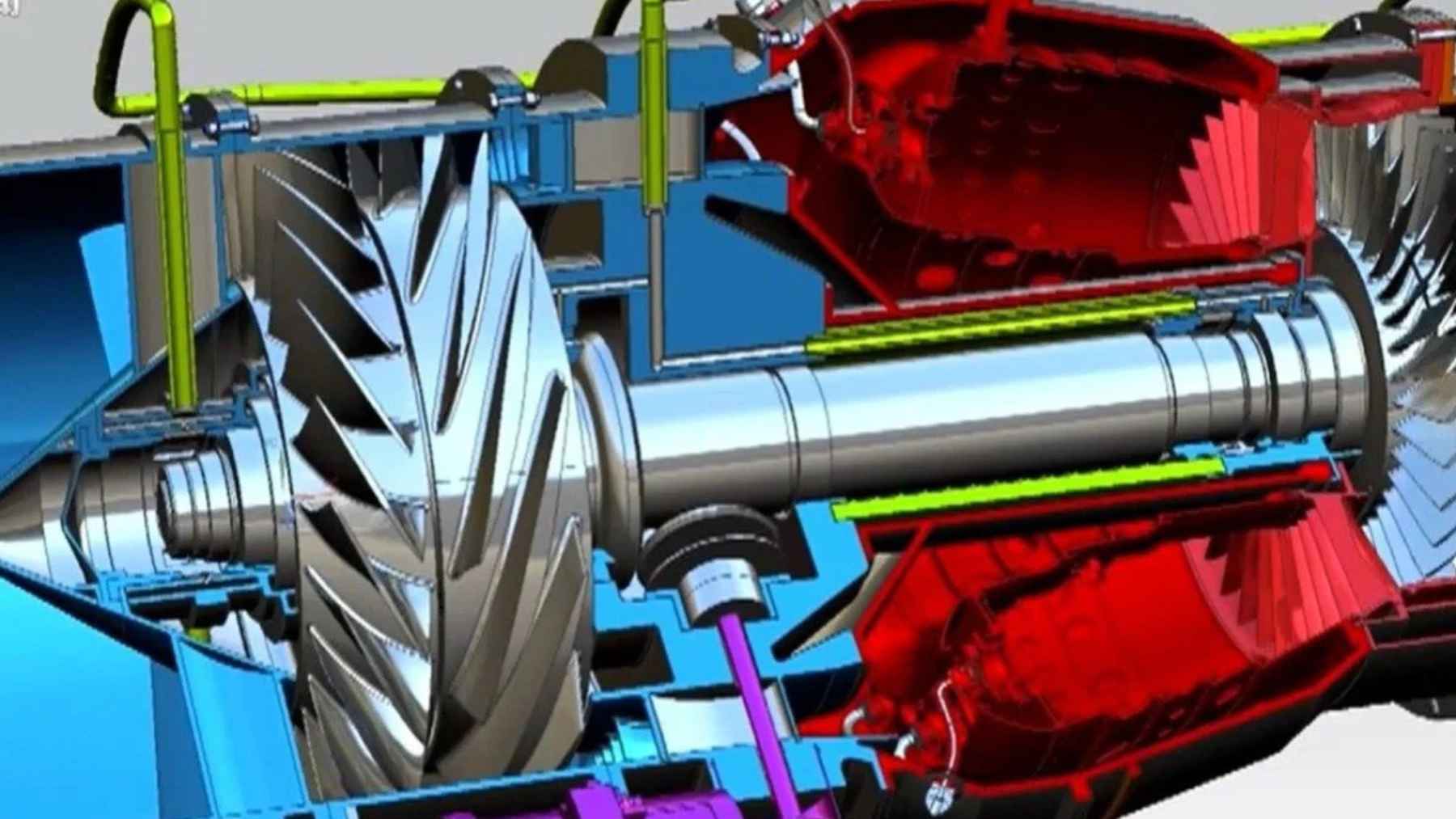
The design being discussed is not a new missile body or a new stealth shape, it is a new way to squeeze air across a huge speed range. In reports carried by outlets including the South China Morning Post and summarized by Interesting Engineering, the CAS-linked team led by Xu Jianzhong describes a compressor with two sets of blades rotating in opposite directions, one associated with higher pressure and the other with lower pressure.
The goal is to reduce centrifugal stress while keeping compression effective as the vehicle accelerates.
The more provocative part is how the concept treats shock waves. Instead of trying to eliminate shocks, the team says the engine is designed to harness them for compression, which can allow a more compact structure and remove certain internal guide vanes (the fixed blades that steer airflow between stages) that would otherwise add size and weight.
A CAS-hosted profile of Xu, originally published by China Science Daily, sketches out why the group took that bet. It notes that textbook engine designs tend to avoid shock waves around Mach 1 because they drive losses higher, but Xu argued that with a deep enough understanding you can strengthen and use shocks while working to cut those losses.
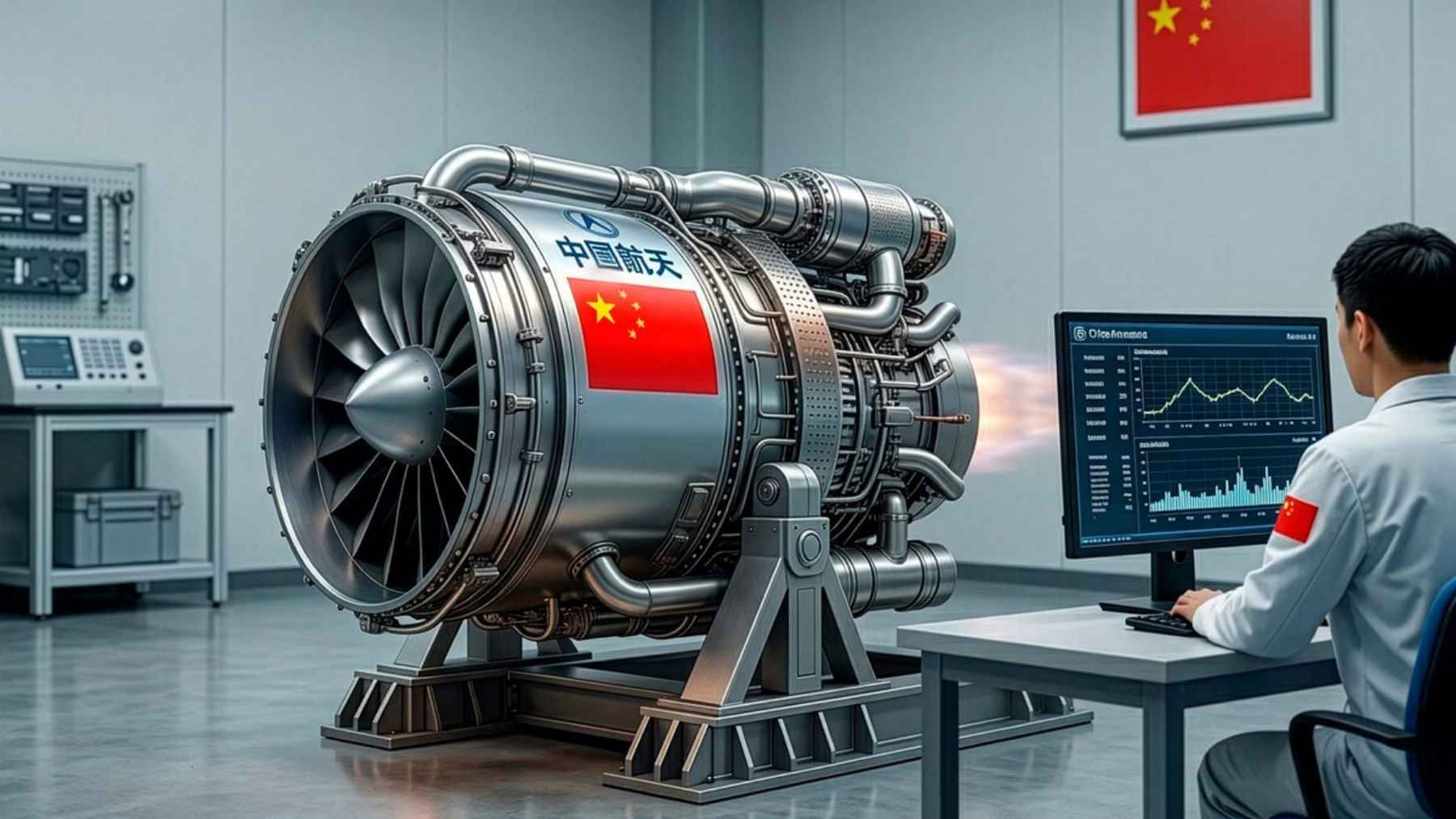
A researcher oversees testing of a next-generation air-breathing engine prototype aimed at seamless flight from takeoff to hypersonic speeds.
The real bottleneck is the handoff
Most wide-speed concepts solve the problem by stacking systems. A turbine engine is efficient for takeoff and lower supersonic speeds, while a ramjet works only once the vehicle is already moving fast enough for the incoming air to compress itself, which is why many designs talk about turbines up to around Mach 3 and ramjets beyond that.
But the handoff between those modes is a notorious trouble spot. A NASA overview of turbine-based combined-cycle propulsion calls out “mode transition” as one of the most critical enabling technologies, because the inlet, controls, and two flow paths have to stay stable while conditions change rapidly.
That is also where weight and complexity creep in. The China Science Daily profile describes the conventional approach as carrying two engines and living with one as “dead weight” when it is not operating, and it highlights mode conversion as a technical stumbling block in its own right.
What changes for jets and missiles
If a single air-breathing system could cover the whole run from takeoff to hypersonic speed, designers would get new tradeoffs. In practical terms, less propulsion mass and less plumbing can be traded for more fuel, more payload, or more thermal protection, and those are the currencies that decide range and maneuverability.
Reports discussing the concept explicitly frame those benefits as potential rather than proven, pending integration and flight testing.
On the other hand, hypersonic speed is not just about going faster. NASA notes that above Mach 5, some of the vehicle’s energy goes into exciting and breaking chemical bonds in the air, and the heated flow can behave very differently than at lower speeds, which means materials and thermal management stay front and center no matter what engine you pick.
There is also a business story hiding in the engineering. The CAS profile notes Xu pushed for hypersonic propulsion planning in the late 1990s, and it describes how the effort struggled for resources around 2000 when China’s per capita GDP was under $1,000, before institutional funding arrived in 2009 and the team built experimental platforms from scratch.
That kind of long-cycle investment is how a country buys options in defense technology, even when the payoff is uncertain.
What to watch next
The most important question is simple and uncomfortable. Can the engine keep stable airflow and stable combustion through the entire envelope in real flight, not just in controlled tests? The researchers’ reported next step is to adapt the design to actual aircraft or missile platforms and run flight tests that can confirm behavior outside the laboratory.
If those tests ever happen, the details will matter more than the headline.
NASA’s combined-cycle work shows the list of failure points that engineers worry about, including inlet “unstart” constraints (when intake airflow suddenly breaks down), distortion, bleed requirements, and operability margins during transition, which is another way of saying the devil lives in airflow management.
Until there is flight data, the safest takeaway is that China is trying to attack hypersonic propulsion where it hurts most: the transition and the “dead weight” it creates. Now comes the hard part.
The official report was published on the Chinese Academy of Sciences Scientist Spirit Network.