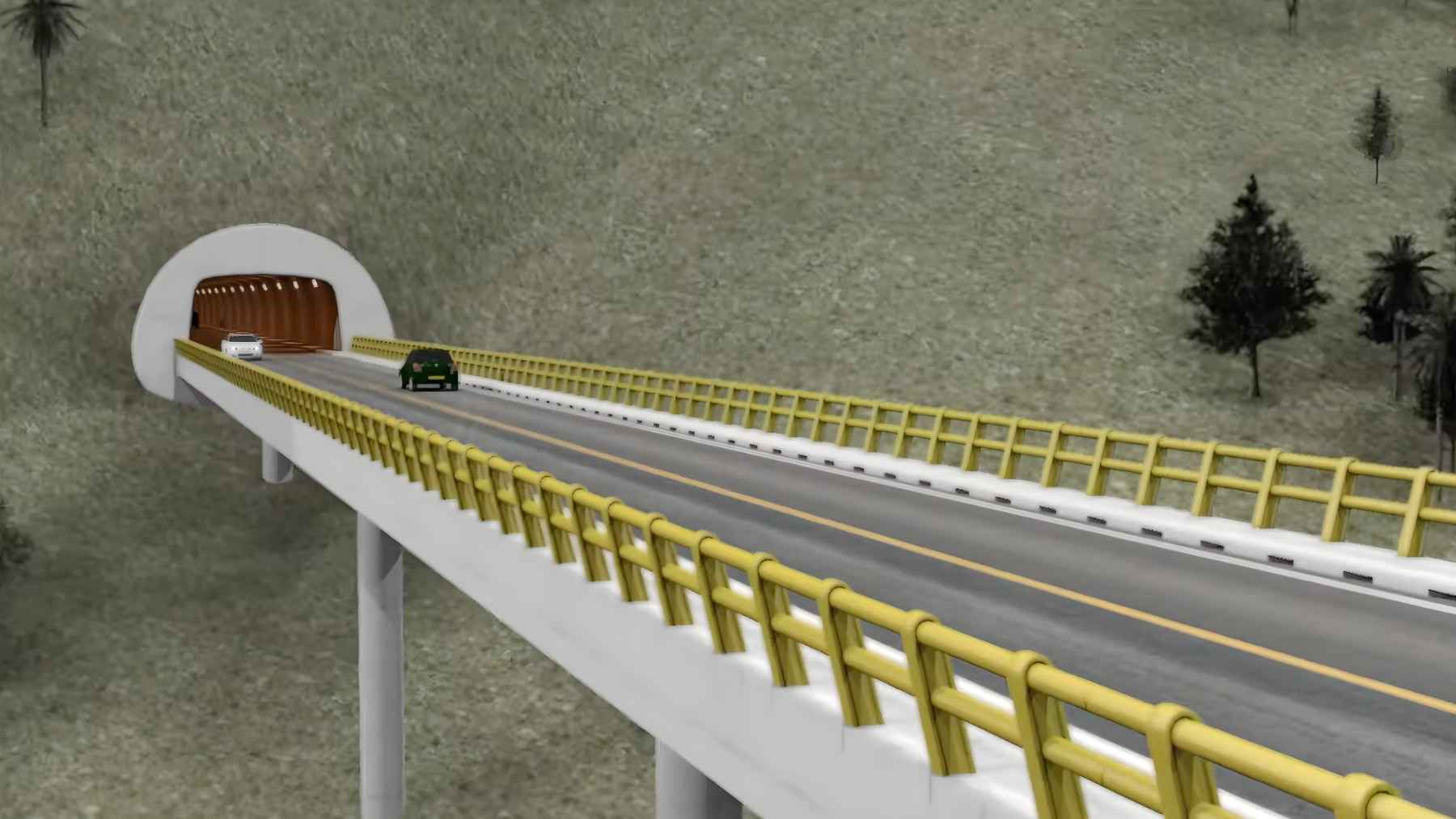
Antioquia is getting closer to switching on one of Colombia’s most closely watched transportation projects, the Toyo Tunnel, a 9.7-kilometer road tunnel (about 6.0 miles) that officials say is built to reshape the Medellín-to-Urabá run.
Local authorities describe Tramo 1 as finished and ready for the next stage, which is the installation of key systems like ventilation, fire protection, cameras, and signage.
It is also being framed as Latin America’s first “intelligent tunnel,” thanks to partially automated systems and advanced monitoring that promise fewer accidents and smoother traffic. But the more interesting question is simpler and more practical: will the “smart” layer actually hold up once freight, buses, and daily commuters start stacking up inside a mountain?
A corridor designed for the logistics economy
The tunnel is part of the Nueva Vía al Mar corridor, a package of new access roads, complementary tunnels, and bridges totaling roughly 37 to 39 kilometers (about 23 to 24 miles). The target top speed on the corridor is 80 km/h (about 50 mph), which is meant to reduce travel time between Medellín and Urabá and improve regional competitiveness.
That matters for more than tourism. Urabá sits in a strategic position for cargo and exports, and projects like this are increasingly treated as industrial policy in concrete form, similar to the way roads, tunnels, and bridges are being discussed as a growth engine elsewhere.
In day-to-day terms, it can mean fewer hours stuck behind trucks on winding roads and fewer costly delays that show up later in the supply chain. And yes, that eventually lands on real life, whether it is the price of goods or the time you lose sitting in traffic.
Inside the tunnel, safety is the product
The main bore, often referred to as Tunnel 17, is designed as a single carriageway about 8 meters wide (about 26 feet), with 1-meter sidewalks (about 3.3 feet). Plans include a parallel rescue gallery running nearly 10 kilometers (about 6.2 miles), with emergency connections every 200 meters (about 656 feet).
Those details are not just engineering trivia. They are about how quickly people can be evacuated, how responders can reach an incident, and whether a crash becomes a manageable disruption or a full closure with real economic consequences.
This is where “smart” claims start to become measurable. Sensors for ventilation, temperature, and gas detection aim to keep conditions stable, while cameras and traffic management tools are supposed to guide drivers and prevent pileups before they happen.
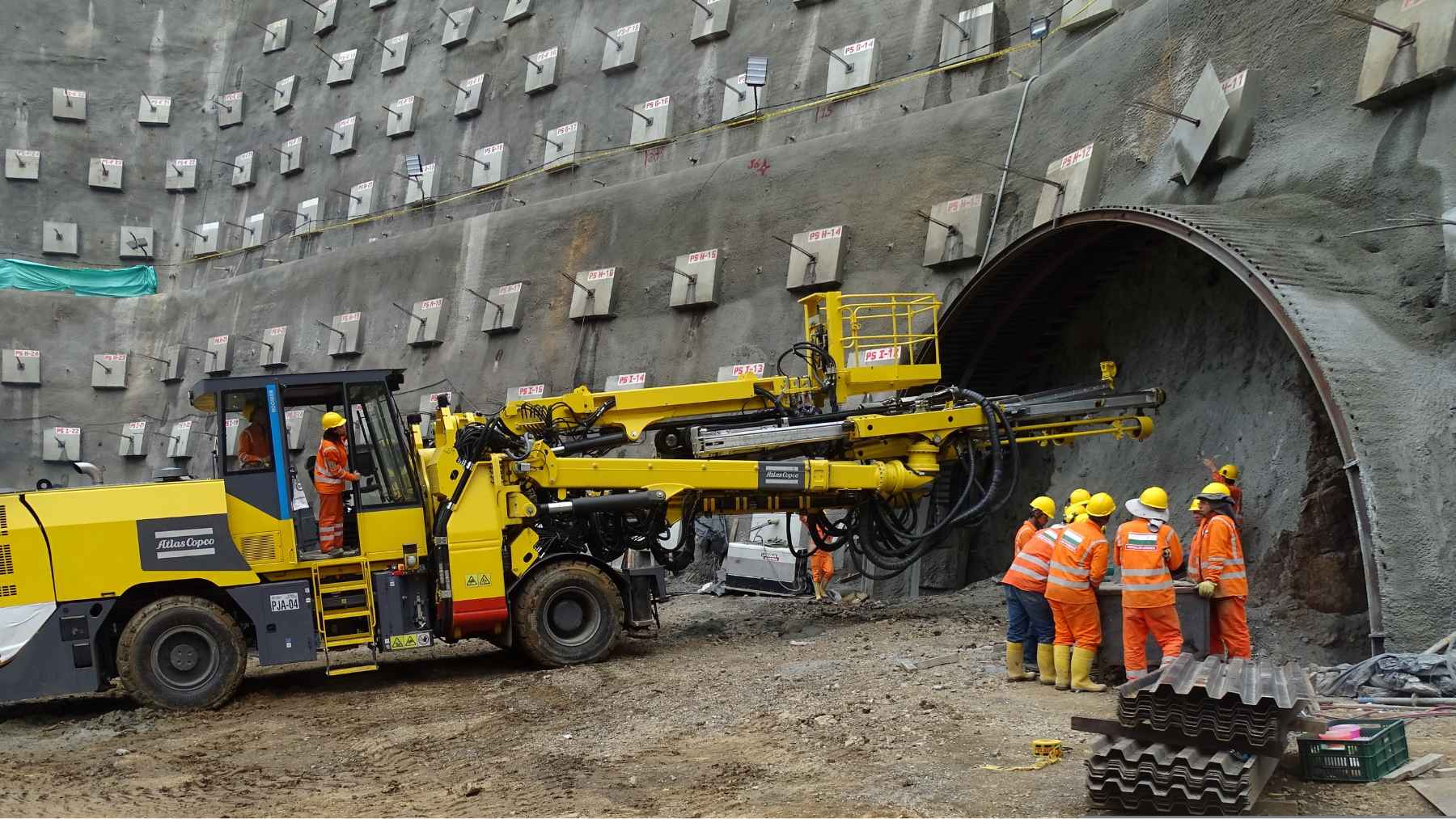
The Toyo Tunnel in Antioquia moves toward completion, combining advanced monitoring systems with critical transport infrastructure.
The “AI” story is real, but it is not autonomous
A lot of the attention is on the project’s use of partially automated systems, including tunnel boring machines that adjust pressure and speed based on rock conditions. That is typically tied to modern mechanized tunneling and the kind of TBM systems built by companies like Herrenknecht, one of the best-known German names in the sector.
But calling this autonomous AI would be misleading. For the most part, this is advanced automation plus continuous monitoring, where software supports human operators rather than replacing them.
That distinction matters because expectations shape accountability. When a control room is responsible, you can audit procedures, staffing, and response times. When “AI” becomes a marketing label, it gets harder to pin down who owns the risk when something goes wrong.
Funding is the pressure point, and overruns are not abstract
The project’s financing has been split across national and local institutions, and reported totals have climbed over time.
The initial investment was estimated at about 1.8 trillion Colombian pesos (roughly $450 million if you use a 4,000 COP to $1 rule of thumb), later rising above 2.7 trillion pesos (roughly $675 million), with additional cost needs also discussed at the regional level.
On the national side, official budget documentation has referenced the project under Invías, including adjustments tied to work execution and the “vigencias futuras” framework. One of the most direct official references is Documento DGPPN No. 103/2025, which sits within the CONFIS process and explicitly covers “Construcción Túnel del Toyo y vías de acceso.”
Why does this matter to readers outside Colombia? Because long megaprojects everywhere tend to collide with the same reality, which is that a tunnel is not “done” until it is equipped, tested, and operated for years. That is also why comparisons pop up with other high-profile public spending debates, including the scrutiny around Germany’s infrastructure fund.
Smart infrastructure also needs cyber resilience
When you wire a tunnel with cameras, sensors, automated ventilation, and centralized controls, you are not just building a road. You are building an operational technology environment, the kind that overlaps with what cybersecurity agencies classify as Industrial Control Systems.
That does not mean the Toyo Tunnel is uniquely vulnerable. It means the risk profile changes, because failures can be physical, digital, or both, and operators need procedures that assume outages, false alarms, and degraded modes will happen sooner or later.
The same logic applies to how agencies talk about risk in complex systems more broadly. Even when tools are described as “artificial intelligence,” the most practical frameworks focus on governance, testing, and accountability, such as the NIST AI Risk Management Framework.
What to watch before the first cars enter
Officials say major construction phases are advanced, and local reporting from authorities has pointed to Tramo 1 being complete while the installation of electromechanical systems becomes the gating item.
Public-sector updates have also framed the next steps around the equipment and operational readiness phase, which historically is where tunnels either become reliable infrastructure or long-running headaches.
The timeline language has often stayed cautious, with references to opening “in the coming years,” even as political and economic pressure pushes for faster delivery. In practice, the real milestone will not be an inauguration photo. It will be test results, safety drills, and whether the control systems actually work under peak conditions.
For readers following infrastructure as a business signal, it is worth watching what comes next along the corridor too. Big transport links tend to pull in adjacent investment, from industrial parks to distribution hubs, not unlike how a single logistics site can quickly reshape local planning, traffic, and labor demand.
The official statement was published on Gobernación de Antioquia.