If you ride a packed subway, squeeze through a busy airport line, or stand shoulder to shoulder at a concert, you have probably felt that modern, invisible worry. Your wallet is in your pocket, your card can “tap to pay,” and someone online swears a thief can read it without you noticing.
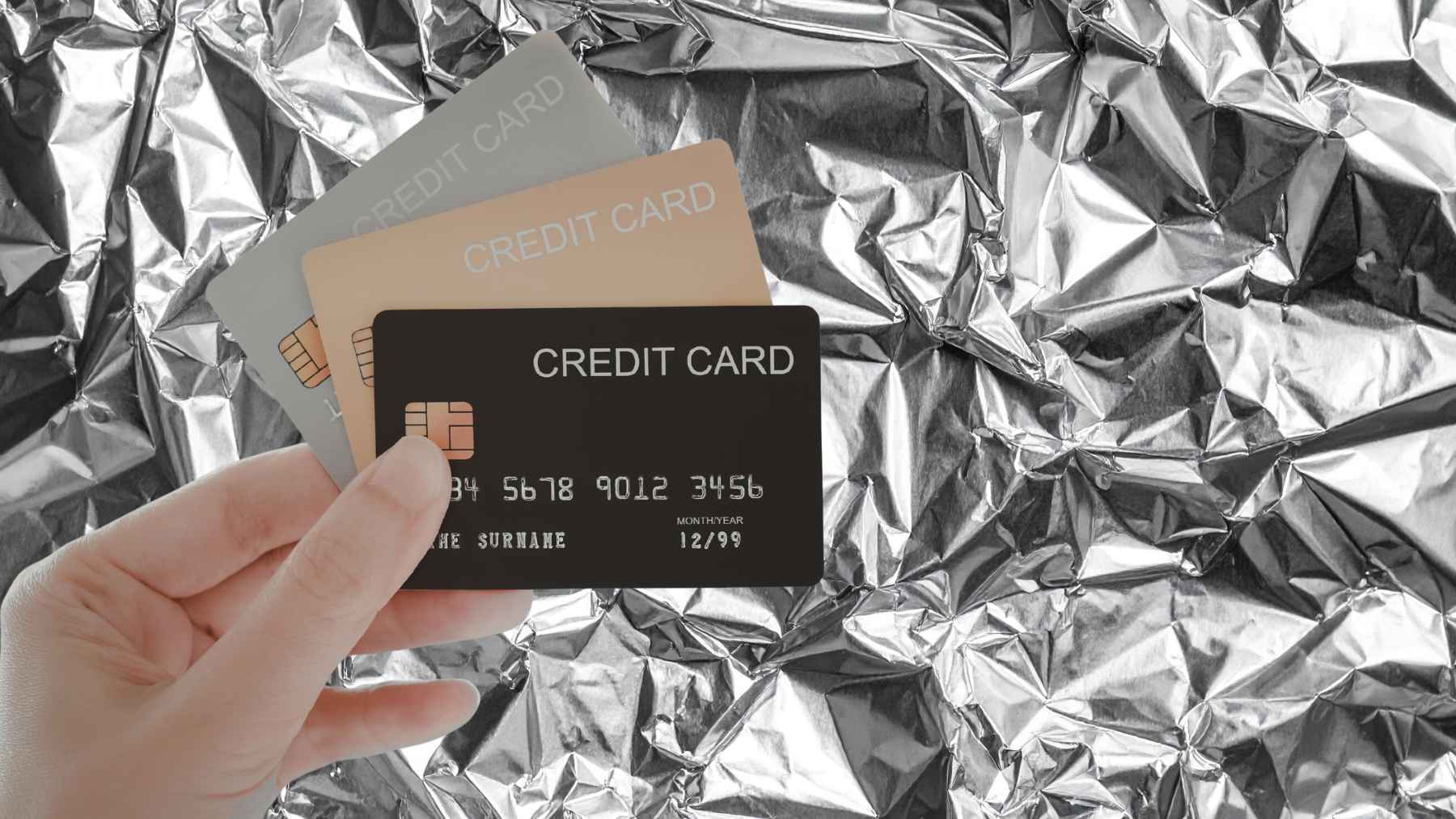
That fear is why a DIY tip keeps resurfacing. Wrap your credit and debit cards in aluminum foil to create a cheap “Faraday cage” that blocks the radio signal. The physics is real, but the real-world threat is more complicated, and that’s where the story gets interesting.
The physics behind the foil
A Faraday cage works because conductive material redirects incoming electromagnetic energy, creating opposing fields that reduce what gets through. In simple terms, the signal hits the metal, the metal responds, and the inside becomes a much quieter place for radio waves. That is the same basic shielding idea used to protect sensitive electronics from interference.
Contactless cards rely on radio-based short-range communication. NFC, the underlying technology used in many everyday contactless products, operates at a base frequency of 13.56 MHz and is built for very short distances. The NFC Forum describes a typical range up to about 2 centimeters, which is about 0.8 inches.
Payment networks also stress that “very short” range point. Visa says a contactless card generally needs to be within 1 to 2 inches of the terminal to initiate a payment, which is still close enough that you usually feel the tap happening.
What contactless cards actually transmit
Here is the part most viral posts skip. Modern chip payments are designed so a copied transaction is not easily replayed, because the card generates a one-time security code for each transaction. EMVCo describes this as a one-time “cryptogram” that is unique per transaction and cannot be reused.
Visa also says a contactless interaction can transmit information like the account number, expiration date, and a one-time code that changes for every in-person transaction. The point is not that “nothing” is transmitted, but that what matters for a real purchase is protected by transaction-specific security.
Mastercard makes a similar claim in plain language, saying each contactless transaction is encrypted by a unique, dynamic cryptogram. That is one reason tap-to-pay has become the default at so many checkout counters.
How real is “wireless skimming” in public?
Could someone build or buy a reader and try to interact with a card through a purse or jacket pocket? In theory, yes, because the communication is radio-based and the range is short rather than nonexistent. That said, a gap remains between “possible in a demo” and “common in the wild.”
AARP, citing experts who track fraud and identity theft, says RFID scanning scams are “largely unheard of,” and quotes Identity Theft Resource Center COO James E. Lee saying, “We do not believe this topic addresses a real risk.” That is a strong reminder that the internet’s loudest fears are not always the biggest day-to-day problem.
Meanwhile, the FBI points to a very real, very costly fraud category that has nothing to do with radio waves. Skimming devices installed on ATMs, point-of-sale terminals, and fuel pumps are estimated to cost consumers and financial institutions more than $1 billion each year. If you want a “most likely” threat model, that is a good place to start.
If you try the foil trick, details matter
If you still want the extra layer, foil can be a practical test. The simplest proof is your own checkout terminal. If you try to tap with the card wrapped and it does not register, the foil is doing its job of disrupting the RF field.
Coverage is the big variable. A partial wrap can leave enough exposed area for coupling to happen, especially if you press the card close to a reader. You do not need to turn your wallet into a brick, but you do want full coverage on both faces and along the edges for more consistent blocking.
Also, do not crush the card. Payment cards are thin plastic with an embedded chip and antenna, and daily mechanical stress is what tends to kill them over time, not some mysterious “signal damage.” When the foil tears or wears through from pocket friction, replace it.
What protects you better than foil
For most people, the best defense is still boring. Turn on real-time transaction alerts, review statements regularly, and act fast if something looks off. That advice shows up in consumer guidance for a reason, and it works whether the fraud comes from a hacked website, a compromised terminal, or a stolen wallet.
It also helps to lean into systems designed to limit exposure. Visa says contactless skimming is “very unlikely and limited in scope” because transactions generate a one-time, transaction-specific code and run through network fraud protections. That does not mean “impossible,” but it does mean the security model is not the same as the old magnetic stripe era.
And if you use a mobile wallet, you get additional layers that are easier to live with than kitchen foil. Apple says Apple Pay uses a device-specific Device Account Number and a transaction-specific dynamic security code, and it does not send your actual payment card number to the merchant terminal.
In practical terms, that is a cleaner solution for people who want both convenience and tighter data handling.
Why this small “hack” matters for business and tech
The foil trend is not really about aluminum. It is a signal that trust is still catching up to technology. Retailers and banks want faster lines, fewer chip insertions, and more “tap-and-go” payments, but a slice of consumers still feels like the system is doing something invisible to them.
That perception gap has a cost. It drives people toward DIY workarounds, sometimes toward expensive “RFID-blocking” accessories they may not need, and sometimes toward skipping contactless altogether. When millions of payments ride on user confidence, even small misconceptions can shape behavior.
So yes, the foil trick can block the radio link. But the bigger takeaway is simpler: understand what risk you are actually addressing, then pick a defense that matches your real life, whether that is the daily coffee run, the crowded train commute, or the gas station pump at midnight.
The official security overview was published on Apple Support.