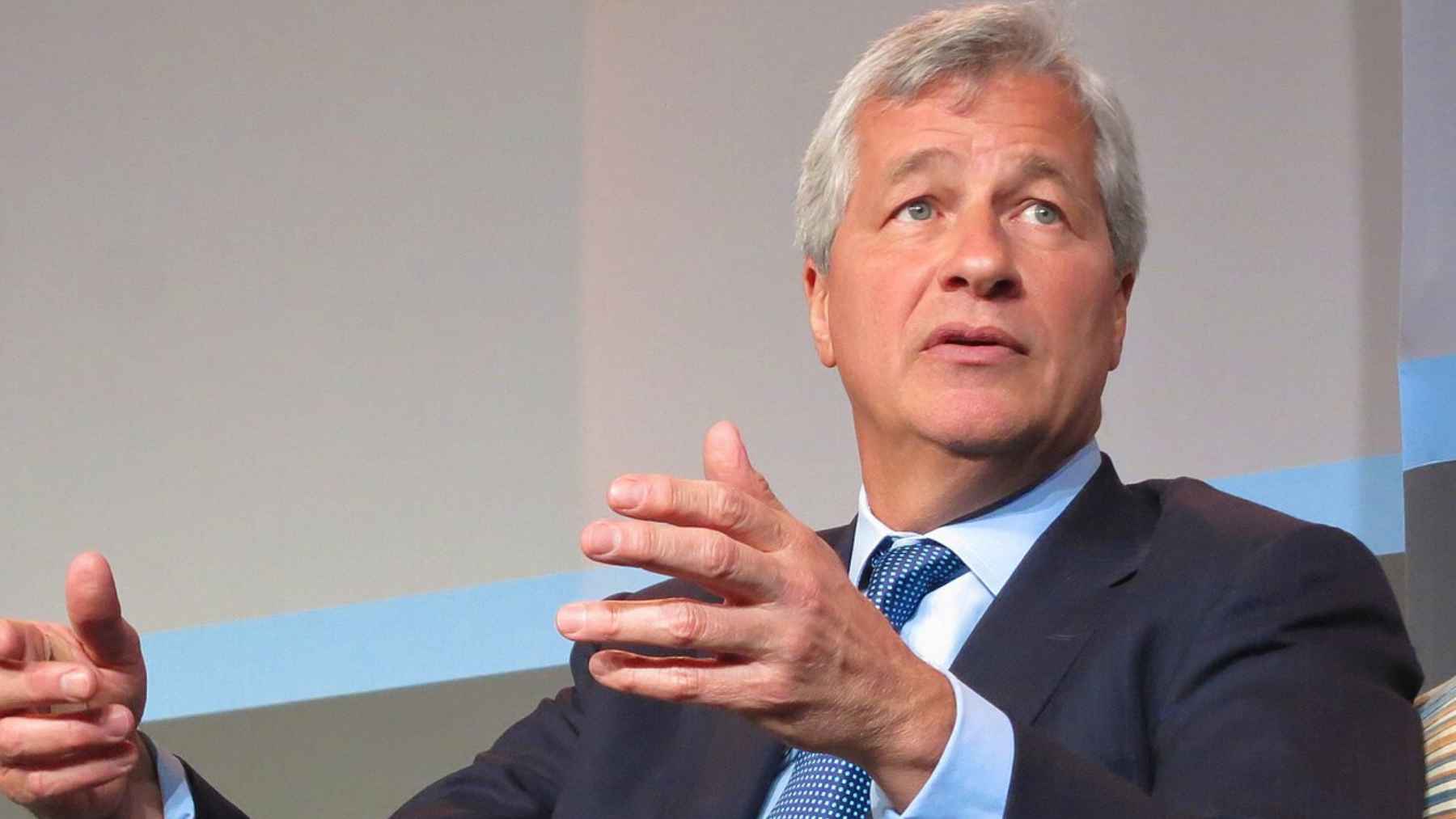
Jamie Dimon has been running JPMorgan Chase for two decades, through recessions, so when he talks about work, people listen. On Tuesday, March 24, he used a Hill and Valley Forum session that brought together leaders from Washington and Silicon Valley to argue that remote work is not just inefficient – it changes behavior in ways that can hurt careers.
His bottom line was simple for anyone early in their career. “Get into the office,” he said, framing in-person work as the fastest route to learn, earn trust, and move up. But is this really about the commute, or about how companies transfer skills before AI reshapes roles?
Dimon’s warning goes beyond convenience
Dimon said he gives his “full friggin’ attention” in meetings, and he implied many remote meetings do not get the same focus.
He added that “a lot of people aren’t paying attention at all” and are on their phones during video calls. “We’re not in business so my employee’s happy,” he said, adding he wants workers happy but “not at the expense of the customer.”
For younger workers, he framed the office as an apprenticeship. “They learn by going on a sales call” and by watching how experienced managers handle mistakes, he said, adding that remote work does not help build emotional intelligence in the same way.
He also took a swing at the tools themselves. Video calls, which he compared to “Hollywood Squares,” allow fewer real-time checkups and he argued that creates more “rope-a-dope type of politics” with less follow-up. JPMorgan’s own five-day in-office policy sparked a petition signed by more than 1,200 employees, and Dimon later told staff, “Don’t waste time on it.”
What productivity research actually shows
The push for five days in the office often leans on one assumption, that remote work is a drag on output. A 2024 U.S. Bureau of Labor Statistics analysis complicates that, finding a statistically significant positive relationship across 61 industries between the pandemic-era rise in remote work and total factor productivity growth.
In the output-weighted relationship, the BLS found that a one percentage point increase in the share of remote workers was associated with a 0.08 percentage point increase in total factor productivity growth. The same notice linked higher remote shares with slower growth in several unit input costs, including office building costs.
That is not a victory lap for work from home, because correlation is not causation and the pandemic reshuffled demand across the economy. But it does suggest that blanket mandates are not backed by a single, clean productivity story.
Engagement is higher remotely, but the stress is real
Gallup’s State of the Global Workplace 2025 data shows fully remote workers report the highest engagement at 31%. Hybrid workers and on-site employees who could work remotely both came in at 23%, which undercuts the idea that the office automatically produces more commitment.
Yet Gallup’s own numbers also show remote work is not a wellness cheat code. Fully remote employees were less likely to be “thriving” overall in their lives at 36%, compared with 42% for hybrid and 425 for on-site remote-capable workers.
The same Gallup analysis notes fully remote workers are more likely to report stress, anger, sadness, and loneliness than some other groups, even while being more engaged. If you have ever closed your laptop after a day of back-to-back calls and realized you have not spoken to a human in hours, that contrast makes sense.
The generational tug-of-war
Dimon is telling younger workers that career growth happens in the room, not on the screen. Many of those workers are signaling they value flexibility enough to pay for it, at least in theory. In a LinkedIn survey, nearly 40% of Gen Z and millennial respondents said they would take a pay cut for more flexibility on where they work, compared with 32% across all generations.
This is not only about comfort or wearing sweatpants. Flexibility can mean fewer commuting costs and fewer hours lost to traffic, which is why some candidates treat it like real compensation. Fortune reported one example where a candidate accepted a £7,000 pay cut (about $9,300) for a fully remote role.
At the same time, younger workers are not rejecting offices across the board. The same reporting notes many still believe in-person time helps them build relationships and improves their odds of getting promoted, which is why hybrid schedules remain attractive.
The corporate herd is moving back inside
Dimon’s view is increasingly common among big-name leaders, especially in tech and finance. Amazon CEO Andy Jassy announced a five-day in-office expectation starting January 2, 2025, arguing it is easier to learn, collaborate, and stay connected to company culture when people are together.
Instagram chief Adam Mosseri followed with a five-day return for many U.S. employees with assigned desks starting February 2, 2026, saying the company is “more creative and collaborative” when people are together. According to Fortune, a Meta spokesperson confirmed the authenticity of the memo first reported by Business Insider.
Not everyone is buying the office-first logic. Kevin O’Leary, the Shark Tank investor and chairman of O’Leary Ventures, said he would “rather hire somebody who can execute and sit in their basement or in their backyard,” making the point that results can travel just fine over Wi-Fi.
AI is turning “where we work” into a skills race
Dimon has also been warning that society should prepare for AI-driven job displacement before it shows up as a crisis. At a JPMorgan event in February 2026, he said he is not predicting job losses will definitely happen, but “now’s the time to start thinking about what you do if it does.”
This is where his remote work argument gets sharper, because if AI tools take on more routine tasks, the remaining human work leans harder on judgment, client trust, and collaboration.
Those are skills many companies still teach by osmosis, which makes the office feel less like a habit and more like a training system, even if it is an expensive one. That is the bet.
For most workers, the near-term reality is probably neither full remote nor five days under fluorescent lights. The winners are likely to be organizations that define when in-person time is truly needed and then build better remote training and feedback for everything else.
The report was published on Gallup.