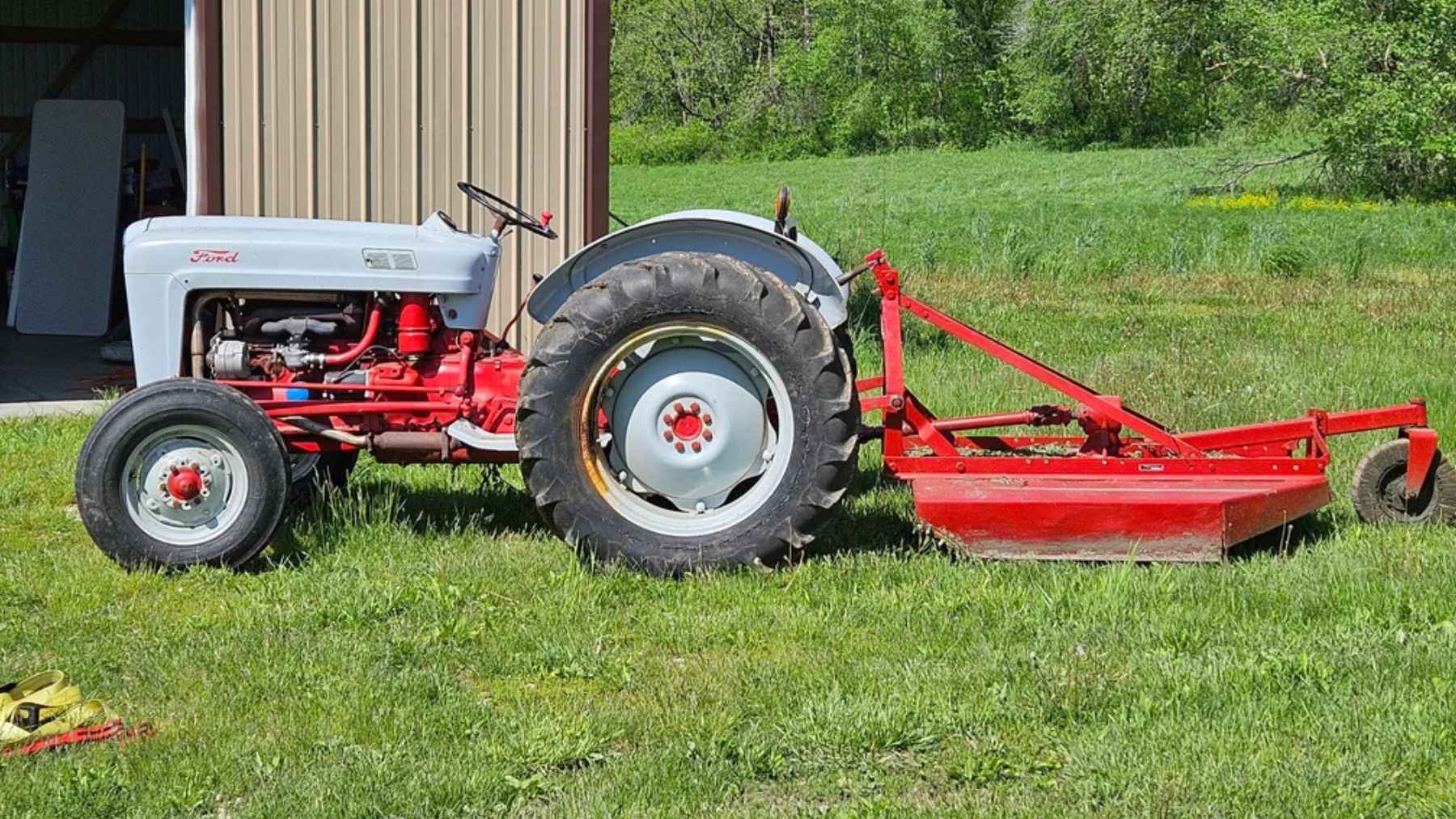
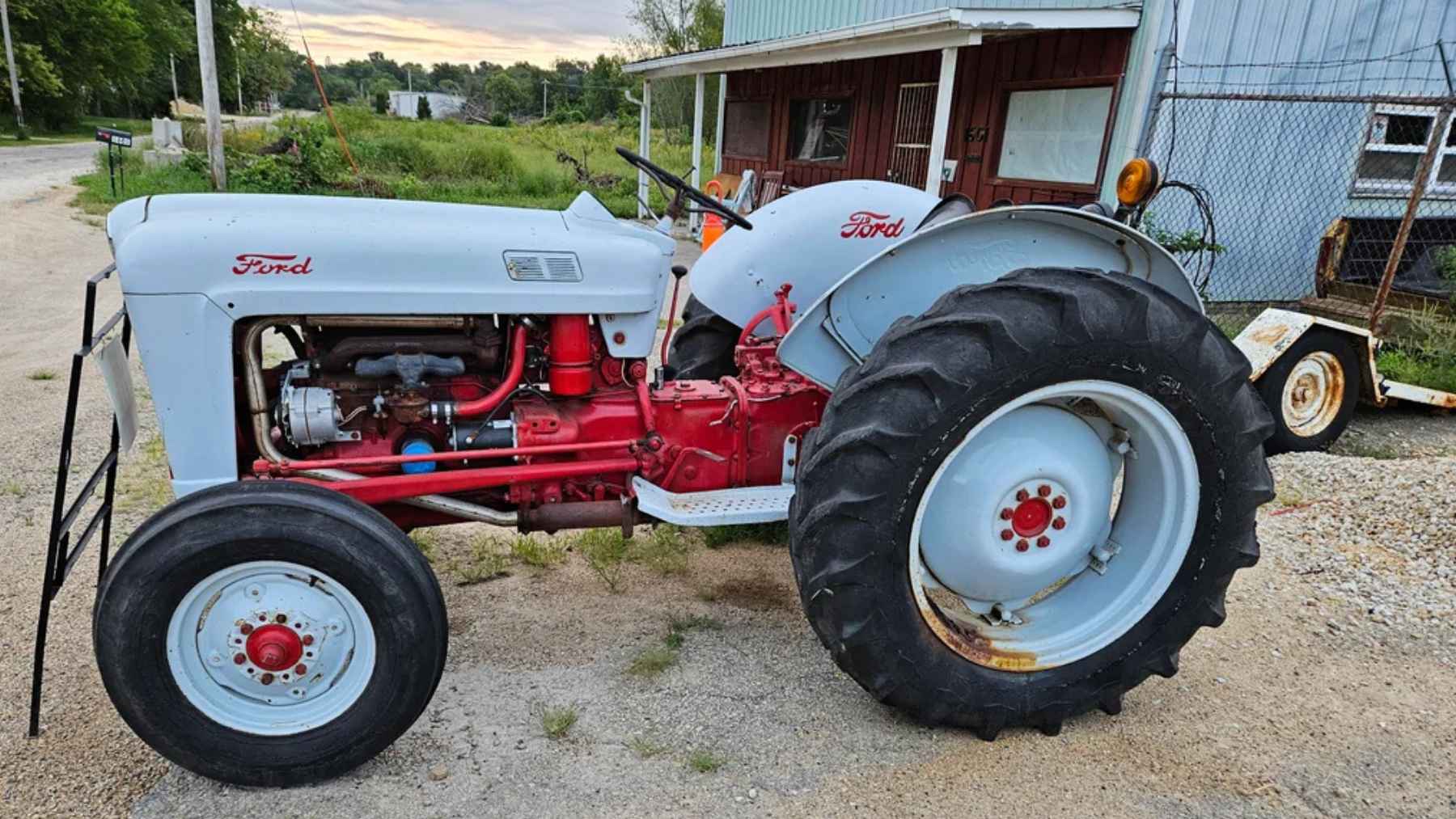
Dusti Snider’s restored 1957 Ford 640 looks sharp, with new lights, wiring, and fresh Ford red and gray paint. But he left one spot untouched – a small patch of bare steel on the right fender where his grandfather’s gloved hand wore through the paint after years cutting hay in Princeton, West Virginia.
It is a family detail, yet it lands in a very current business fight. In 2026, farmers face stubborn equipment costs and a widening debate over who gets the tools and software to fix machines they already own. What happens when a modern tractor throws a code right before planting?
A handprint that survived the paint job
Farm broadcaster Max Armstrong highlighted Snider’s tractor in a Farm Progress feature called “Max’s Tractor Shed.” Armstrong said most people want a family tractor “darn near perfect,” but Snider left a “flaw” on purpose and called attention to it.
The project started as a Christmas gift when Snider’s spouse gave him the parts needed for a rebuild. Over about five years, he replaced worn components, refreshed the electrical system, and repainted the tractor, then stopped short of covering the one mark that mattered.
To make the meaning unmistakable, Snider added a custom decal that frames the worn spot like a label on a keepsake. The sticker honors Otis G. “Poppy” Reed (April 13, 1919 to Feb. 2, 2002), and Snider told Armstrong, “I love this old tractor. And I really loved my grandfather.”
What the Ford 640 was built to do
Built in Highland Park, Michigan, the Ford 640 was a utility tractor in Ford’s 600 Series, produced from 1954 through 1957. Tractor references put it at roughly 30 horsepower on the belt, a sweet spot for the everyday jobs that helped farms mechanize fieldwork.
Under the hood, it used a 134-cubic-inch, four-cylinder gasoline engine, paired with a basic four-speed transmission. There is no mystery box of electronics here, which is one reason these machines remain popular with collectors and small operators alike.
TractorData lists an original price of $2,056 in 1957, which helps explain why families held onto them. When a machine cost real money and earned its keep, it often became part of the family story.
The modern math of keeping old iron running
Today’s price pressure is pushing more people to keep older equipment longer, whether they love vintage machinery or not. University of Illinois farm economists have noted that prices of new agricultural equipment rose by more than 20% between 2021 and 2023, lifting annual machinery costs on many farms.
The sales numbers suggest buyers are cautious. AEM’s U.S. retail sales figures show total farm tractor sales in 2025 were down about 9.9% compared with 2024, a sign that some producers delayed big purchases.
That is when repairability stops being an abstract talking point. On a farm, a breakdown is not just an inconvenience – it can be a whole field of hay racing a rain cloud, and the repair bill does not wait. No one wants downtime.
Repair rights are turning into real policy
The politics around farm machinery are getting louder, largely because costs are hard to ignore. On March 27, 2026, President Donald Trump urged major equipment makers such as Deere, CNH’s Case, and Caterpillar to cut tractor and equipment costs, alongside new loan support initiatives for farmers and suppliers.
Regulators are also raising the stakes. In January 2025, the Federal Trade Commission and multiple states sued Deere and Company, alleging the company’s practices restricted farmers and independent repair providers and pushed repairs toward authorized dealers.
Meanwhile, the American Farm Bureau Federation has promoted voluntary “right to repair” memorandums of understanding with manufacturers, saying roughly three-quarters of U.S. agricultural machinery sales are now covered. Critics argue voluntary agreements can be limited without enforcement, which is why the issue keeps returning.
The Clean Air Act argument is getting squeezed
One common claim in the repair fight is that emissions law forces manufacturers to restrict repair tools and software. That matters for newer diesel equipment, where diagnostics and emissions controls are tightly linked.
On Feb. 2, 2026, the U.S. Environmental Protection Agency said manufacturers can no longer use the Clean Air Act to justify limiting access to repair tools or software for nonroad diesel equipment.
The agency also clarified that temporary overrides are allowed when they are for the “purpose of repair” and the equipment is returned to proper functioning.
In practical terms, this does not make every tractor open overnight. But it narrows one argument that has hung over independent repair, and it signals that a modern machine is equal parts hardware and code. EPA also said repair limits have pushed some farmers toward older equipment simply because they can fix it themselves.
Old tractors can be easier to fix, but not always safer
It is tempting to treat old tractors as a feel-good story. Safety researchers warn the reality is more complicated, with studies pointing to an average tractor age of more than 25 years and noting that many older tractors lack rollover protective structures, especially models built before 1985.
That gap is not small. Rollovers remain one of the most dangerous events on farms, and older machines were designed long before today’s safety expectations.
Restoration culture can help if it is honest about risk. For some owners, that means adding certified rollover protection and seat belts, improving lighting, and treating a “working tractor” as working equipment.
A family story that hints at a bigger shift
Snider’s tractor is, first of all, a memorial. Still, it also reads like a quiet answer to a world where repairs can depend on a password, a dealer appointment, or a subscription.
As farm machinery becomes more expensive and more digital, basic mechanical independence looks more valuable, especially for smaller operations and families passing down know-how. A worn handprint on steel is not just sentiment – it is proof that someone kept the machine going.
At the end of the day, farming is full of moments where you do not get a second chance. You either get the hay cut, or you watch it get soaked.
The official statement was published on the U.S. Environmental Protection Agency.