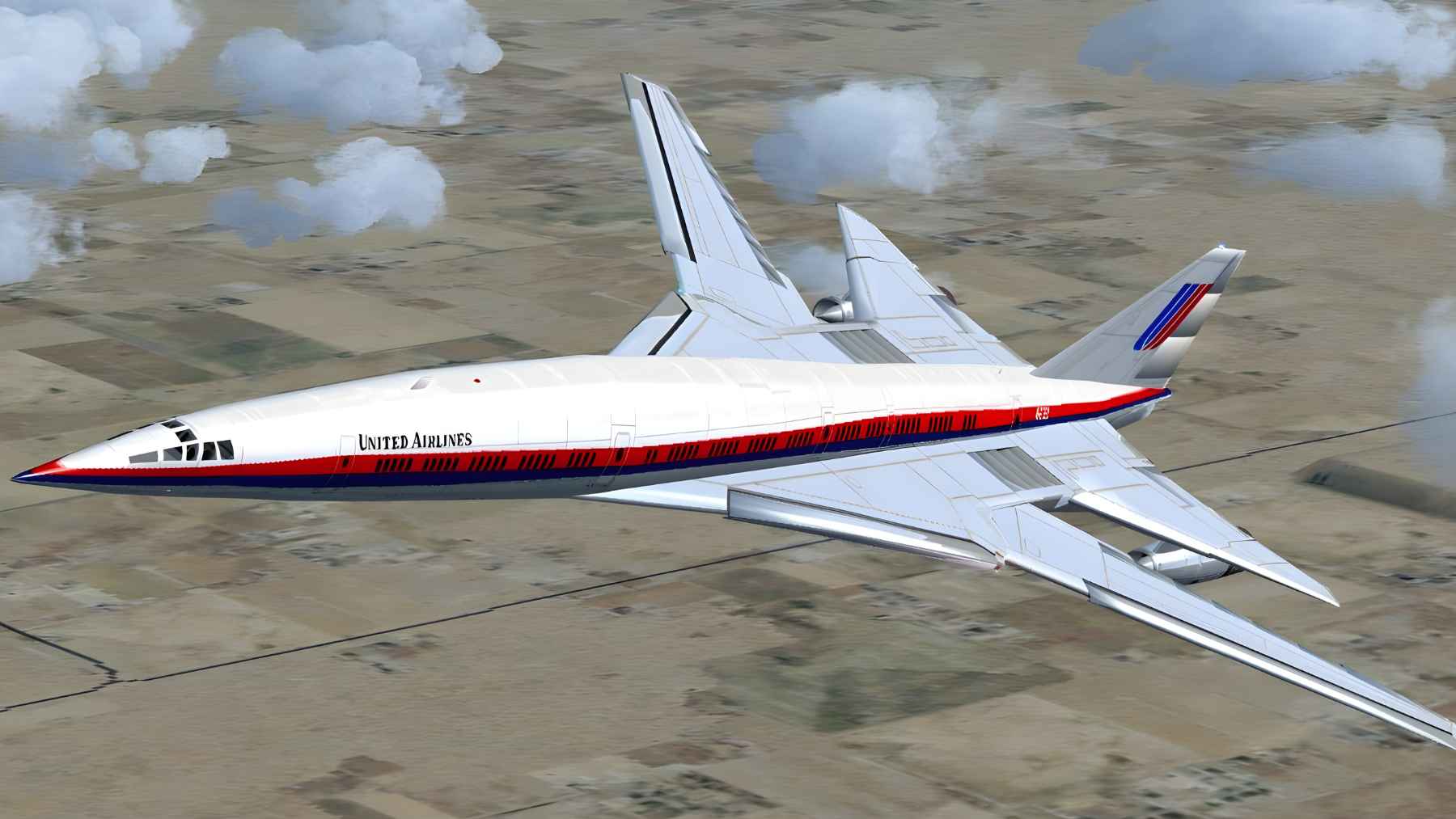
The United States once tried to build a passenger jet that would make the Concorde look modest. It was called the Boeing 2707, and it never carried a single paying passenger.
The Boeing 2707 story matters again because commercial aviation is flirting with the same idea. Despite decades of failed economics and public backlash over sonic booms, quiet supersonic flight is creeping back into the conversation. But the industry’s next chapter will be written as much by regulators and communities as by engineers in a wind tunnel.
A plane that never left the factory floor
In the mid-1960s, Washington wanted a U.S.-built answer to the Concorde and the Soviet Tu-144. Boeing won the government-backed contest with a design that initially promised Mach 3 speeds and a cabin that could hold roughly 250 to 300 passengers, far more than the Concorde’s typical layout.
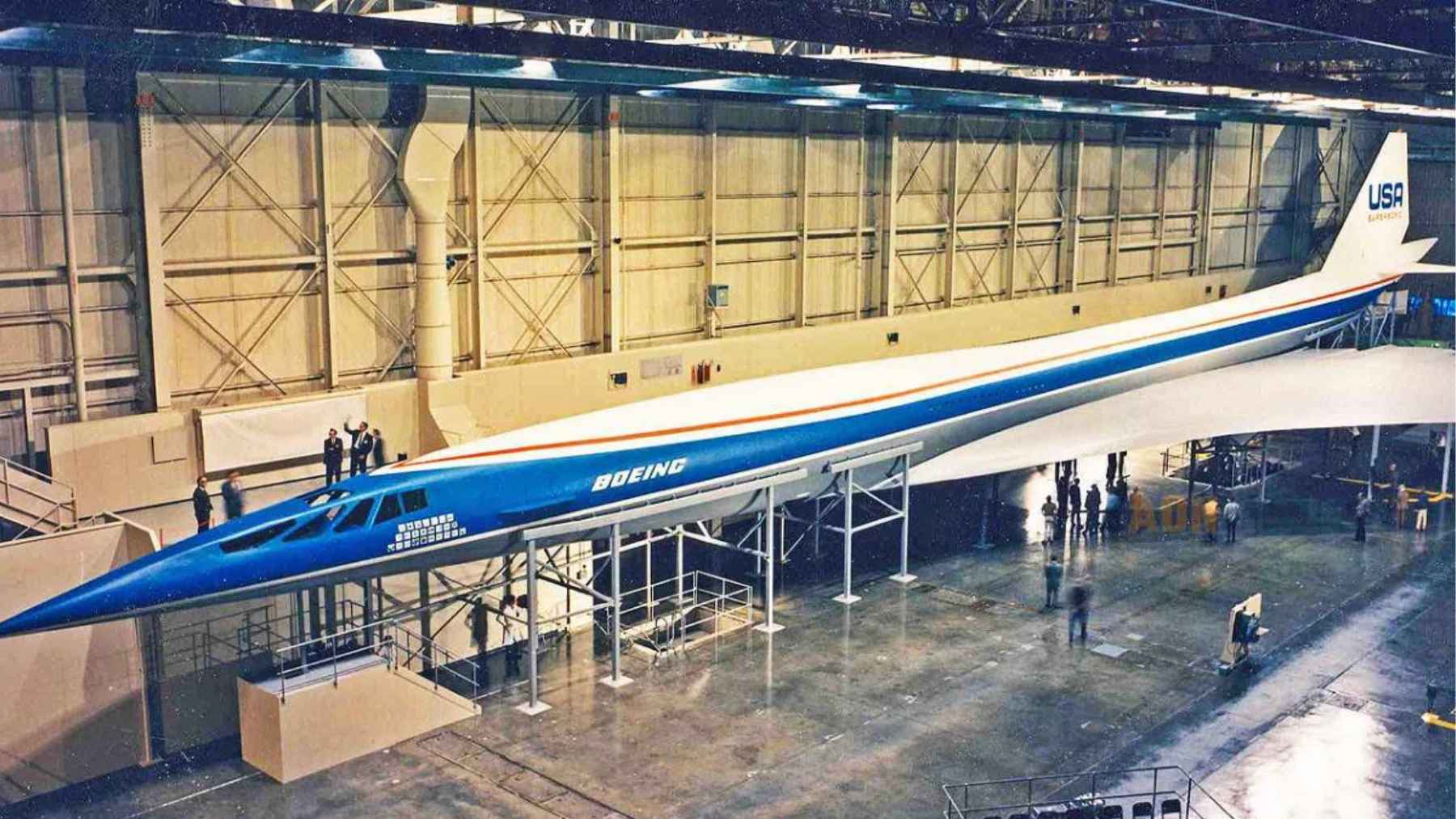
The early concept even used variable-sweep wings, like a fighter jet scaled up to airliner size. Boeing built a full-scale mock-up in 1969 and drew crowds, but the core engineering challenge stayed brutal. The swing-wing idea added weight and complexity, and Boeing later shifted toward a delta-wing layout to keep the project from collapsing under its own ambitions.
Fragments of that dream still exist. The surviving forward fuselage section is about 85 feet long and roughly 318 feet wide at the cockpit, and it is held by the Museum of Flight in Seattle, waiting for restoration.
The sonic boom problem that Concorde could not solve
Supersonic flight sounds glamorous until you hear it on the ground. A sonic boom is a pressure shock wave, and when it rolls over a neighborhood, it can rattle windows, spook people, and trigger complaints fast.
NASA’s “Quieting the Boom” history describes one 1960s test campaign where communities reported broken glass and thousands of noise complaints after repeated booms.
That backlash helped shape U.S. policy. The Federal Aviation Administration banned routine civil supersonic flight over land, locking in the basic reality that Concorde could only make money on ocean routes. In the United States, the ban is codified in 14 CFR 91.817, which prohibits civil aircraft from exceeding Mach 1 over land except under special authorization.
Boeing’s 2707 was designed in an era before that political wall fully hardened. But by the time the program was fighting for survival, the public mood had turned and the economics were wobbling. It is one thing to sell speed to business travelers. It is another to sell a boom to everyone else.
Why costs and complexity overwhelmed the program
By 1971, Congress pulled federal funding and the Boeing 2707 was effectively dead. Costs had soared, the design kept shifting, and airlines that once showed interest started backing away as the Concorde order book shrank and doubts about profitability grew.
Environmental concerns mattered too, and not just as a talking point. Noise was the headline, but regulators and researchers were also looking at high-altitude emissions and the potential ozone impacts of high-flying fleets, a fear that shaped the era’s debates about supersonic transport.
In hindsight, the program was caught in a squeeze. The United States wanted to win a prestige race, but it also needed a market that could absorb huge development costs and tolerate a new kind of environmental controversy.
The National Archives declassification history notes how quickly that political coalition fell apart once the price tag and public opposition became impossible to ignore.
What today’s supersonic startups should learn
The Boeing 2707 failed for specific reasons, but the warning signs feel familiar. Supersonic passenger travel has to clear three hurdles at once – noise, economics, and regulation. If you solve only one, the rest can still sink you.
Modern startups talk about efficiency, sustainable aviation fuel, and premium business cabins instead of 300-seat giants. That is a smarter commercial posture, but it also shrinks the revenue base, meaning ticket prices must stay high and demand must stay steady. In practical terms, it has to work not just for rich early adopters but for airlines balancing costs route by route.
There is also the dull reality of airports and fleets. Concorde needed special handling, expensive maintenance, and could not use many airport gates without adjustments. Any new supersonic jet will face similar constraints, and airlines will not gamble on a fleet that adds operational headaches unless the payoff is crystal clear.
The quiet-supersonic test that could change the math
This is where NASA’s X-59 comes in. The X-59 is designed to produce a softer “thump” instead of a classic boom, and NASA plans community overflight tests intended to measure how people actually respond when the sound is less violent. NASA says the goal is to provide data that could support a new regulatory framework for overland supersonic flight.
The FAA is already nudging the rules. It has created a modernized process for special flight authorization of supersonic aircraft, a step meant to support testing while keeping the overland ban in place for routine operations.
That does not open the door to commercial service, but it signals that regulators are preparing for a world where more supersonic prototypes are in the sky and competing demands on airspace keep growing.
Politics is also pushing. In June 2025, a White House executive order called for a coordinated push to reform supersonic rules, including a plan to repeal or change the overland prohibition within a set timeline.
It explicitly pulls in the Department of Defense and NASA, which is a reminder that speed is not just a consumer story but a strategic one.
The difference between Boeing 2707 and today’s programs is that the technology might finally be catching up to the social problem. But the real test will happen far from the runway, in living rooms, schools, and city blocks where people decide whether “quiet supersonic” is quiet enough.
The official statement was published on NASA.