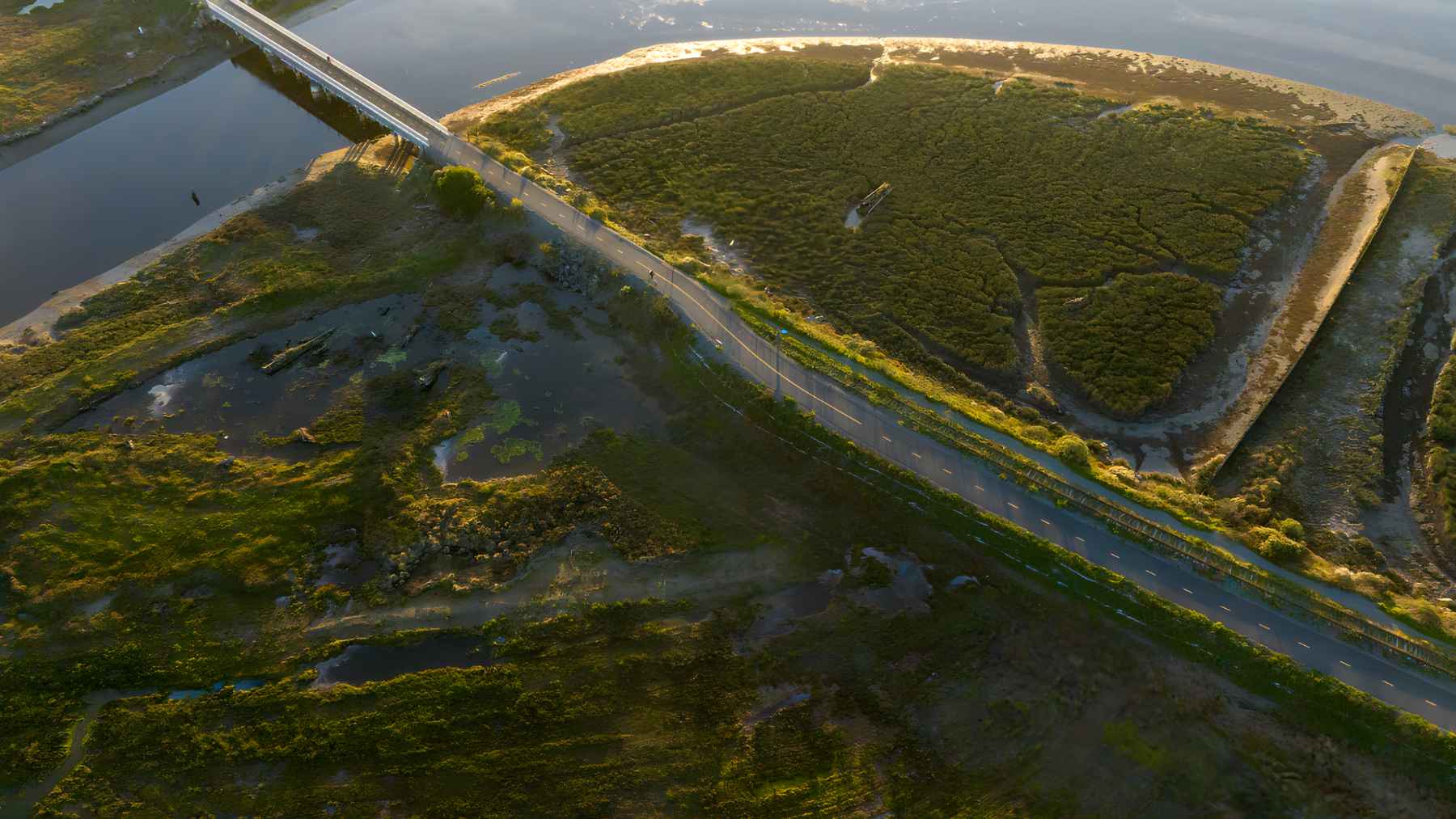
Northern California just took a big step toward turning an old railroad line into one of the country’s largest trail networks.
The Great Redwood Trail Agency says its board approved the Great Redwood Trail Master Plan during a meeting on March 19, setting a roadmap for the Mendocino, Trinity, and Humboldt County sections of the route. The broader vision is a trail of more than 300 miles running from San Francisco Bay to Humboldt Bay and beyond.
Supporters pitch the Great Redwood Trail as more than a scenic weekend ride. The plan frames it as a long-term public works project that mixes tourism, local transportation, and ecosystem repair, and it comes with economic projections meant to justify the investment.
One key estimate for the 231-mile master plan area is about $102.6 million in total annual benefits, presented in 2023 dollars.
What just changed
The approval locks in a shared blueprint for 231 miles of trail in Mendocino, Trinity, and Humboldt counties. The agency says Sonoma and Marin county segments are expected to be planned and built mostly by Sonoma-Marin Area Rail Transit, known as SMART.
This is not a single, continuous construction contract. The master plan breaks the corridor into 43 segments and lays out how each piece could be prioritized, designed, and managed over time.
A lot of people had a hand in shaping what made it into the final version. In its press release, the agency said the draft plan released in 2024 drew 725 participants across 32 community and tribal events, alongside 767 completed surveys and more than 600 written comments.
A corridor with cleanup duties
The Great Redwood Trail follows the former Northwestern Pacific Railroad line, which means some stretches come with legacy problems you cannot ignore.
The agency says trail development is expected to involve removing hazardous materials and equipment, stabilizing damaged slopes, and restoring riparian habitat for species such as salmon and steelhead.
That is why state conservation agencies keep showing up in the project’s public messaging. Amy Hutzel, executive officer of the State Coastal Conservancy, called the trail a “landmark” effort that aims to expand access while protecting ecological values.
There is also a less obvious infrastructure angle hiding in plain sight. In a 2024 board packet, the agency said it had been contacted during a California Energy Commission study looking at rights-of-way for possible electrical lines tied to a proposed wind farm project outside Humboldt Bay.
The economic pitch in numbers
For readers trying to understand why California is leaning into a project of this scale, the money case is central.
An Economic Benefits Assessment connected to the master plan estimates total annual benefits of about $102.6 million for the 231-mile stretch in Mendocino, Trinity, and Humboldt counties, and notes the figures are in 2023 dollars and presented as order-of-magnitude estimates. So what does that kind of number mean for the towns along the route?
The same assessment forecasts a $5.49 million annual increase in tax revenue, which matters for small local governments that are always juggling road repairs and public safety budgets.
It also breaks benefits into categories, led by about $61.7 million tied to recreation, tourism, and retail, followed by about $38.5 million in health benefits and about $2.4 million in transportation benefits.
Then there is the demand question, which is where projections can start to feel real. The report estimates 6.2 to 9.2 million walking and biking trips per year, and it projects about 67 percent of those trips would be local use rather than visitors.
Why local use matters
Tourism tends to grab the headlines, but the Economic Benefits Assessment expects most trips on the Great Redwood Trail would come from local users. That is the kind of steady traffic that can support trail-adjacent cafes, repair shops, and small motels even when peak season fades.
The assessment points to just how many communities sit close enough to treat the corridor like everyday infrastructure. It describes 29 cities, towns, and census-designated communities along the 231-mile master plan area, with about 180,000 people living within three miles of the trail.
If you have ever watched someone walk a shoulder because there is no sidewalk, that proximity hits differently.
Still, the report is upfront that these are modeled trips, not a headcount taken at a trail counter. It leans on data from comparable trails, including the Great Allegheny Passage and the Erie Canalway Trail, which is a sensible approach but not a guarantee that Northern California demand will match.
Construction comes in pieces
If you have been on the North Coast lately, you may have already seen the “piece by piece” approach in action. The agency said about 17 miles of trail are currently open to the public in Humboldt and Mendocino counties, with about 40 miles in active planning or construction.
One of the visible projects is the Annie and Mary Trail connection between Arcata and Blue Lake, built along the former rail alignment. Caltrans describes it as part of a longer effort to extend a multi-use path network and close gaps between neighboring communities.
Local reporting around the master plan vote also points to a segment in Willits already under construction, plus additional planning in the Eel River Canyon. Great Redwood Trail Agency project manager Bridget Nichols told KRCR that different segments are moving at different speeds, depending on the stage and local conditions.
What happens next
The agency is clear that adoption is not the finish line. Its press release says a few segments are already built or nearly done, but the majority are still not yet in development, and future work will depend on prioritizing projects that deliver benefits quickly and can clear permitting hurdles. Now the real work begins.
There is also the neighbor factor, especially where the corridor touches farms, backyards, and working timberland. The agency says it expects outreach to owners of roughly 10,000 to 15,000 adjacent parcels as segments are prioritized, and it says it prefers local hiring for contractors and vendors when possible.
And no, there is still no single completion date to circle on the calendar. Nichols told KRCR she could not provide an end date for the overall project, and the agency continues to post upcoming board meetings and public updates online for those who want to track progress.
The press release was published on The Great Redwood Trail Agency.