If you have ever tried to get from downtown Cancun to the Hotel Zone at the wrong time of day, you already know the problem.
Mexico’s Secretariat of Infrastructure, Communications and Transport says the Nichupté Vehicular Bridge is now more than 92% complete, a roughly 7.0-mile link (11.2 kilometers) designed to cut trips by as much as 45 minutes.
But this is not just a “faster commute” story. In the same statement, SICT said it aims to “transform mobility in Cancun” by connecting the city with the Hotel Zone, and it points to a large environmental mitigation program plus a design with a reversible lane, a bike path, and modern traffic management features.
The big question is whether the project can deliver both faster trips and real protection for the lagoon.
A nearly 7-mile shortcut over water
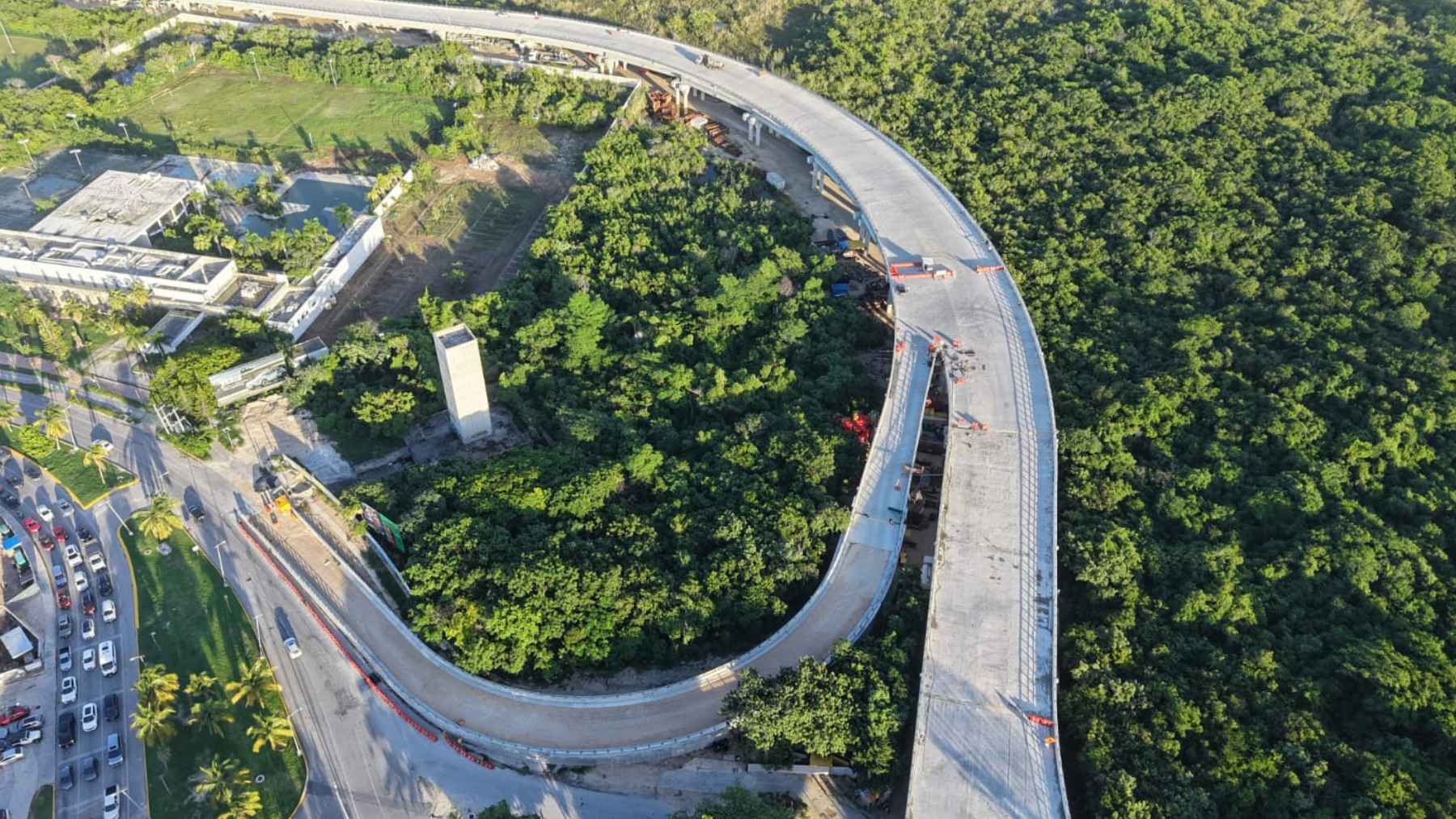
The bridge crosses the Nichupté lagoon system and is billed as one of Latin America’s longest bridges built over a lagoon.
The core structure spans about 5.5 miles (8.8 kilometers), with about 1.5 more miles (2.4 kilometers) of connecting interchanges at Boulevard Luis Donaldo Colosio and Boulevard Kukulcán. It also includes a 338-foot (103-meter) metal arch bridge and a dedicated bike path.
For visitors, the numbers can sound abstract. For locals, a 45-minute savings can mean getting home before dinner, making a shift on time, or simply not idling in that sticky heat that sits over Cancun’s asphalt. The government also projects an average daily traffic flow of about 20,000 vehicles.
There is also a business layer that is easy to miss until it hits your inbox. Building an elevated roadway over water means procurement, contractors, and materials, and the cost matters because it sets the bar for similar projects elsewhere.
Why Cancun cares right now
Cancun’s Hotel Zone is effectively a narrow strip of high-value real estate, and access is a vulnerability. When storms hit, accidents happen, or construction narrows lanes, the region can feel like it has a single clogged artery. An additional route across the lagoon is meant to give the city a second option in emergencies.
That matters because tourism is not just a postcard economy here. It supports a large workforce that commutes daily between the city and the hotels, often on tight schedules that do not care about traffic jams. If the bridge works as intended, it reduces risk for a destination that routinely hosts more than 20 million visitors a year.
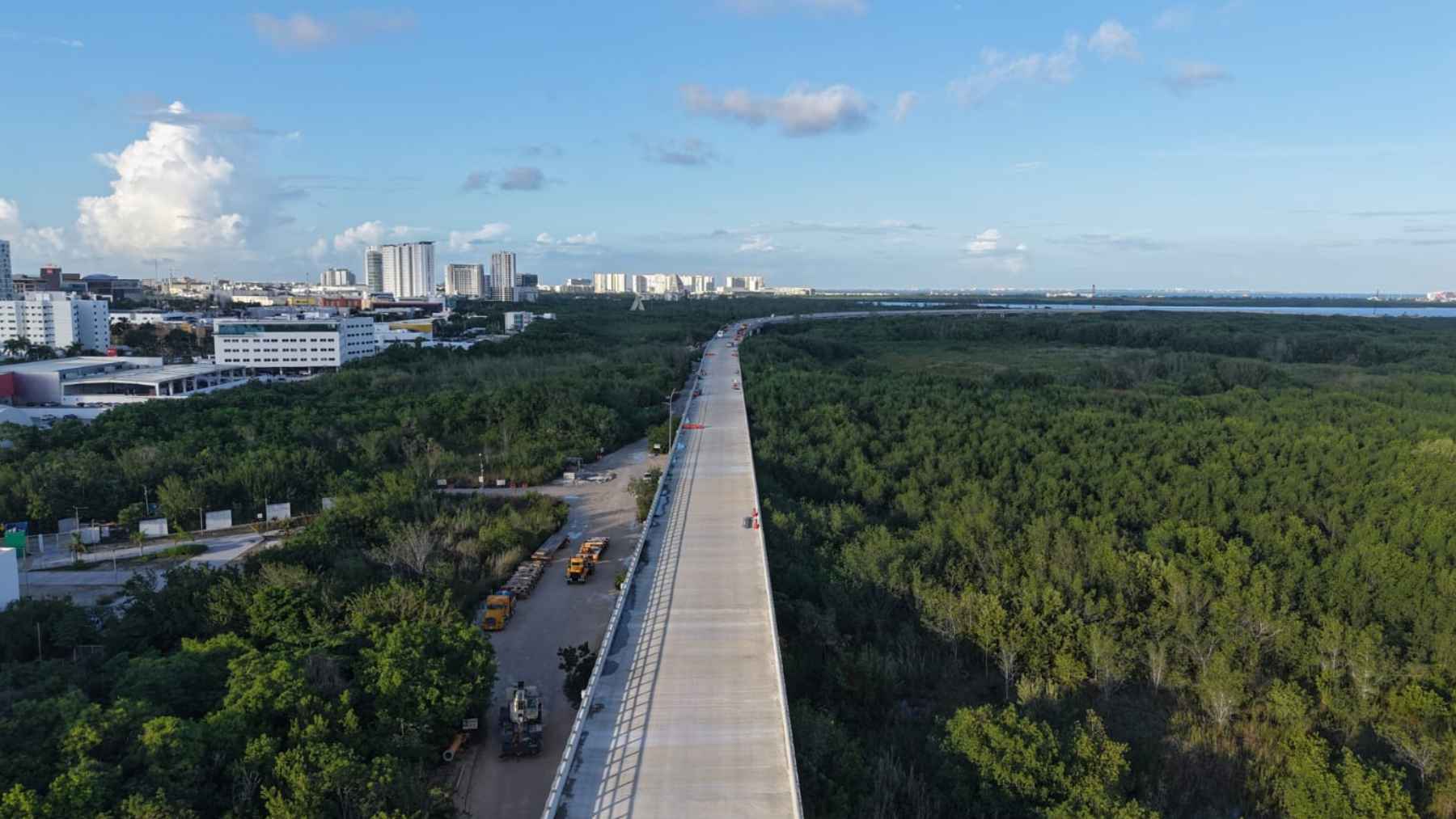
An aerial view shows the Nichupté bridge stretching across Cancun’s lagoon, a major infrastructure project designed to ease congestion and improve access to the Hotel Zone.
Mangroves and mitigation are central to the pitch
Officials say the bridge comes with a large environmental component, describing it as the transport ministry’s largest restoration program. The plan includes about 756 acres (306 hectares) of mangrove restoration, about 292 acres (118 hectares) of seagrass rehabilitation, and the rescue or relocation of more than 1,168 native plants and over 2,100 animals.
Those numbers are meant to answer the most sensitive critique of the project, which is that building across a lagoon ecosystem is inherently risky.
The government says the environmental plan includes 10 programs and 25 subprograms authorized by SEMARNAT under a regional environmental impact authorization, with measures for prevention, mitigation, compensation, monitoring, and rehabilitation. This is the part that will matter long after the construction crews are gone.
Engineering choices that try to limit damage
One reason the bridge has drawn attention is the method used to build it. A February report from Obras by Expansión says SICT used a construction procedure known as “Top Down,” which allows drilling, foundations, and concrete work to be done from an elevated platform to reduce direct intervention in mangrove areas.
In plain terms, it is an attempt to treat the lagoon like a no-go zone, working above it instead of inside it. The same report describes specialized equipment such as a launching girder and hydraulic drilling systems that let crews install piles and pour concrete while minimizing contact with sensitive ground.
This approach does not erase environmental risk, but it signals what the project is trying to balance. Speed and safety can pull in opposite directions, especially when deadlines are political and the ecosystem is fragile. That balancing act is where the bridge will be judged.
A smart bridge with a security backend
The Nichupté project also leans into the idea of a “smart” bridge. Proyectos México says the design includes intelligent transportation systems connected to a “C4” security center, along with lighting, pedestrian features, and cycling infrastructure.
That could mean cameras, sensors, and real-time monitoring that help manage congestion and improve response times when something goes wrong.
It also means the bridge is as much a tech platform as it is concrete and steel, which raises questions about cybersecurity and who controls the data. Not every driver thinks about that, but it is becoming part of modern transportation.
Still, “smart” infrastructure only stays smart if it is maintained. The long-term test will be whether the tech is funded and staffed after the ribbon-cutting, instead of being left to fade due to routine budget pressure.
What to watch as the finish line approaches
Officials say the bridge has already generated around 51,000 direct and indirect jobs, which is not small for a single project. The bigger question is what happens after opening, when the daily reality of traffic volumes, maintenance, and emergency use takes over. A bridge can look perfect on inauguration day and still struggle once it is carrying real loads.
The bridge is expected to be an alternative route during storms and disasters, but its value will depend on how quickly it can be cleared, managed, and reopened.
For Cancun, that is the difference between a minor disruption and a long day of gridlock that ripples into hotels, airports, and local businesses. And for Mexico, it will be a test case for building big over water without losing what makes the place worth visiting in the first place.
The official project profile was published on Proyectos México.