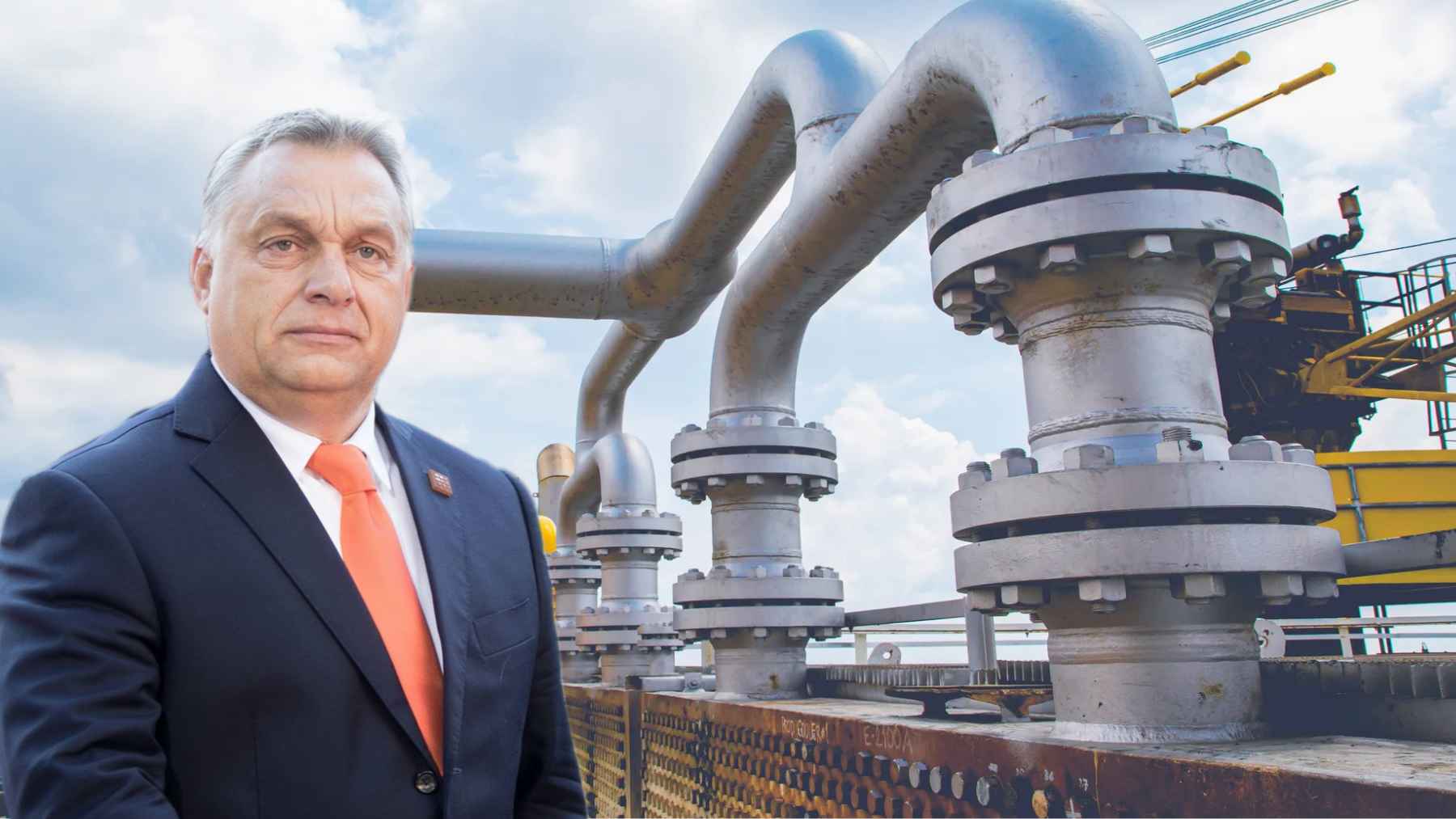
Hungary’s prime minister, Viktor Orbán, says Budapest will gradually stop sending natural gas to Ukraine until Russian oil deliveries restart through the Druzhba pipeline, which runs across Ukrainian territory.
In a social media video later published by his office, Orbán framed the dispute as “Ukrainian blackmail” and said Hungary would keep that gas at home to build reserves instead (miniszterelnok.hu), a threat that echoes far beyond Budapest’s borders.
For Kyiv, this is not a symbolic threat. A Ukrainian energy consultancy, EXPRO, estimates Ukraine imported about 45 percent of its gas through Hungary last year, even as that share fell to 38 percent by January, according to the Associated Press.
Hungary’s message is simple and blunt, and it lands in the middle of a war where energy infrastructure is constantly under fire.
A pressure point that hits fast
Orbán’s line was explicit. “As long as Ukraine fails to resume oil shipments to Hungary, they will not receive gas from the direction of Hungary,” he said in the statement published by his office, tying the move to domestic stockpiling and Hungary’s price caps.
But in practical terms, the cutoff is not a switch you flip in a single afternoon. Reuters reported that Hungary was still shipping gas as of Wednesday morning, with Ukraine nominated to receive 8.3 million cubic meters that day (about 293 million cubic feet) and another 4.6 million cubic meters the next day (about 162 million cubic feet), as detailed in Reuters’s reporting.
Then came the follow-through. Reuters also reported that Hungary barred its gas transmission operator from organizing capacity auctions for shipping gas to Ukraine in the third quarter of 2026, while requiring an extra 800 million cubic meters (about 28.3 billion cubic feet) to be stored domestically, a shift that turns politics into pipeline policy, according to Reuters.
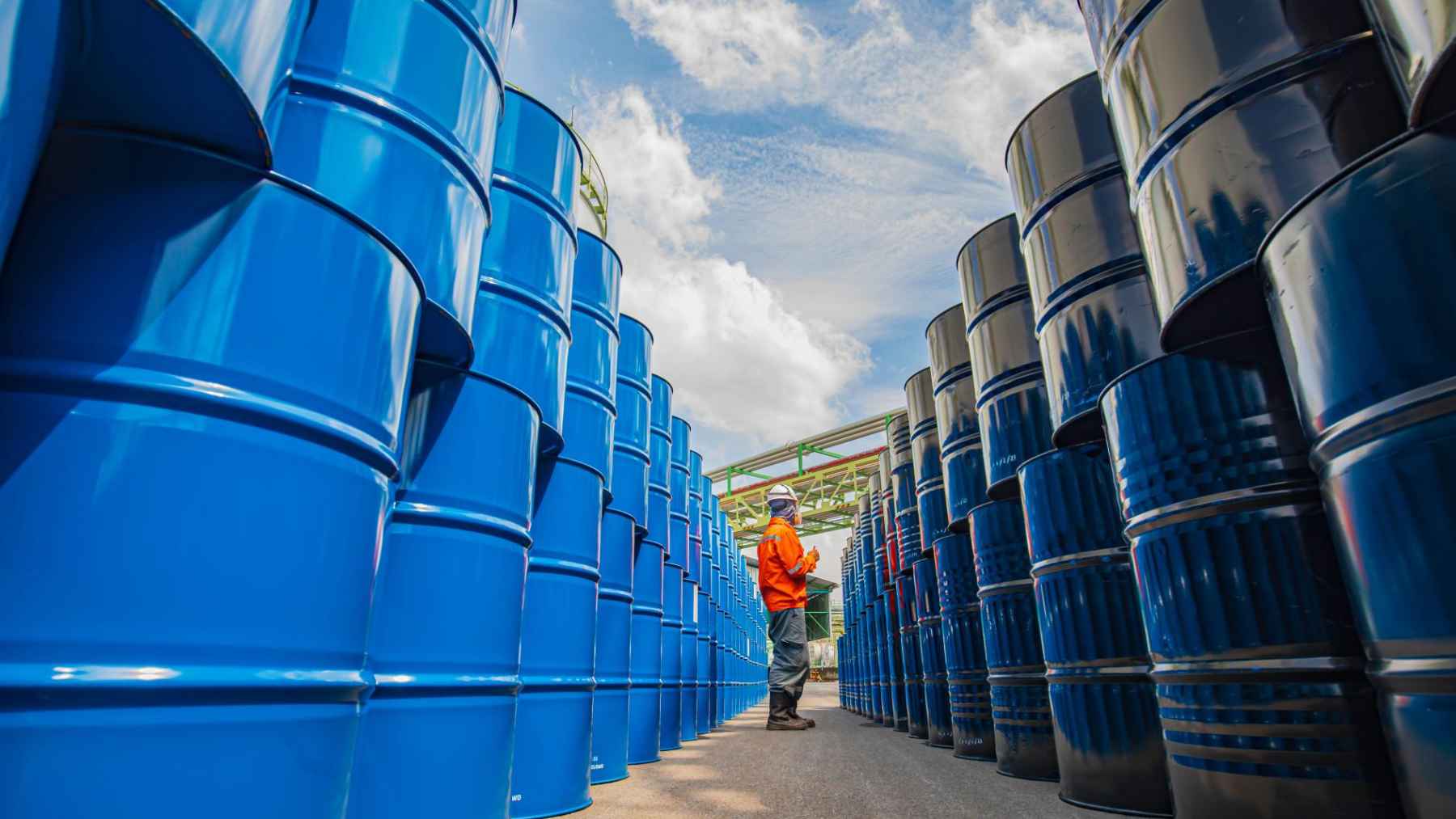
Rows of oil barrels at a storage site underscore the stakes of Europe’s energy system as Hungary’s dispute with Ukraine over Druzhba pipeline flows threatens regional supply stability.
Druzhba is still a choke point
The Druzhba pipeline is not just another piece of infrastructure. It is one of Europe’s key Soviet-era arteries, and it remains central enough that the European Commission has issued updates on the oil-transit interruption affecting regional supply security.
According to reporting cited by both Reuters and the AP, oil supplies to Hungary and Slovakia through Druzhba have been halted since late January after a strike damaged pipeline-related infrastructure on Ukrainian territory.
Ukrainian officials have said continuing attacks make repair work dangerous, while Hungary and Slovakia argue Ukraine is deliberately delaying the return of Russian oil flows.
That is where the moral and strategic knots tighten. Ukraine has signaled it does not want to enable Russian oil transit, and it is fighting a war funded in part by Russia’s energy revenue. At the same time, shutting down transit lines that serve EU member states gives leaders like Orbán an opening to retaliate using a separate pipeline entirely.
The numbers behind Ukraine’s dependence
Here is the detail many readers miss. Ukraine has been buying gas from Europe, but “Europe” is often a handful of border points and a few key neighbors, not a single unified supplier.
That is why Hungary’s share matters, and why threats to stop flows can spook markets even before anything physically changes, much like the broader energy-market whiplash described in Indux’s report on China’s halt to fuel exports.
Reuters reported that for March, Hungary was contracted to supply Ukraine with 180 million cubic meters of gas (about 6.36 billion cubic feet), roughly 28 percent of Ukraine’s total gas imports for the month. That is the sort of share that can show up in real life quickly, in industrial output, in heating plans, and, yes, in what people end up paying when the electric bill arrives.
There is also a business angle for Budapest. Ukraine’s foreign ministry warned that stopping gas shipments would cost Hungary more than $1 billion in annual revenue, according to Reuters. So even if Orbán is framing this as purely about national security, there is money on the table for both sides, and the incentives do not line up neatly.
EU policy meets veto power
Orbán is not only using pipelines. The AP reported he blocked a proposed €90 billion EU loan to Ukraine (about $106 billion) and vowed to veto further pro-Ukraine decisions until oil flows resume.
This pattern has turned energy transit from a technical dispute into a broader test of how the EU functions when unanimity meets wartime urgency, a tension that also sits behind the EU’s wider push under REPowerEU to phase out Russian energy imports.
Zoom out and you see why Brussels is nervous. Reuters reported that Russian oil made up only about 1% of EU imports by late 2025, and that Hungary and Slovakia were the only EU members still importing Russian oil, thanks to carve-outs tied to pipeline geography, which trace back to the EU’s oil embargo rules including the pipeline derogation in Council Regulation (EU) 2022/879.
In other words, most of the EU has moved on from Russian crude, but the last mile is messy. And as long as exceptions exist, the politics around those exceptions can spill into other markets, including the gas Ukraine is buying from the West, in a way that feels uncomfortably similar to how Asia’s LNG crunch is driving a return to coal.
War, energy, and the election clock
This standoff is happening with a deadline on the calendar. Hungary heads into an April 12 election, and Reuters reported EU officials openly hoping the vote could end Orbán’s frequent blockades, with challenger Péter Magyar and his Tisza party seen as a serious threat in polling.
Is the gas threat about energy security, or about turning a foreign dispute into a domestic message? Probably, to a large extent, it is both.
Meanwhile, the battlefield context keeps tightening the screw. Reuters has described a broader wave of attacks hitting oil infrastructure and export routes linked to Russia’s war financing, while Russia continues striking targets inside Ukraine, including energy-related assets.
Pipelines are supposed to be plumbing, but in this war they behave more like levers, pulled whenever pressure is needed, and the ripple effects can spread quickly, as seen in Indux’s coverage of how Iran’s attacks damaged Qatar’s LNG capacity and how that shock feeds into inflation fears.
For readers trying to make sense of it, three questions are worth watching: Will Druzhba repairs resume quickly enough to defuse the dispute?
Will Hungary’s operational restrictions translate into real declines in deliveries? And will EU institutions find a way to prevent one member state from turning Ukraine’s energy imports into a recurring bargaining chip, especially as price pressure shows up in daily life, like Indux has tracked in the U.S. with gasoline prices hitting household finances?
The official statement was published on Miniszterelnok.hu.