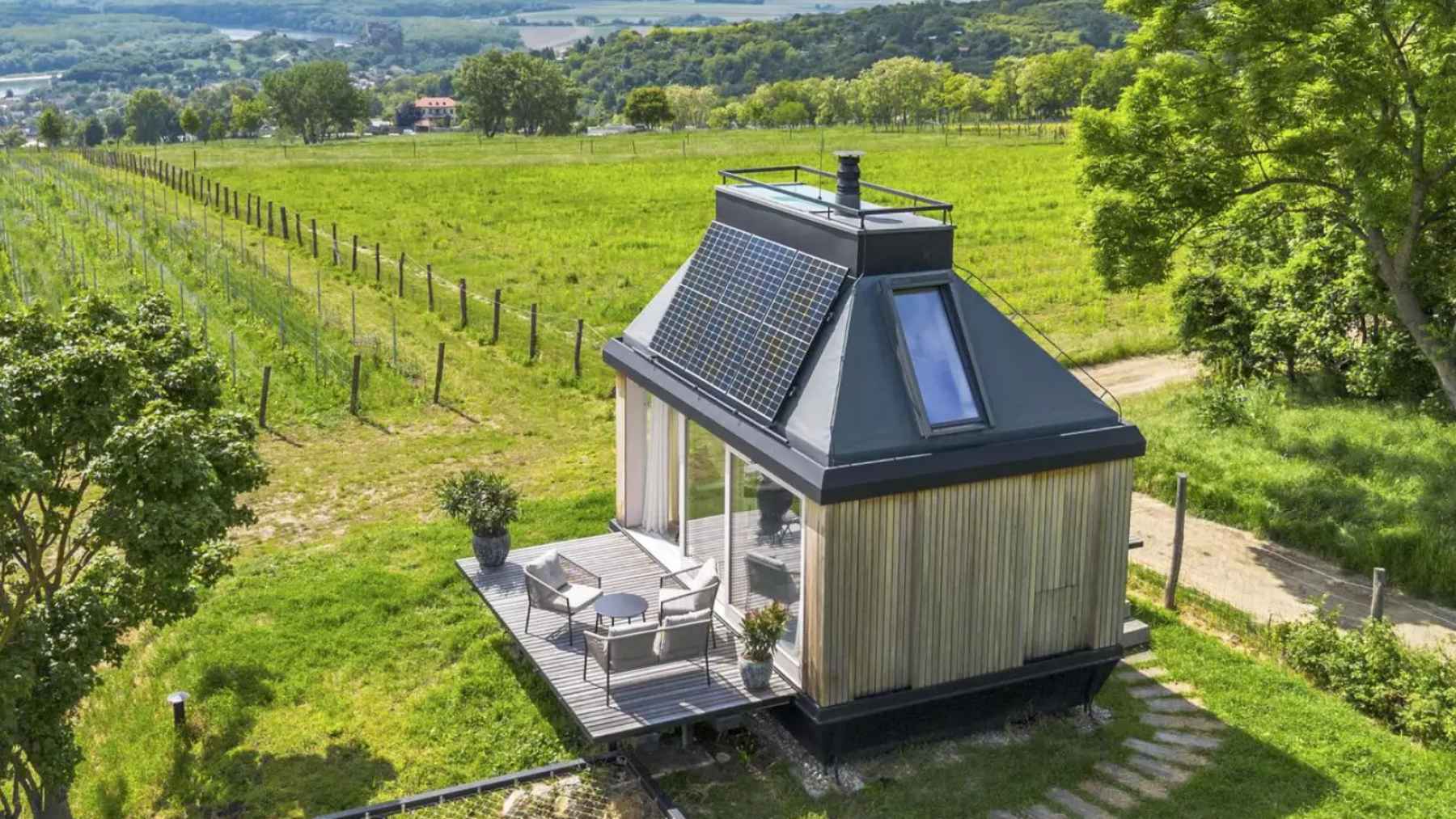
Cabin Devín is the kind of place that makes you do a double take. It is an off-grid microcabin near Devín Castle in Bratislava, Slovakia, with just 20 square meters of interior space, which is about 215 square feet, yet it still offers the basics people actually want on a short getaway. Think a real shower, a small kitchen, and a warm interior when the weather turns.
The bigger story is not just “tiny house meets pretty view.” It is how projects like this blend vacation rentals, smart-home controls, and energy independence into a single product that can be sold by the night. In a world where travelers still expect to charge a phone, stream a movie, and not freeze at 2 a.m., off-grid now has to mean reliable.
A cabin built for a very specific place
Cabin Devín sits in the Devín area of Bratislava, with views that include Devín Castle and, on clear days, the Austrian Alps. The rental’s own site leans hard into the idea of privacy, noting a fenced property and “no neighbors,” which is exactly the kind of promise that sells when city life starts to feel loud.
That location matters because Devín Castle is not a random backdrop. Local tourism sources describe it as one of Slovakia’s key landmarks, set above the confluence of the Danube and Morava rivers. It is about 12 kilometers from Bratislava’s historic center, which is roughly 7.5 miles, close enough for an easy escape but far enough to feel like you actually left town.
The cabin was designed by Ark-Shelter and Archekta as a weekend dwelling meant to work year-round in local conditions. Architecture writeups describe it as a compact retreat at the edge of the Zlatý Roh vineyards, positioned for long views across the landscape.
The design trick that makes 215 square feet feel less tiny
If you only hear the square footage, it sounds like a cramped studio. The cabin’s main illusion is that it can “open” itself to the outside, using fold-down terraces on two sides that reveal large sliding glass walls when lowered. It is a simple idea, but in practical terms it turns the outdoors into a second living room.
Inside, the layout stays straightforward. New Atlas reports an open living and dining area with a small kitchen and a wood-burning stove nearby, plus a bathroom tucked behind the kitchen with a shower and a concrete sink.
The sleeping area is a loft accessed by a removable ladder, which keeps the floor-level clear when you are not climbing into bed.
Some of the smallest choices are the most telling. Metalocus describes a retractable ladder integrated into cabinetry and even a pendant light that moves to reveal the sleeping area, which is the kind of “hidden mechanism” thinking you usually see in boats or RVs, not vacation cabins.
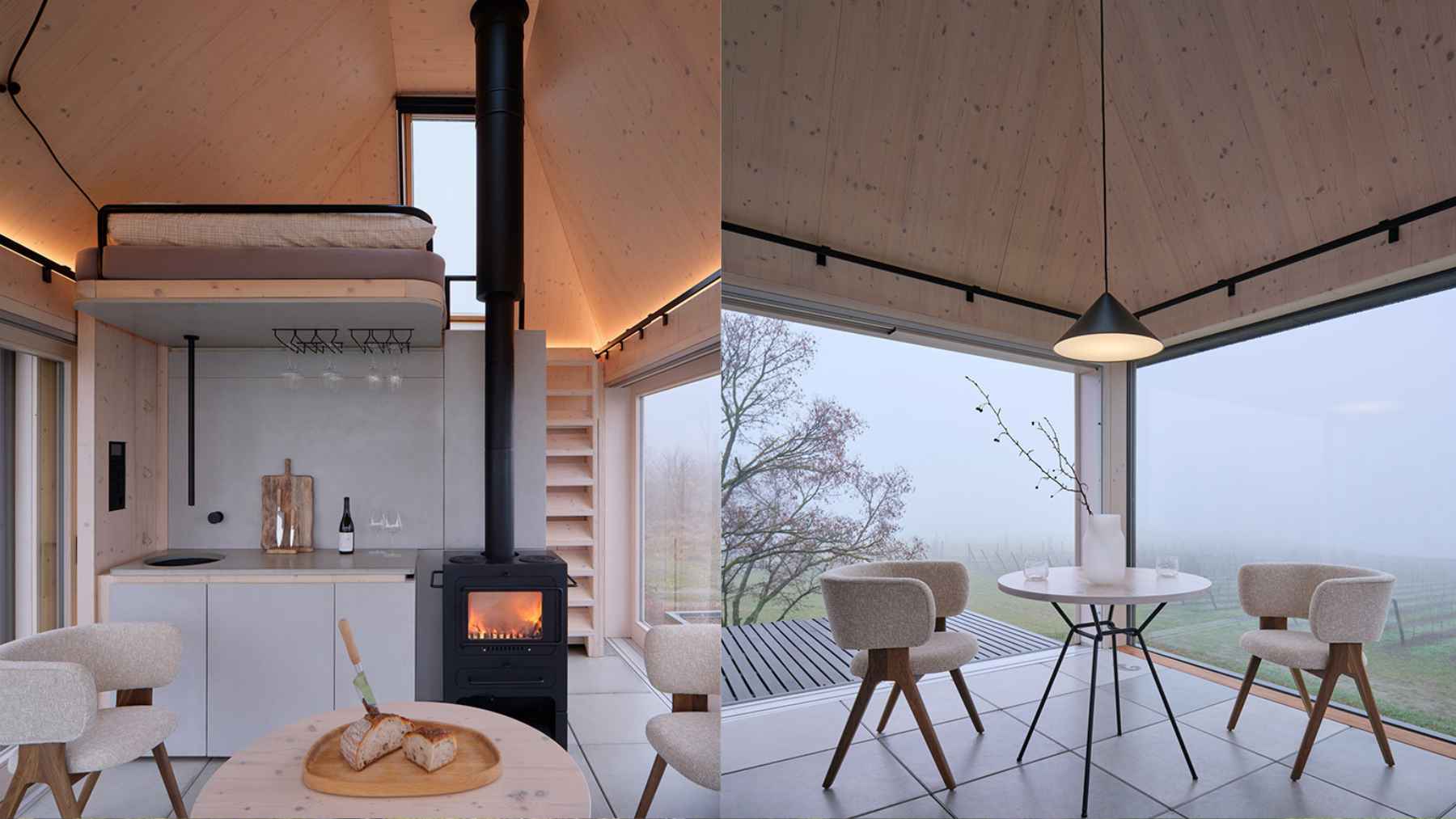
The cabin’s compact interior features a loft sleeping area, wood stove, and floor-to-ceiling glass that expands the sense of space.
Off-grid, but not “roughing it”
The cabin’s power setup is built around roof-mounted solar panels feeding battery storage, with a gas backup system designed to kick in when solar and batteries are not enough. That matters because an off-grid rental is only charming until the lights flicker or the heating can not keep up.
The tech details go further than basic solar. In the project description republished by Metalocus, the teams say hybrid appliances can automatically switch from electricity to gas when battery capacity drops below a defined threshold, prioritizing electricity for lighting and small devices.
The same description also notes intelligent shading and controlled ventilation, with sensors monitoring carbon dioxide and humidity to maintain indoor comfort across seasons.
Water is another quiet constraint in off-grid hospitality. Metalocus reports that service water is stored in a concealed tank within the raised floor, alongside a separate wastewater tank, which is a reminder that “self-sufficient” often means “carefully managed,” not “hands off.”
The business math behind a tiny rental
Cabin Devín is marketed as a vacation rental with pricing starting at €119 per night for the whole cabin. Using the European Central Bank reference rate published March 24, 2026, where €1 equaled $1.1572, that nightly starting price works out to about $138.
Here is the question a lot of owners quietly ask. How does a 215-square-foot space justify a nightly rate that competes with full apartments in many cities? Part of the answer is that tiny rentals are selling an experience, not square footage, and the terraces, views, and privacy are all part of the “inventory.”
Some architecture listings also publish a project budget of €180,000, which converts to about $208,300 using that same ECB reference rate. Even if that figure is only a reported budget and not a verified final cost, it hints at why these cabins aim for premium positioning.
At $138 a night, it takes roughly 1,500 booked nights to gross $208,000 before cleaning, maintenance, staffing, and financing enter the picture.
What to watch as “micro-retreats” scale up
Cabin Devín is a single cabin, but it fits a larger direction in travel and property. Ark-Shelter’s broader pitch is modular architecture, prefabricated units, and minimal on-site work, which can make small cabins easier to replicate as a “cabin hotel” concept if a location and permitting allow it. That scalability is where the real business momentum tends to come from.
Still, off-grid is not magic, and travelers are not forgiving when comfort fails. Gas backup improves reliability, but it also introduces fuel logistics and an energy footprint that owners have to manage, while water and wastewater tanks add another layer of operational work.
For readers thinking about this trend, the takeaway is simple. The tiny house boom is not just about smaller buildings, It is about turning tight architecture plus energy systems into a dependable service you can rent like a hotel room.
The official information was published on CabinDevín.sk.