The Trump administration says it will reimburse TotalEnergies up to about $1 billion if the French energy giant gives up two U.S. offshore wind leases off New York and North Carolina, then reinvests the same amount into U.S. oil, natural gas, and LNG projects.
Interior framed the arrangement as a “landmark agreement” that shifts money away from “costly” offshore wind and toward “affordable, reliable” energy.
It is an unusual twist on the energy wars because it is not just a permit fight or a court battle. It is a government-backed exit ramp, paid for by taxpayers, that effectively rewrites what risk looks like for major clean energy bets.
If you are wondering what that means for your electric bill and for the power-hungry AI boom, you are not alone.
A buyout, not a ban
Interior says TotalEnergies will invest roughly $928 million in U.S. fossil fuel and LNG projects in 2026, then the government will reimburse the company “dollar-for-dollar” up to what it paid for the offshore wind leases. The department also said the leases will be terminated after the reinvestment.
The numbers are concrete. Interior listed a payment of $133,333,333 for the Carolina Long Bay lease executed on June 1, 2022, and $795,000,000 for the New York Bight lease executed on May 1, 2022, which totals $928,333,333. The “$1 billion” headline figure is essentially rounding plus political framing, even if the mechanics hinge on that roughly $928 million figure.
Secretary of the Interior Doug Burgum called the deal “yet another win” for “affordable and reliable energy,” while criticizing offshore wind as subsidy-dependent. The agreement also includes TotalEnergies pledging not to pursue new U.S. offshore wind projects, which is a major concession for any developer thinking long-term about the Atlantic coast.
What gets shelved offshore
Before this deal, the two lease areas were positioned as big future sources of electricity.
TotalEnergies bought the North Carolina-related lease in 2022 with the goal of producing more than 1 gigawatt, which is often described as enough to power about 300,000 homes, and it bought the New York and New Jersey area lease with the potential for about 3 gigawatts, or close to 1 million homes.
Those projects were not just about climate branding. For East Coast states that worry about supply crunches, offshore wind is frequently pitched as a local, fuel-free source that can reduce exposure to gas price swings.
That matters in everyday life because when natural gas spikes, it tends to show up quickly in household utility bills, even for people who have never thought about where electricity really comes from.
TotalEnergies had already paused work on the leases after Trump’s election win, and it is now making that pause permanent in the United States. At the same time, the company says this is not a global retreat from offshore wind, since it continues to develop projects in Europe and Asia.
Following the money to LNG and oil
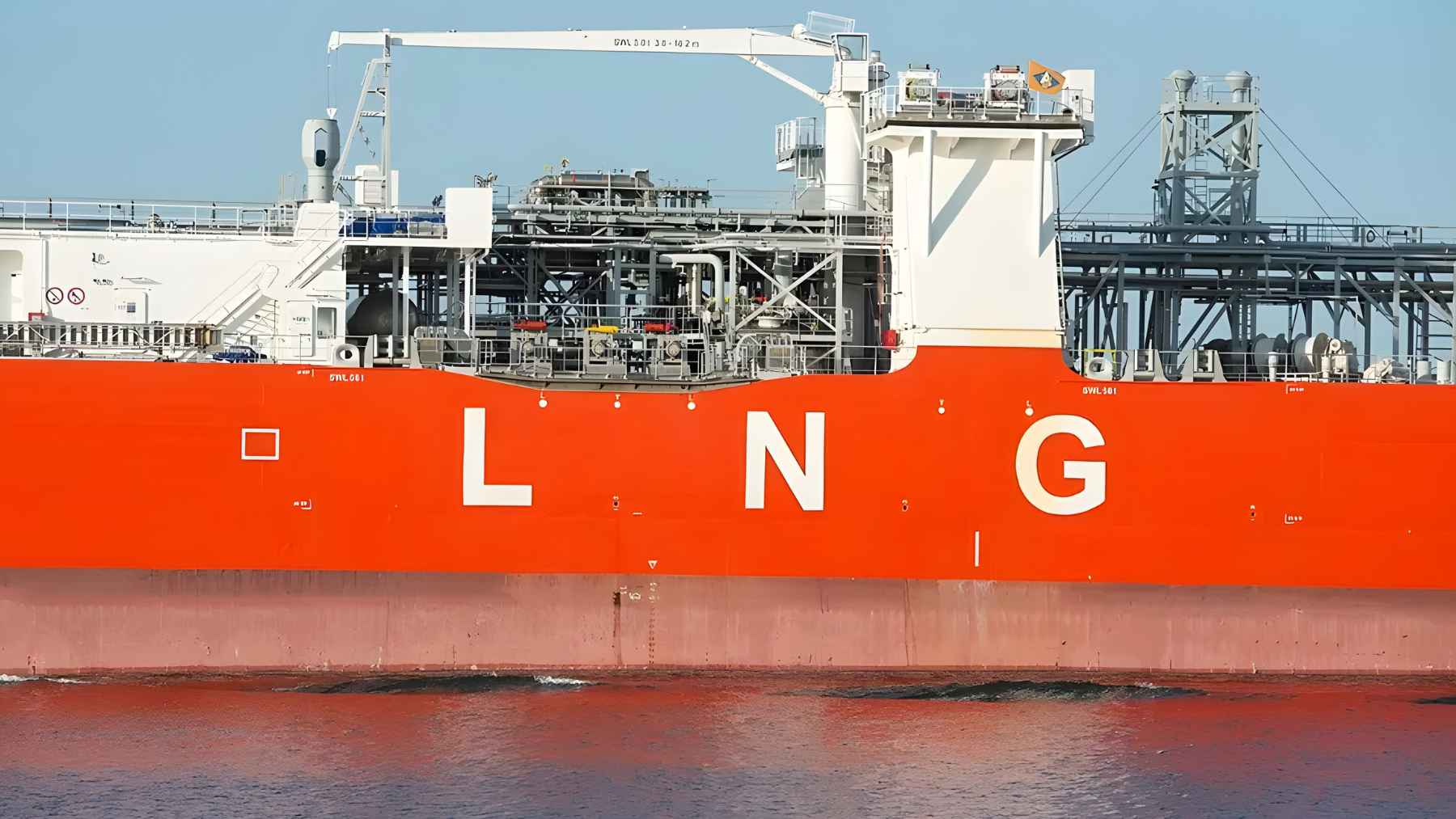
Interior’s press release spells out where the reinvestment is expected to land, including the Rio Grande LNG project in Texas and upstream oil and shale gas development. TotalEnergies, for its part, described reinvesting the refunded lease fees into a Rio Grande LNG plant it characterizes as “29 Mt,” which is roughly 29 million metric tons a year, or about 32 million short tons.
Why the focus on gas right now? Both Interior and TotalEnergies explicitly tie the pivot to reliability and to rising electricity demand, including demand from data centers that power cloud services and AI tools people use at work and at home.
Interior even said the reinvestments help the U.S. maintain “global leadership in artificial intelligence,” which is a striking line to include in an energy lease announcement.
TotalEnergies also used the moment to underline how large its U.S. LNG footprint already is, saying it exported 19 million metric tons of U.S. LNG in 2025, which is about 21 million short tons.
It also pointed to a separate Alaska LNG supply intent for 2 million metric tons per year over 20 years, or about 2.2 million short tons annually, though that is still subject to a final investment decision.
Courts, national security, and the grid
This deal is landing after months of legal whiplash. The Trump administration has tried to halt offshore wind construction through federal actions that judges repeatedly overturned, according to reporting on the broader offshore wind crackdown.
When courts keep reopening the door, a negotiated exit can look like the cleanest way to shut it again, at least from Washington’s point of view.
Interior also leaned on national security language, saying that “in light of the national security concerns” TotalEnergies pledged not to develop new U.S. offshore wind projects.
Attorney General Pamela Bondi added that the investment would “enhance our national security and grid reliability,” which shows how closely the administration is tying energy choices to defense-related arguments.
And yet, the offshore wind buildout is not fully frozen. Dominion Energy’s Coastal Virginia Offshore Wind project began delivering its first power to the grid this week, a milestone that underscores how some large projects are still moving ahead even amid federal hostility.
That contrast is part of the story now, since markets can handle policy fights, but they struggle with unpredictability.
The message to states and investors
Democratic leaders are treating the agreement as more than a single corporate decision. New York Governor Kathy Hochul described it as a taxpayer-funded “bribe,” and North Carolina Governor Josh Stein called it “a terrible deal,” arguing the state’s offshore wind potential could power millions of homes and attract private investment.
Environmental groups echoed that language, calling it a “billion-dollar bribe” meant to choke off clean energy.
The bigger market signal is hard to miss. If a future administration is willing to reimburse nearly the full cost of leases when a developer walks away, companies may start pricing political reversals differently, either demanding higher returns or avoiding certain U.S. markets altogether.
In practical terms, that can mean slower buildouts, more expensive financing, or both, even for projects that never become political punching bags.
What happens next will hinge on enforcement and imitation. Investors will watch how the government verifies the promised fossil fuel reinvestment, whether similar deals are offered to other leaseholders, and how states respond as they try to balance reliability, affordability, and long-term planning.
For now, one thing is clear. The offshore wind fight has moved from courtrooms to checkbooks.
The official statement was published on the U.S. Department of the Interior.