The war sparked by the February 28 strikes on Iran is now showing up in a place almost everyone notices quickly: the price sign at the gas station. With oil shipping disrupted around the Strait of Hormuz, a key global chokepoint, fuel costs have risen fast across the U.S. and Europe.
That price shock is already nudging some drivers toward electric vehicles and hybrids, especially in the used market where shoppers can act right away. The bigger question is whether this becomes a lasting change in what people buy, or just a short, anxious sprint to cut the next monthly fuel bill.
A chokepoint shock hits the pump
The Strait of Hormuz matters because of sheer volume. The U.S. Energy Information Administration estimates that in 2024 about 20 million barrels per day moved through the strait, roughly one-fifth of global petroleum liquids consumption.
In the U.S., the government’s weekly numbers capture the speed of the jump. EIA data shows average regular gasoline rose from $3.02 a gallon on March 2, 2026 to $3.72 on March 16, 2026, while diesel hit $5.07 on March 16.
Europe has seen a similar pattern, just in different units. U.K. government data shows average unleaded gasoline went from 131.71 pence per liter (about $1.67) on February 23, 2026 to 140.28 pence on March 16, 2026, about a 6.5% increase in three weeks.
Used EVs feel the heat first
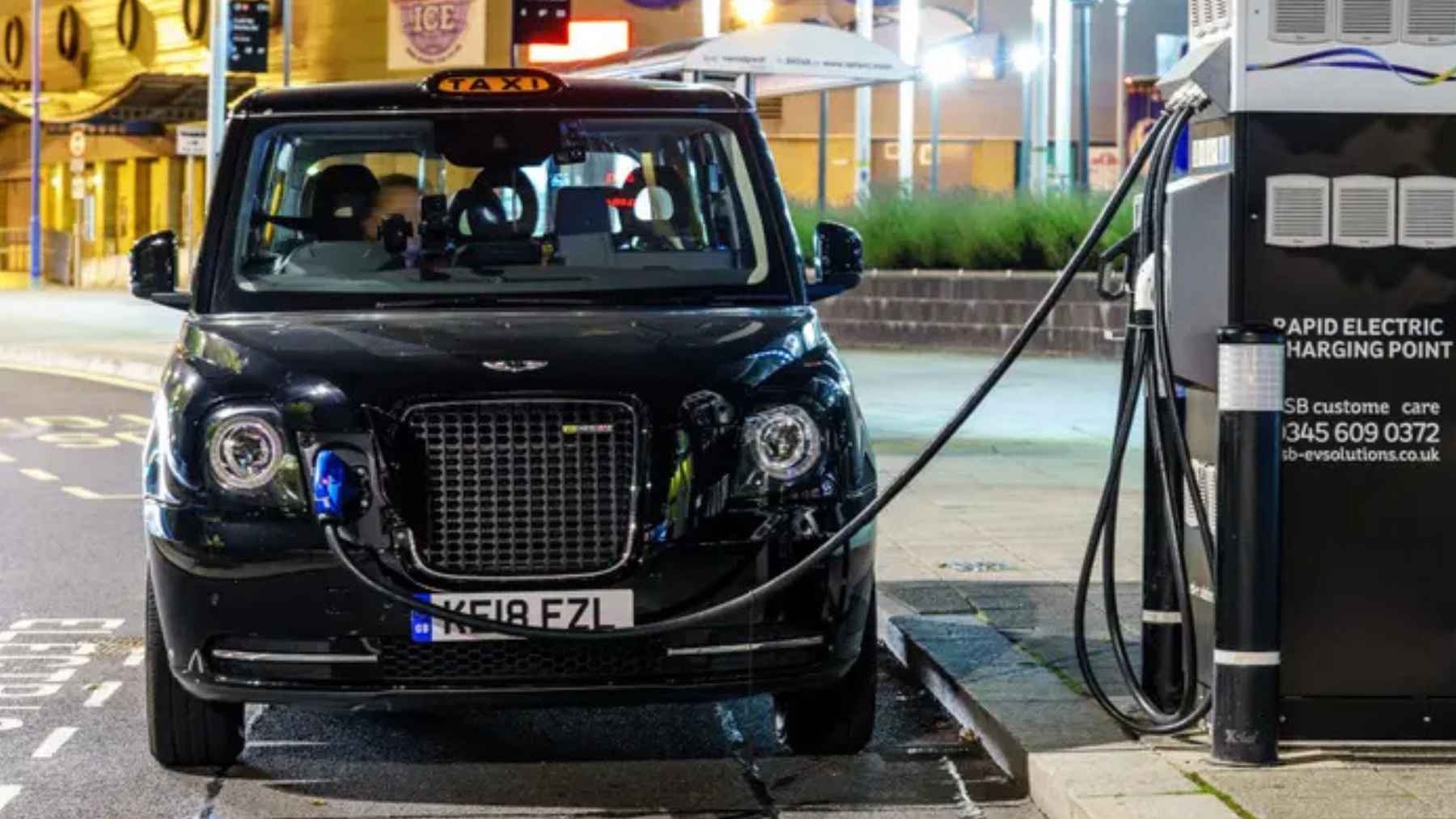
The earliest behavioral shift is showing up on used lots, not factory order books. In the U.K., dealer Martin Miller said his used EV shop had its busiest Saturday ever about a week after the conflict began, and he described sales as “turning cars very, very quickly.”
That “move fast” mindset is easy to understand. If you commute every day or haul kids across town, higher gasoline prices are not an abstract chart—they are a weekly budget hit that keeps repeating.
In the U.S., Reuters reported a similar impulse at a used EV dealership in Richmond, Virginia, where shopper Zach Xavier said he wanted to “get in before everybody freaks out” as he traded a gas SUV for an EV and bought a second, smaller electric car.
That kind of quote is not the whole market, but it is a real signal of how uncertainty spreads.
Price psychology still rules
History suggests a spike alone does not always rewrite buying habits overnight. Analysts told Reuters it often takes sustained high prices or a clean, memorable threshold before shoppers truly pivot, and CarGurus pointed to $4 a gallon as a number that has mattered in prior shocks.
The U.S. is not at that national tipping point yet, although some areas are getting close. As of March 16, 2026, the EIA national average was $3.72, up sharply in two weeks, so the “does it cross $4 and stick” question is now on the table.
There is also a second threshold that matters more for mass adoption. Cox Automotive research cited by Reuters suggests most U.S. consumers would consider switching to an EV or hybrid if gasoline hit $6 per gallon, and analyst Stephanie Valdez Streaty warned that higher fuel can also push buyers to delay purchases altogether, saying “Unless you really need a car right now, you might hold off.”
Europe is closer to a tipping point
Europe starts from a higher EV baseline, and that changes how a fuel shock plays out. Reuters noted that fully electric cars accounted for 19.5% of sales last year in Europe, making it easier for a larger share of buyers to imagine an EV as a normal next car, not a science project.
Germany is a good example of the “search first, buy later” funnel. Reuters reported that MeinAuto saw EV-related traffic rise 40% since the start of the war, and a March 12 survey by Carwow found 48% of respondents said spiking fuel prices would influence them to consider an EV or hybrid.
Policy is also tilting the field in Europe, at least in the near term. The European Alternative Fuels Observatory describes a 2026 German incentive program that complements tax exemptions and other measures designed to reduce upfront cost barriers, which can matter when drivers are already doing the math on running costs.
The business bet is on volatility, not just electrification
For dealers, the immediate business problem is inventory. Miller said his team was buying used EVs at auctions “like mad” because they believed demand would keep coming, which is exactly what happens when a market moves from calm comparison shopping to stress shopping.
Automakers face a trickier landscape, especially in the U.S., where policy has been moving in the opposite direction. Reuters and other reporting show the $7,500 federal EV tax credit ended on September 30, 2025, a change that removed one of the strongest price levers for mainstream adoption right before this fuel shock hit.
So what should readers watch next if they are trying to make a practical decision? Keep an eye on whether the Strait of Hormuz disruption lasts, whether U.S. gasoline holds above $4 nationally, and whether Europe’s incentives and charging buildout keep pace with the new surge of interest.
The official fuel price update was published on the European Commission’s Weekly Oil Bulletin.