What if the empty strip between train rails could help cut the electric bill? SNCF thinks the question is worth testing in the real world.
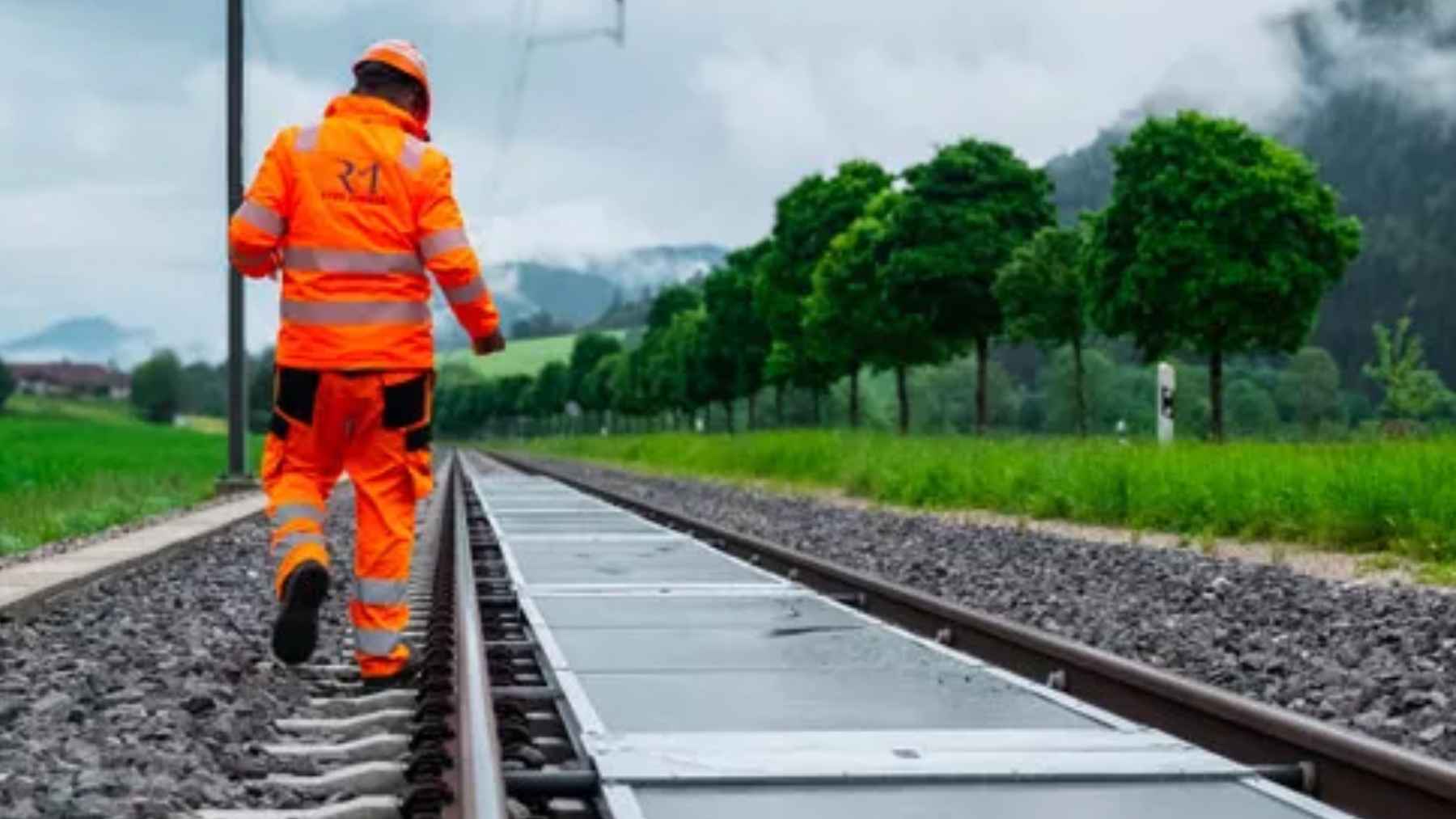
The French rail group has partnered with Swiss startup Sun-Ways to monitor a pilot in Buttes, Switzerland, where removable solar panels have been installed between the rails of an active line. SNCF said the collaboration contract was signed in November 2025, while the Swiss site itself has been operating since April 24, 2025, and is due to run until April 2028.
Why SNCF is paying attention
This is not a small side bet. SNCF says it is France’s largest industrial consumer of electricity and the country’s second-largest property owner, with 12 million square meters of buildings and more than 100,000 hectares of land.
Through SNCF Renouvelables, it plans to install 1,000 hectares of solar panels on its property. By the company’s own estimates, that buildout could cover roughly 15 to 20% of current electricity demand by 2030.
Solar on station rooftops and parking canopies are already part of that push. But Sun-Ways offers a more unusual proposition. It uses the unused space between the rails themselves, which means SNCF can study whether rail corridors can produce power from ground it already controls.
The Buttes pilot is modest, just 48 panels rated at 380 watts across 100 meters of track, or 18 kWp, with expected output of 16,000 kWh a year. Still, the value for SNCF is the data. The group says it is watching installation and removal cycles, glare, track inspection, maintenance effects, output, and dirt buildup.
A live test with real limits
And that is where the story gets interesting. Plenty of solar projects look good on paper. Rail infrastructure is less forgiving. Dust, vibration, maintenance windows, and safety rules can turn a neat prototype into a headache fast.
That is why SNCF is treating the Swiss site more like a live laboratory than a green light for rollout across France. These are the kinds of details passengers never notice from the platform, but they usually decide what scales and what stalls.
Sun-Ways argues the upside could be meaningful if the idea scales. On its website, the startup says its system can produce about 200 MWh per kilometer each year, and Swiss reporting citing Sun-Ways says a nationwide rollout across roughly 5,320 kilometers (about 3,300 miles) of rail could reach1 billion kWh annually, or about 2% of Switzerland’s electricity use.
For now, though, the test in Buttes remains small by design. Small, but telling.
The press release was published on SNCF Group.