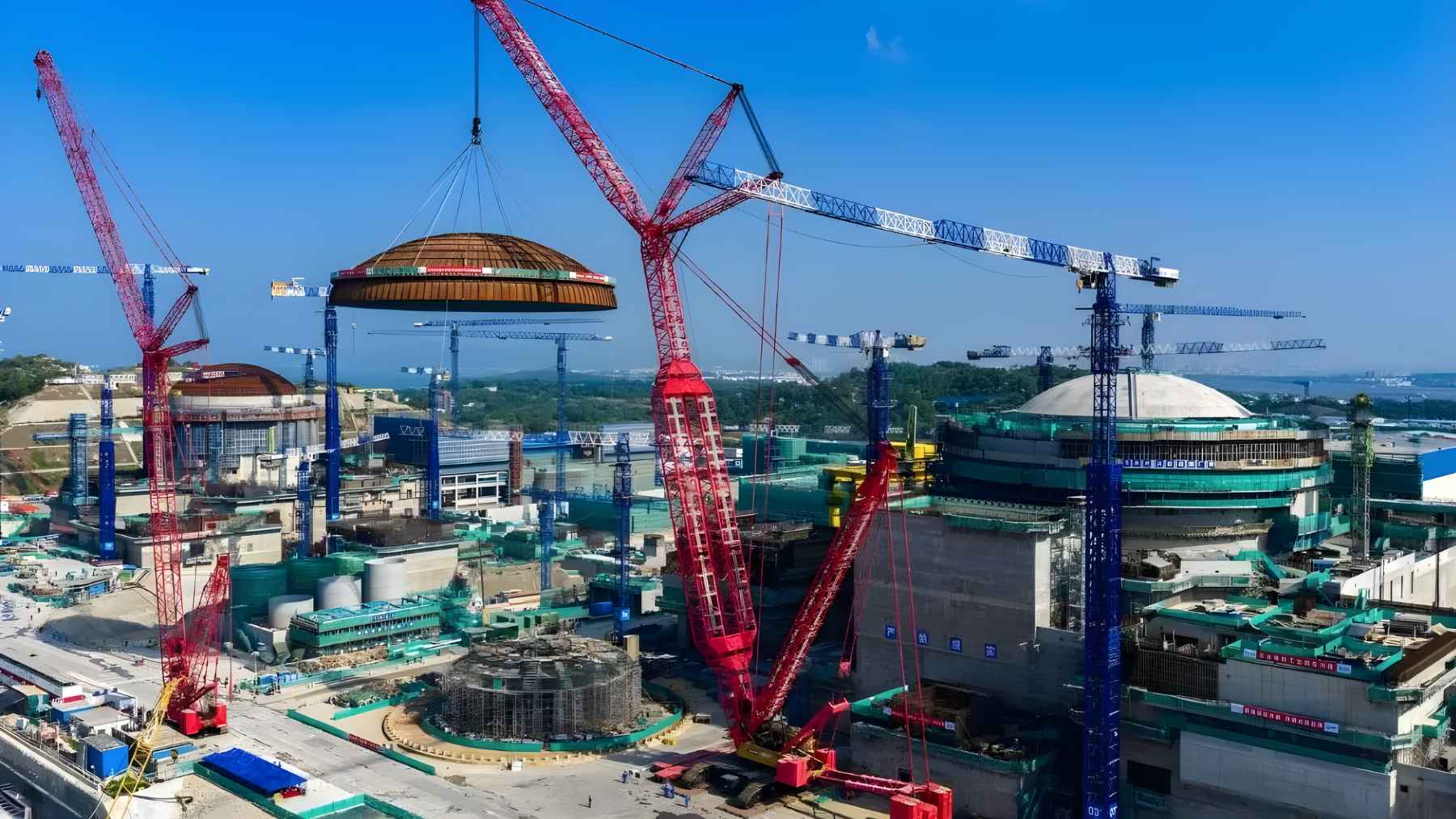
China has pulled off a striking new milestone at unit 5 of the Lufeng nuclear power plant in Guangdong. On October 18, crews lifted a 261.8-ton outer containment dome steel formwork module, measuring 51 meters across (about 167 feet) and 13.202 meters high (about 43 feet), into place in just 94 minutes. The move was more than a visual spectacle.
It marked CGN’s first modular installation of an outer dome on a Hualong One reactor, clearing the way for containment pressure testing and the next phase of nuclear island installation.
How China completed the 261-ton dome lift in 94 minutes
So what is the real story here? Not just the weight. Not just the speed. It is the method. The lift used a 2,000-ton crawler crane paired with a laser target guidance system, and the team managed six tightly controlled stages before the module settled into position.
If lining up a shelf at home can go wrong by a few millimeters, imagine doing it with a reactor building component hanging high above the site. According to project details, the module was placed with center deviation under 2 millimeters and levelness under 1 millimeter.
In practical terms, this looks a lot like the industrialization of nuclear construction. The project team shifted work from piecemeal assembly more than 50 meters (about 164 feet) in the air to ground assembly followed by one integrated lift.
That move cut 89 high-altitude lifting operations and reduced exposure to weather and cross-site interference. It also leaned heavily on digital welding management, BIM, and 3D scanning.
The result was a first-pass dimensional acceptance rate of 100%. Across Lufeng units 5 and 6, stainless steel modularization has reached 45.8%, while the number of nuclear-grade welders needed has dropped by 37%. That is the kind of detail investors and competitors notice.
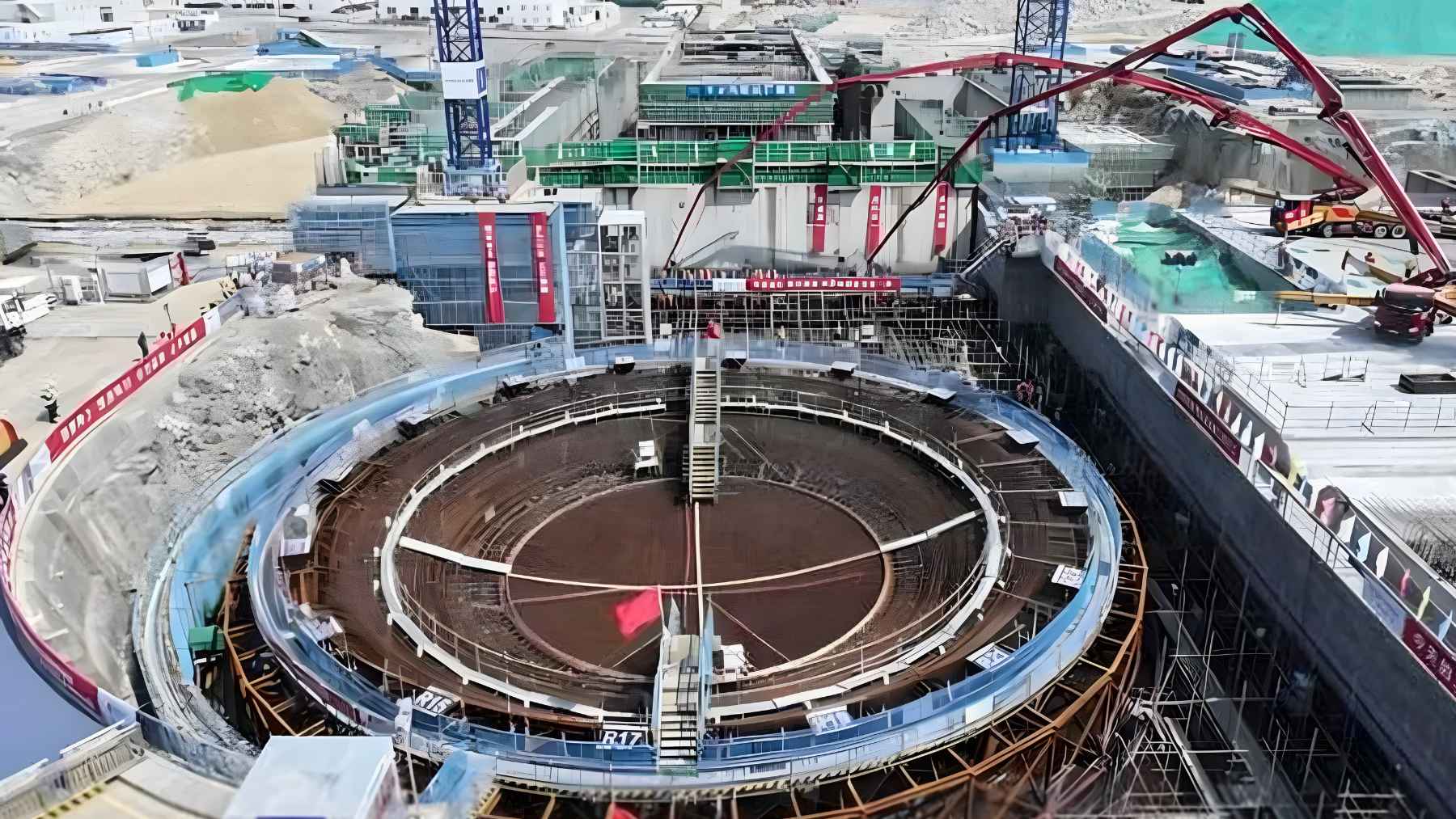
Construction advances at the Lufeng nuclear plant, where a massive dome installation highlights faster modular building methods.
Lufeng units 5 and 6 timeline and Hualong One capacity
The milestone also fits a larger timetable. CGN says Lufeng units 5 and 6 were approved in April 2022, both use the Hualong One design, and each has a capacity of 1,200 megawatts. In a 2026 financing document, the company said unit 5 is expected to enter operation in 2027 and unit 6 in 2028.
CGN has also said the full Lufeng project, planned for six large nuclear units, could generate about 52 billion kilowatt-hours a year and cut carbon dioxide emissions by about 42.8 million tons annually once fully built.
At the end of the day, that is why this 94-minute lift matters. It is not only about crane power or bragging rights. To a large extent, it is about turning one of nuclear construction’s hardest jobs into a repeatable, lower-risk process. And in big infrastructure, that is usually where the real race is won.
The official statement was published on China Nuclear Energy Association.