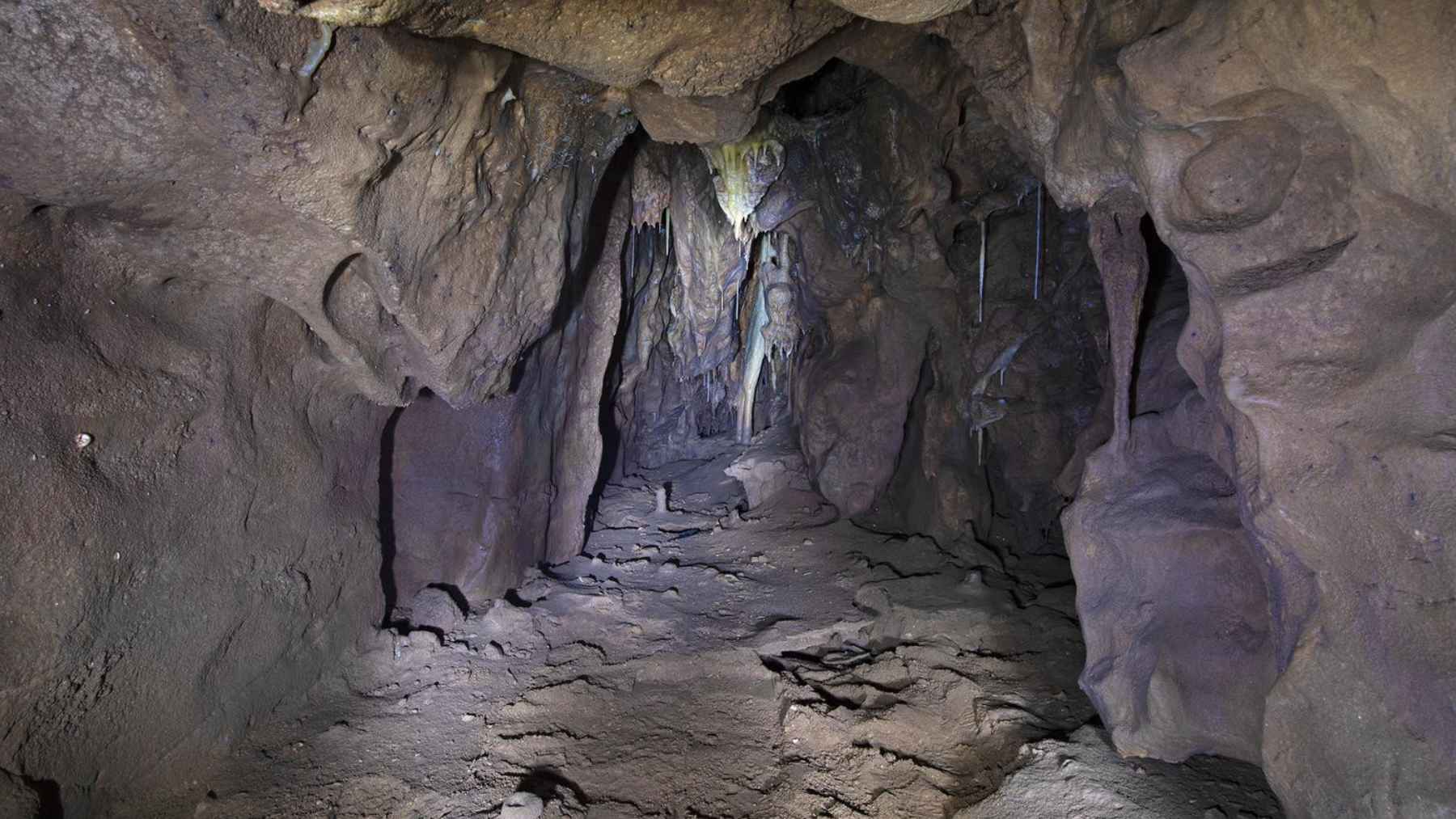
For decades, textbooks placed the last Neanderthals in cold river valleys and forested plateaus. Now a chamber hidden high inside a sea cave in Gibraltar is nudging that picture toward the shoreline and toward a much more complex daily life.
Archaeologists from the Gibraltar National Museum have opened a room in Vanguard Cave that was sealed off by sediment for at least 40,000 years. Inside, they found the bones of lynx, hyena and griffon vulture, plus the shell of a large sea snail that could only have arrived in someone’s hands.
Taken together with earlier work in the same cave system, the find strengthens the case that this Mediterranean outcrop served as one of the very last refuges for Neanderthals in Europe. It also shows how much of their story may still be hidden a few meters behind the sand.
A world heritage cave complex at the edge of Europe
The new chamber lies inside Vanguard Cave, one of four main openings that form the Gorham’s Cave Complex on the eastern face of the Rock of Gibraltar. Today, waves almost lap at the cave mouths. During the Ice Age, sea level stood much lower, and the entrances opened onto a broad coastal plain where Neanderthals could hunt and forage.
This stretch of cliff is not just another pretty viewpoint above the Mediterranean. Gorham’s Cave Complex is recognized as an UNESCO World Heritage Site for preserving one of the longest and most detailed records of Neanderthal occupation anywhere in the world.
Within a few hundred meters lie Gorham’s Cave, Vanguard Cave, Hyaena Cave and Bennett’s Cave. Layers in these sites record more than 100,000 years of human presence, from early Neanderthals to the arrival of Homo sapiens.
The Gibraltar National Museum has spent decades excavating them and argues that Neanderthals survived here thousands of years after they vanished from much of the rest of Europe.
In practical terms, the setting helped. The complex offered shelter, fresh water from nearby springs, and a menu that ranged from red deer and ibex to mussels, fish, seals and even dolphins. For people used to counting every winter calorie, living above a rich tidal zone would have been a serious advantage.
A hidden chamber above the cave floor
The newly opened space sits about 13 meters above the current cave floor, at the back of Vanguard Cave. According to the official description, archaeologists spent years removing sediment that had plugged the passage before breaking through into a chamber that had not seen daylight since long before modern humans reached western Europe.
Preliminary work shows a room roughly the size of a small apartment, with rock walls that still carry scratch marks from a large carnivore. On the floor, the team identified remains of lynx, hyena and griffon vulture, all consistent with a place where predators dragged or consumed prey. Among those bones, however, lay something that does not simply walk into a high inland chamber on its own.
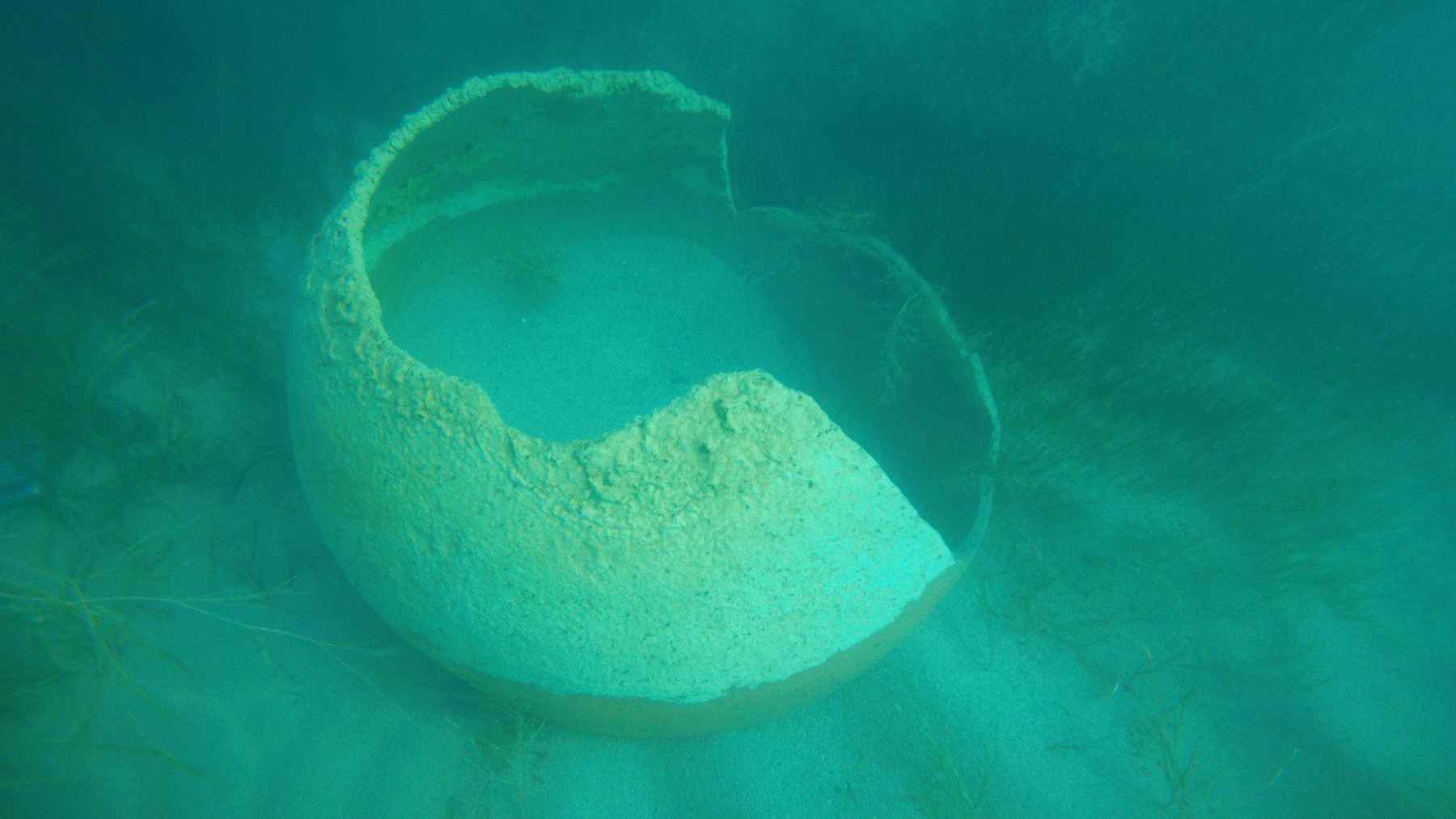
There was a large marine whelk shell that must have been carried up from the coast. Even today the shoreline sits at a distance, and during the period when the chamber was open the sea lay even farther away. Someone chose that shell, brought it inside and left it behind in a room that then sealed shut for tens of thousands of years.
Archaeologists cannot yet say whether Neanderthals used the space mainly as a den, a short-term shelter or something more symbolic. For now, the chamber feels more like a paused scene than a fully understood household. That is exactly why the team is going slowly.
The work in this room will look less like a quick dig and more like a scientific expedition in the jungle, layer by layer, object by object. Every scrap of bone and every grain of sediment carries information about who came through this space and when.
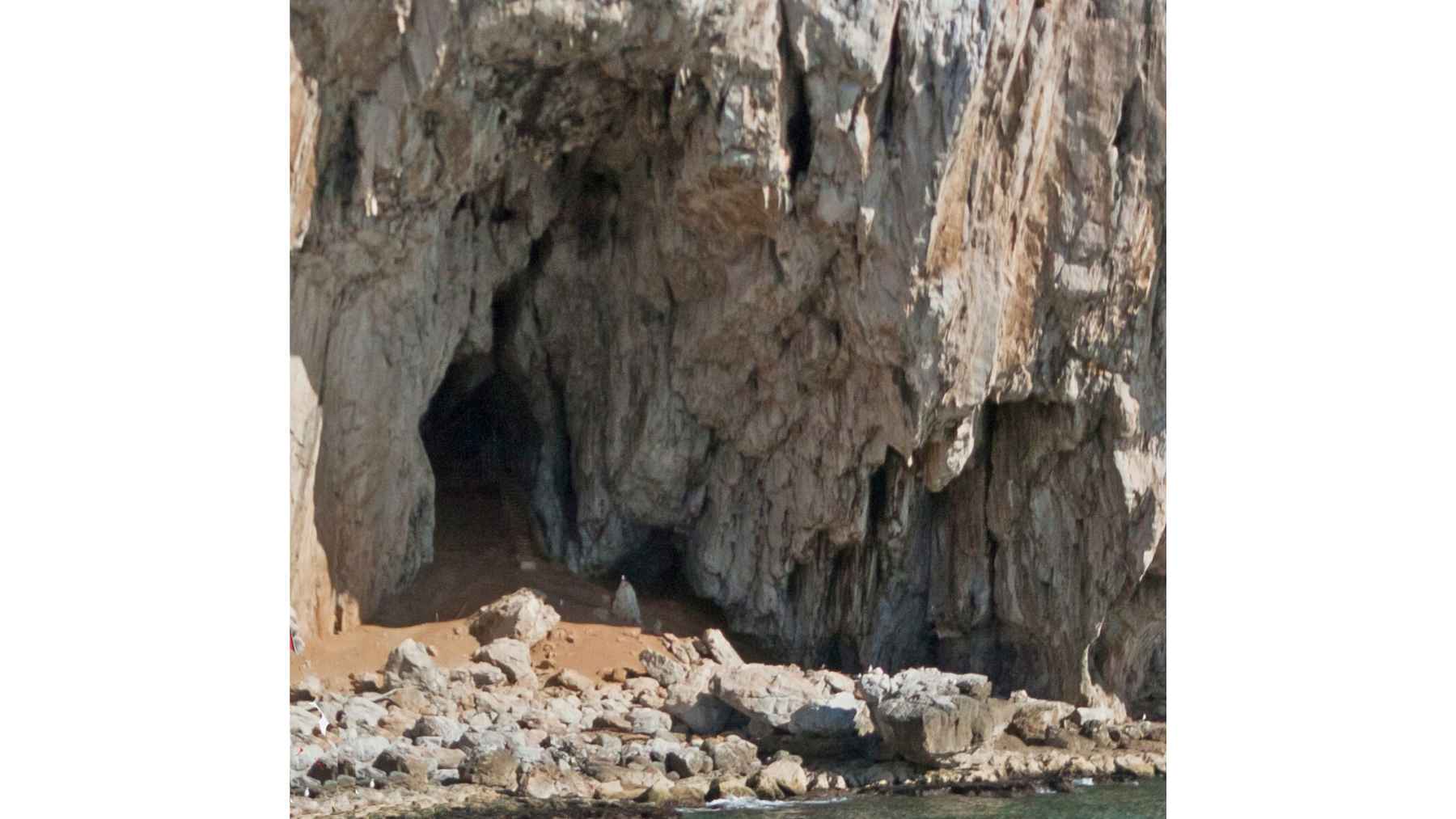
The rocky entrance of Vanguard Cave in Gibraltar, one of the key sites within the Gorham’s Cave Complex linked to late Neanderthals.
Everyday life on a Pleistocene coastline
The sealed chamber matters partly because it slots into a much bigger puzzle. Over the past two decades, Gorham’s and Vanguard have revealed a coastal lifestyle that is far from the stereotype of Neanderthals as inland big-game specialists.
Excavations have uncovered shells of mussels and limpets, bones of fish, seals and dolphins, and cut marks that show these animals were processed for meat and fat. Some shells appear to have been selected for their color or shape rather than just for food.
This pattern points to a systematic use of marine resources and a comfort with the tides that lines up more with beachcombers than with cave men hiding from storms.
Other recent work, from lunar dust to deep ocean trenches, shows that long‑held scientific assumptions can flip when new samples arrive on the lab bench. In Gibraltar, that shift is happening around Neanderthal diet and behavior.
The coastal focus also matters for timing. Climatic records suggest that southern Iberia stayed relatively mild while much of Europe swung between glacial extremes. To a large extent, that made Gibraltar a climate refuge, a place where Neanderthals could retreat as ice advanced elsewhere.
Symbols carved into stone
The caves have already delivered some of the clearest evidence that Neanderthals were capable of abstract thought. In Gorham’s Cave itself, researchers uncovered a set of deep, cross hatched lines carved into the bedrock.
The grooves lie beneath undisturbed Neanderthal layers and show no sign of practical use such as butchering. Experimental replications indicate that they were made by deliberately passing a sharp stone point along the same paths many times.
A peer-reviewed paper describing this engraving, titled “A rock engraving made by Neanderthals in Gibraltar,” concluded that it represents an intentionally produced geometric design.
You could think of it as a durable sketch, a fixed pattern that outlived its makers and quietly challenges the idea that only Homo sapiens invested time in symbolic marks on cave walls. The study is archived on PubMed.
The sealed chamber in Vanguard Cave does not yet show similar engravings, although only initial surveys have been reported. Still, the fact that abstract markings and complex behavior appear elsewhere in the same cliff system sets the scene for whatever might emerge once archaeologists begin detailed work on the newly opened room.
Industrial chemistry in a cave
Gibraltar is also where researchers recently documented what appears to be a purpose built structure for producing tar, an adhesive that Neanderthals used to haft stone points onto wooden shafts.
In Vanguard Cave, a team described a shallow pit and associated burning features that match predictions for a controlled, low-oxygen heating setup. Experiments suggest that such a structure could distill sticky plant resins that functioned as glue.
The Government of Gibraltar summarized the finding in an official press release, noting that the structure supports the more complex of two previously proposed methods for tar production.
Instead of simply burning birch bark in the open, Neanderthals appear to have managed a process where plant material was heated out of contact with oxygen so that resin would flow rather than burn away.
From a modern perspective, that sounds almost like a workshop. You need to select the right plants, control temperature, keep the setup stable and then collect the product without ruining it.
That kind of trial and error is not so different, in spirit, from the laboratory routines behind a method so simple it seems like a trick in plastic recycling or other cutting-edge chemistry. The tools change, but the underlying habit of tinkering with heat, time and materials connects those experiments across tens of thousands of years.
A late refuge at the edge of the map
Why does it matter whether Neanderthals were still using these caves 40,000 years ago, or a few thousand years earlier than that?
For the most part, researchers agree that Neanderthals disappeared from most of Europe between about 40,000 and 42,000 years ago.
Dates from Gorham’s Cave Complex, including work on charcoal and sediments, point to Neanderthal presence persisting somewhat later in southern Iberia than in areas farther north. That would make Gibraltar one of the very last strongholds before the species vanished.
At the same time, genetics has brought its own surprises for human evolution, from new Denisovan lineages to revised family trees for many animals. Experts caution that timelines based on a few sites can shift as new layers are dated or reanalyzed. In that sense, the newly opened chamber is less a final answer and more a fresh data point in a moving picture.
What seems solid is that Gibraltar hosted Neanderthals in a coastal environment rich in food, that they invested effort in technology such as tar production, and that they left symbolic marks on stone. The chamber sealed for 40,000 years now adds a unique, undisturbed context where those behaviors might show up together.
What this means for readers at home
It can be hard to connect a sealed cave in Gibraltar with everyday life, the electric bill or traffic on the way to work. Yet discoveries like this subtly change how we think about human history and about what counts as “advanced.”
If Neanderthals tracked tides, processed marine mammals, engineered adhesives and scratched abstract patterns into rock, the gap between them and us looks much narrower. The story becomes less about a “failed” species replaced by something better and more about several human groups sharing overlapping skills in tough environments.
There are also practical gains. Techniques used to study micro layers of ash, pollen and tar in caves feed into climate reconstructions, fire ecology, and even modern materials science. The same kind of precise, low temperature analysis that reveals ancient adhesives can help chemists design new coatings or more efficient ways to recycle waste.
And there is a broader pattern. Whether it is hidden rooms inside a Neanderthal cave, new species revealed by a jungle survey or the reinterpretation ofl unar dust, science keeps finding that the world is messier and more interesting than older models suggested.
What comes next inside the sealed room
For now, archaeologists have only scratched the surface of the newly opened chamber. The next steps will involve careful mapping, sampling and dating of sediments, along with detailed study of every bone fragment and shell.
That process takes time. Each scoop of soil has to be sieved, recorded and sometimes sent to specialized labs for microfossil or chemical analysis.
Researchers will be watching for hearths, tools, small charcoal flecks and any repeated patterns in where objects lie. Even a thin scatter of stone flakes on the floor would show that hominins sat or worked there, while concentrations of certain animal bones could hint at specific activities such as butchering or scavenging.
The chamber’s long isolation is both a challenge and a gift. It means access is awkward and the team must work in tight, sometimes humid conditions that anyone who has crawled through a narrow attic might recognize. It also means that later visitors did not trample or rearrange the evidence. The room froze a moment in deep time and then waited.
At the end of the day, that is what makes this discovery so compelling. It is not just another cave layer, but a self-contained pocket of Pleistocene history perched above the waves. Whatever story it holds has been protected longer than our own species has been writing anything down.
The official statement describing the sealed chamber and its first finds was published on Gorham’s Cave Complex.